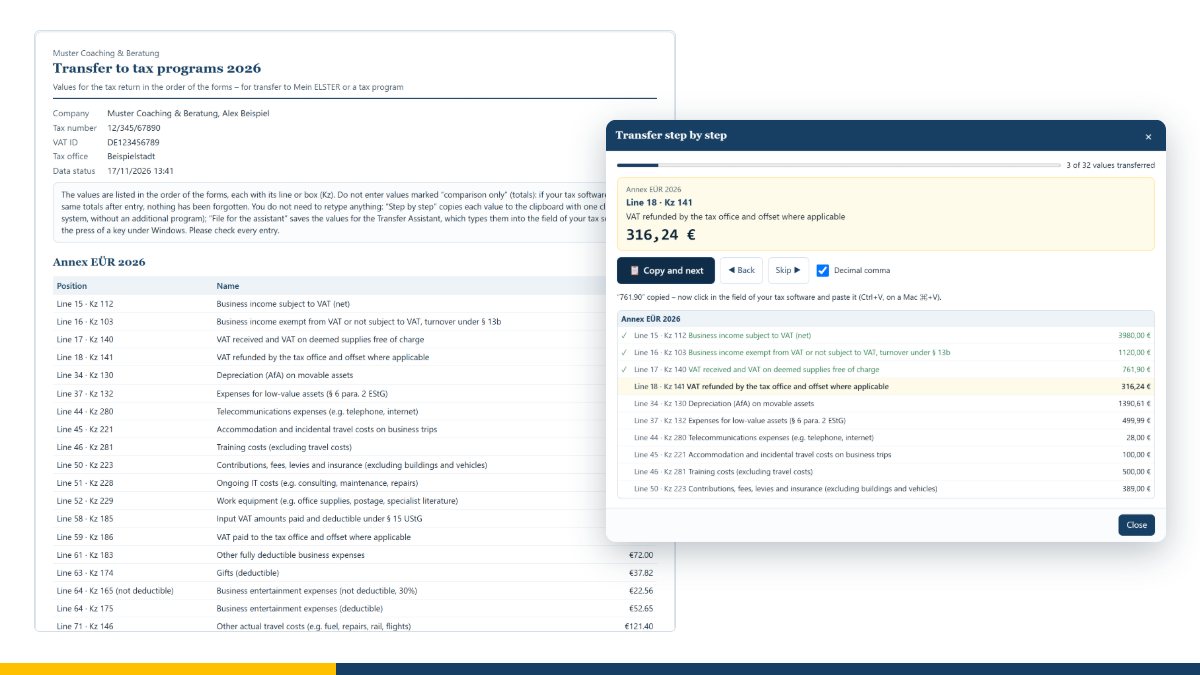
Accounting: transferring values to your tax return
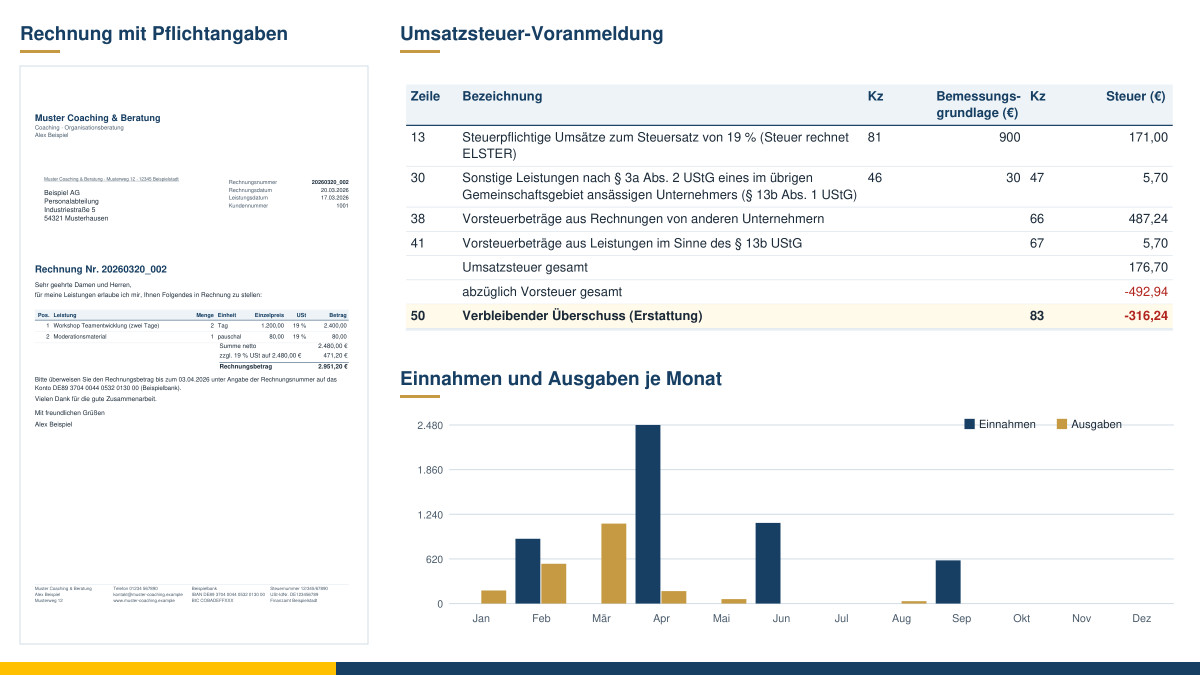
Get your bookkeeping figures into the German tax return without retyping – into Mein ELSTER or tax software such as QuickSteuer, step by step or by assistant.
Thoughts and practical knowledge on enterprise architecture, IT service and process management, coaching and artificial intelligence.
128 articles
Get your bookkeeping figures into the German tax return without retyping – into Mein ELSTER or tax software such as QuickSteuer, step by step or by assistant.
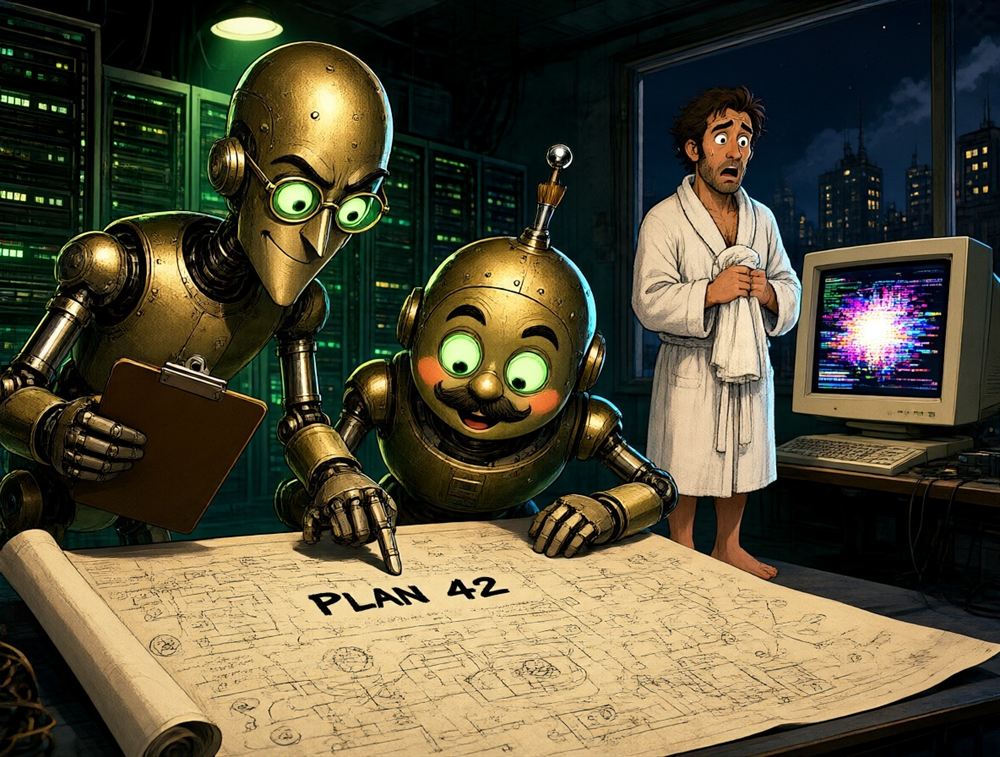
Two AI assistants, 19 attempts, 47,000 words and one towel: satire by Peter Hoenig on AI blind spots – and what small businesses can learn.
Use the MC4Y suite library as a drive in Explorer or Finder, sync its calendar with your own app via CalDAV, and get appointment and task reminders by e-mail.
MC4Y Suite user manual: portal, tools, questionnaires, games and taskbar – with the differences between Windows, macOS, Linux and browsers.
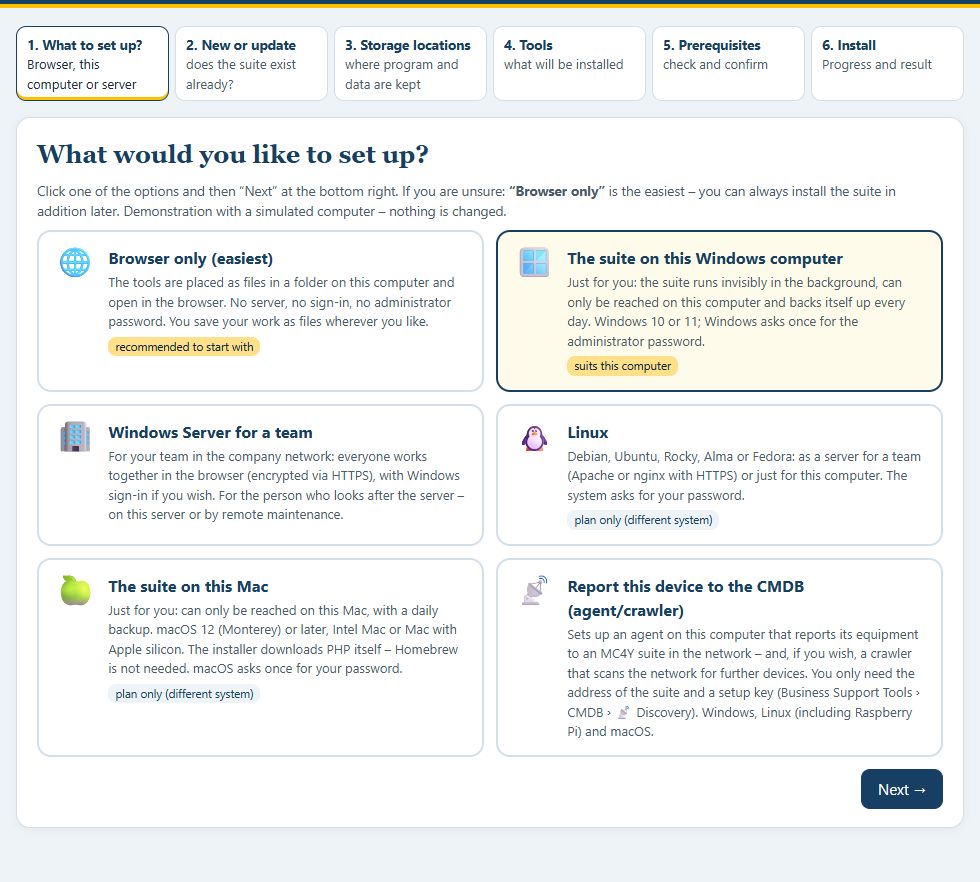
Installation guide for the MC4Y Suite: every route step by step, all script parameters, messages with remedies, files and locations – Windows, Linux, macOS.
Goals, goal conflicts and pain points from your workshop go into the 8EM Modeller at one click – as influence relationships, no duplicates, with feedback.
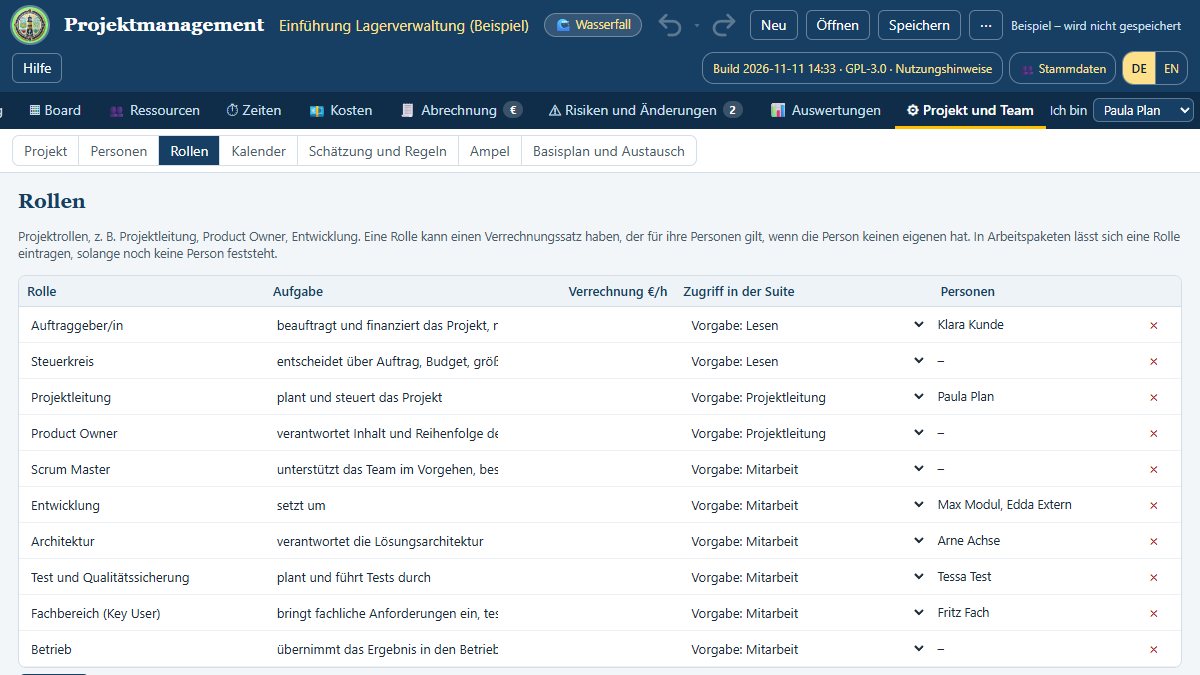
Several people work in the same project at the same time: book time, set status, plan – with roles and without overwriting each other’s work.
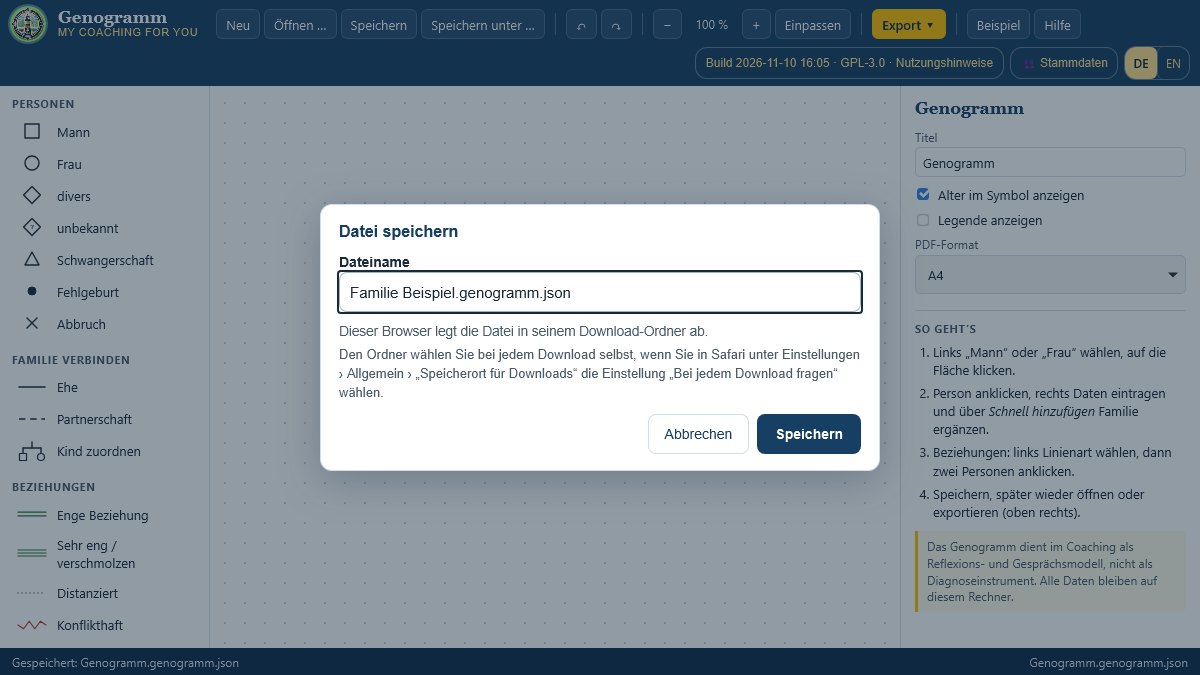
My tools also run in Safari and Firefox. How Save, Save as and Open work there and where your files end up on your Mac or Linux computer.
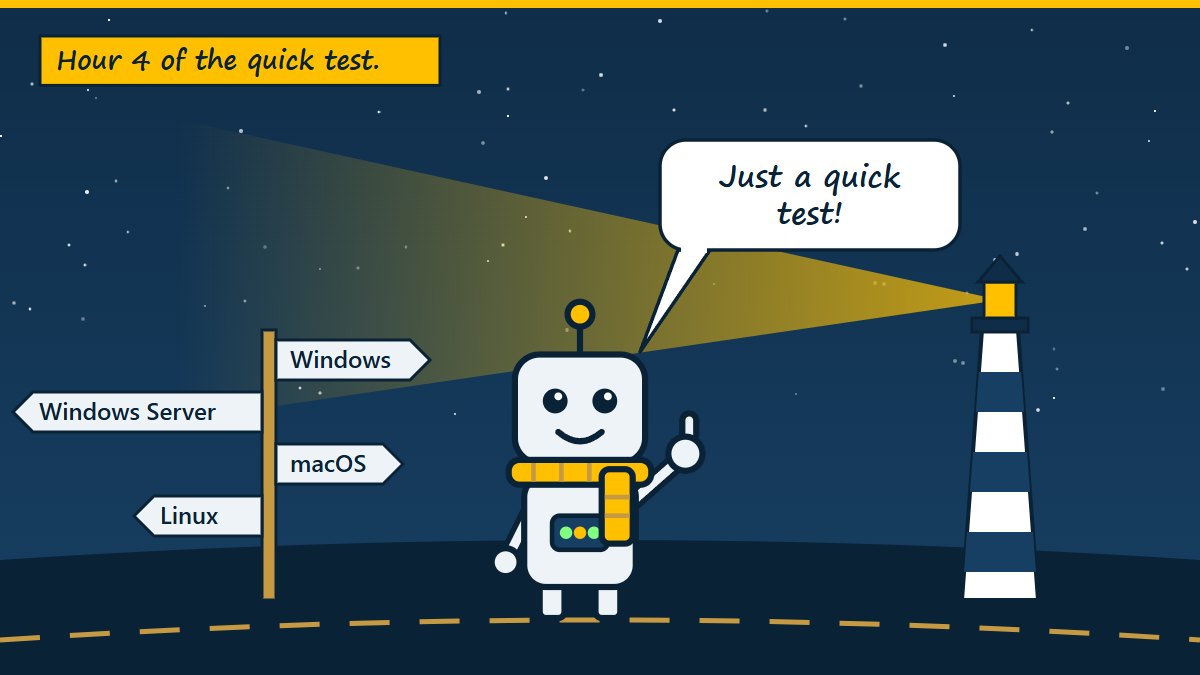
A cheerful travelogue about software testing with an AI: Windows, Safari, Firefox, real Linux – and what small businesses can learn about thorough testing.
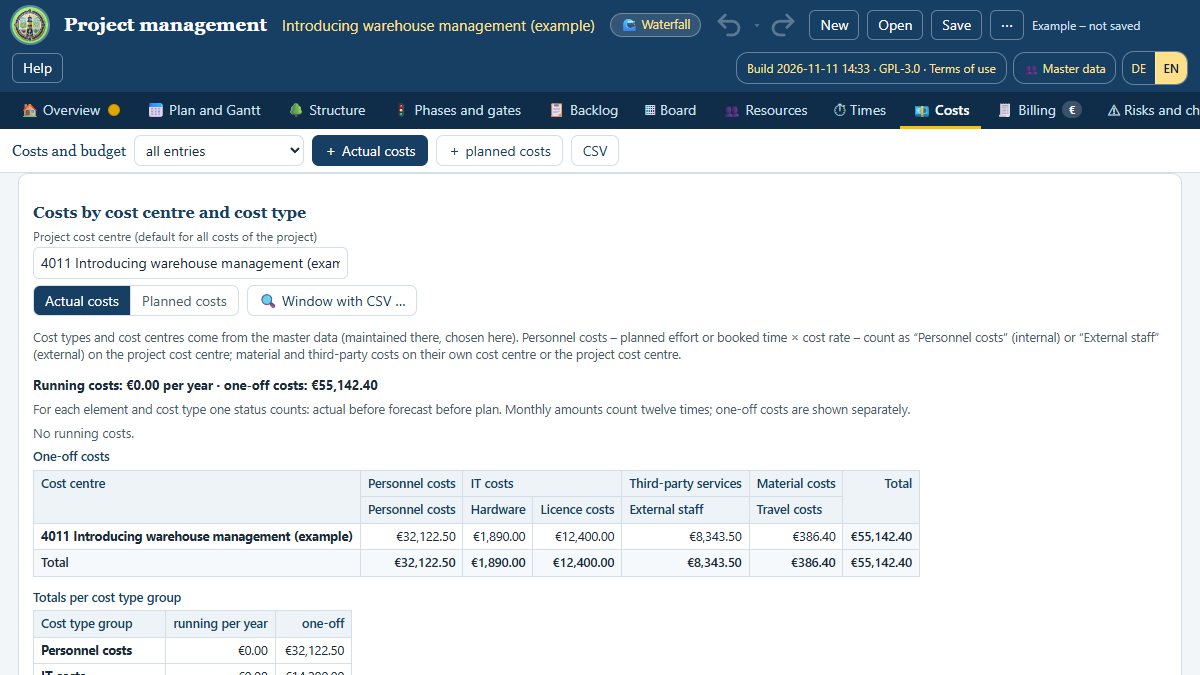
Cost type and cost centre from the master data: the project management tool analyses actual and planned costs by both – per project and across all projects.
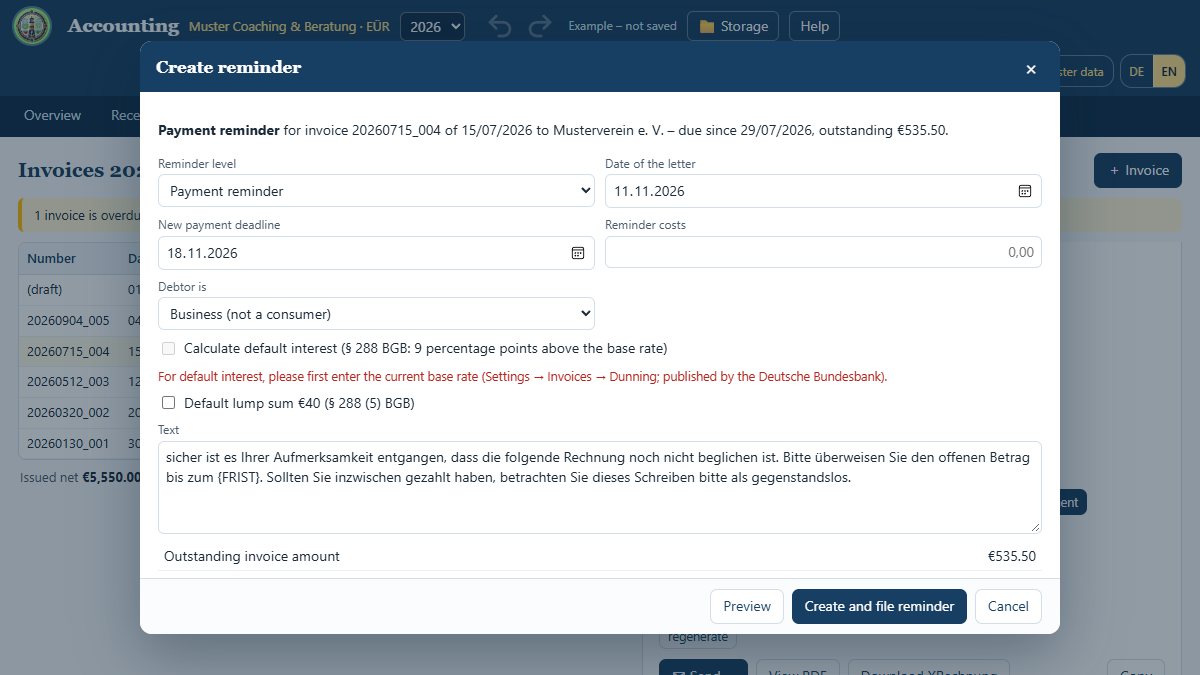
New in my accounting tool: costs by cost centre and cost type, KOST1 and personal accounts in the DATEV export, reminders as PDF and the input VAT refund.
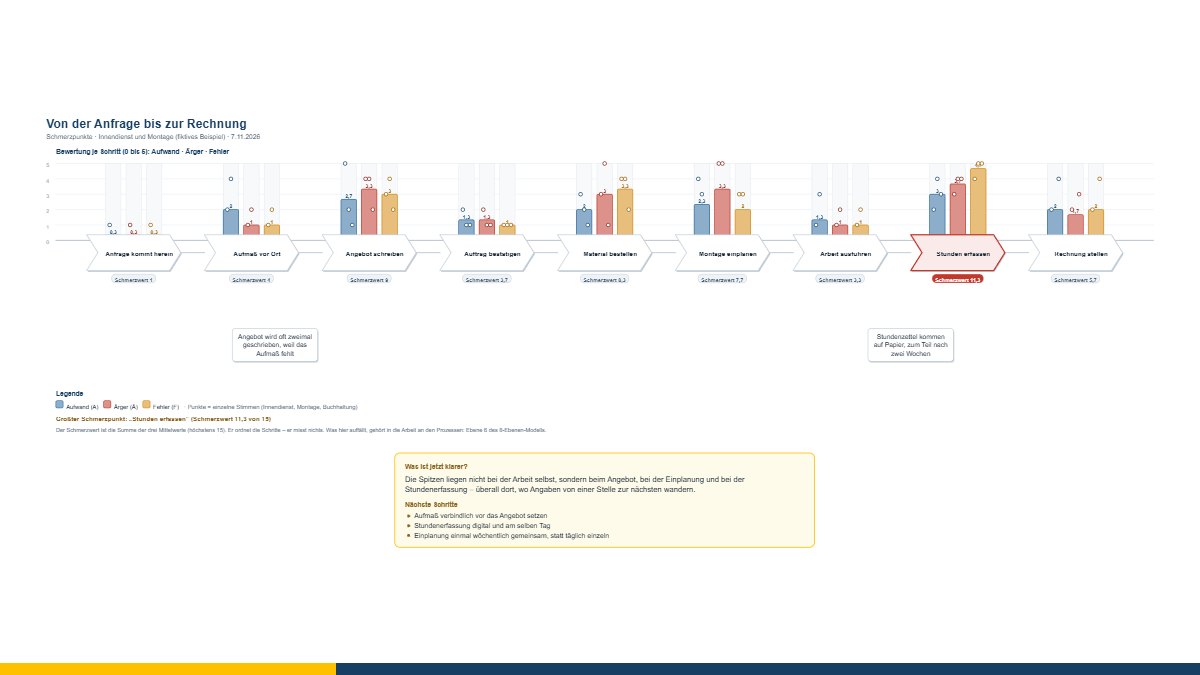
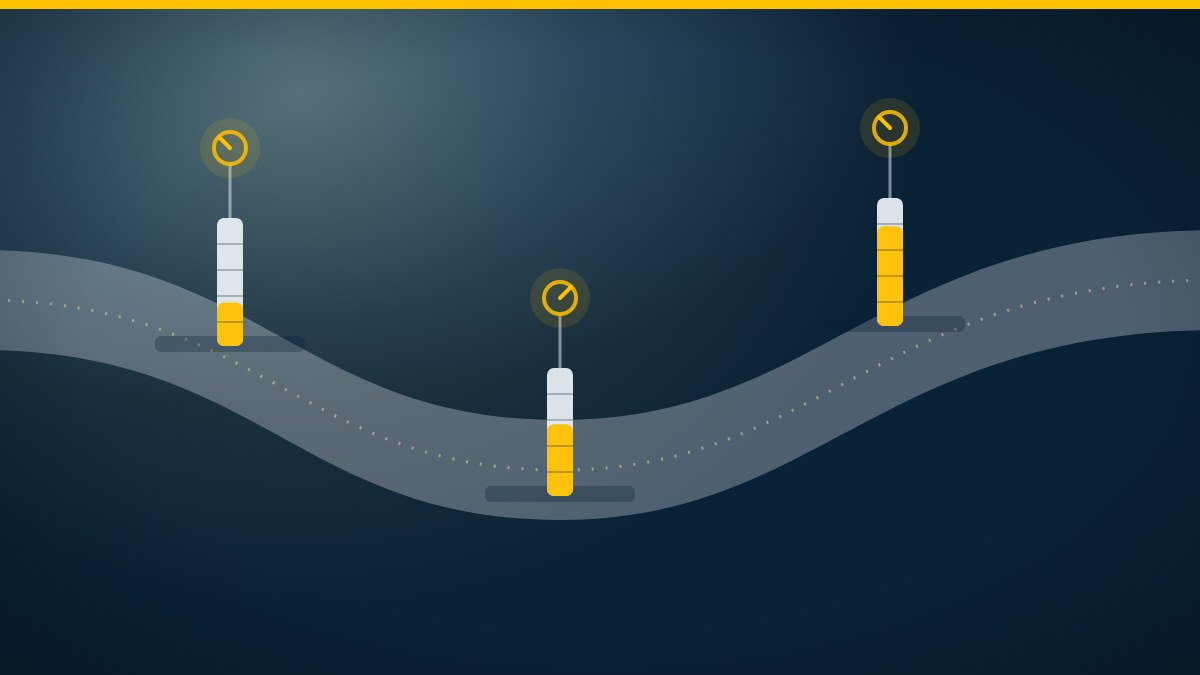
Process steps as a chain, with bars for effort, trouble and mistakes – every person involved rates for themselves. The peaks are the pain points.
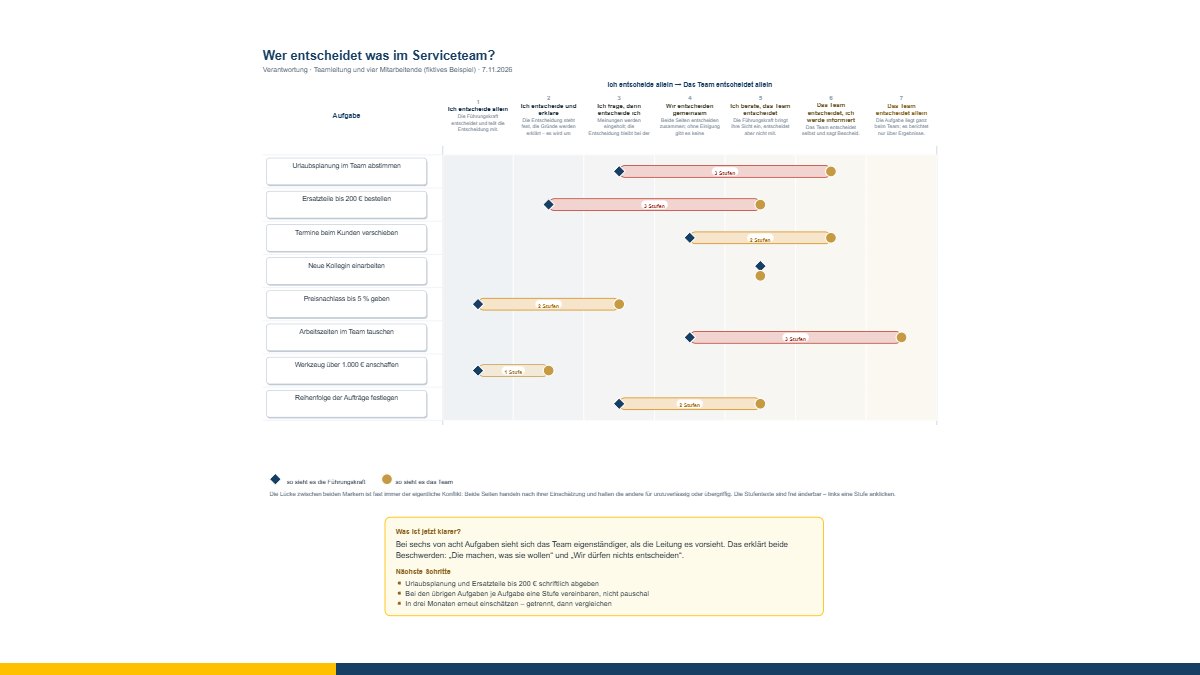
Seven stages per task from “I decide alone” to “the team decides alone” – and two markers. The gap between them is the real conflict.
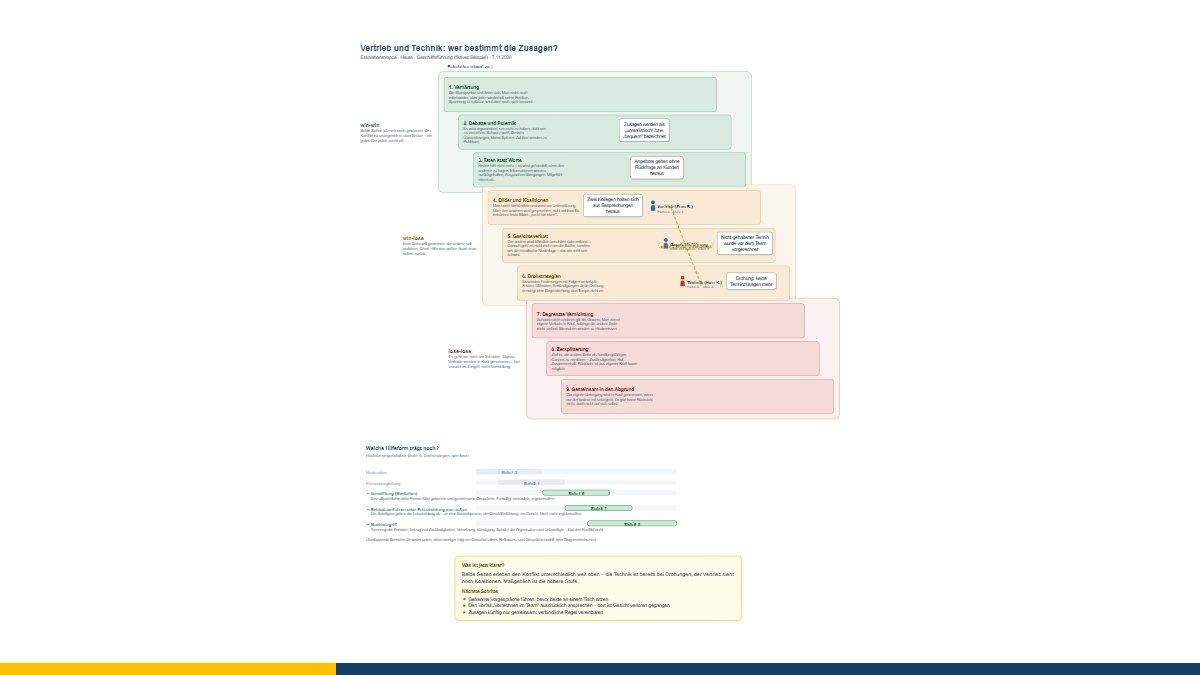
Nine stages, three levels, two parties: place a conflict and see which kind of help still works there – from facilitation to forceful intervention. Free.
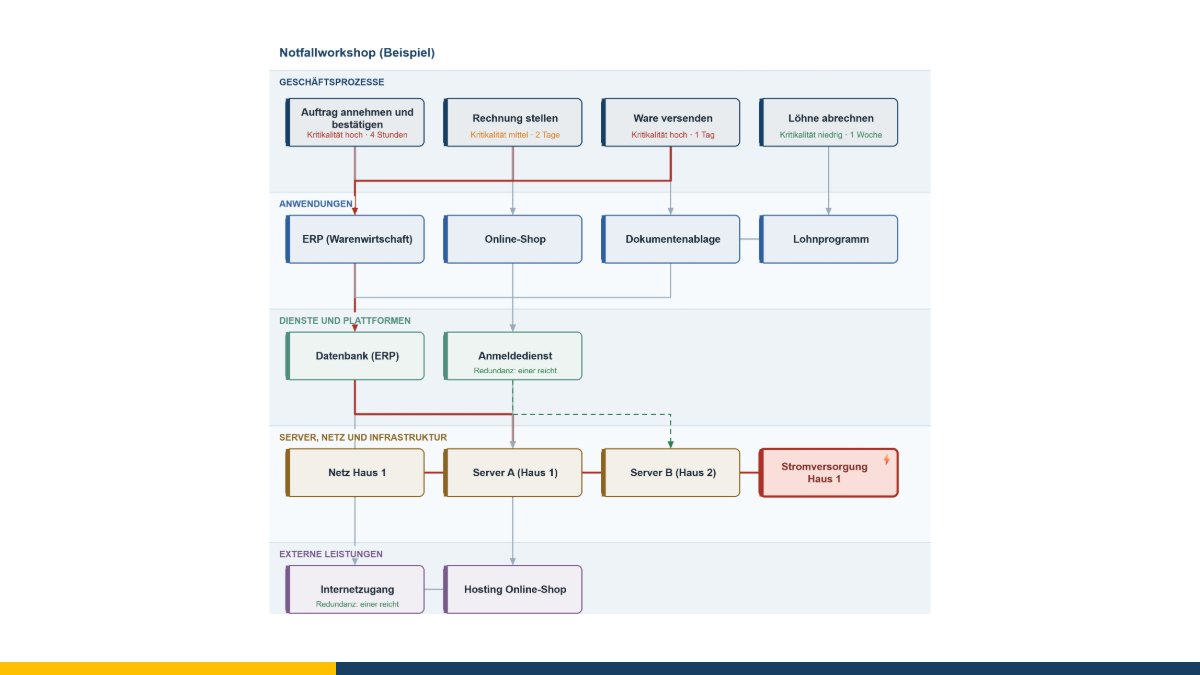
Map the dependencies between systems, servers and business processes, then click one element to see which processes an outage takes down.
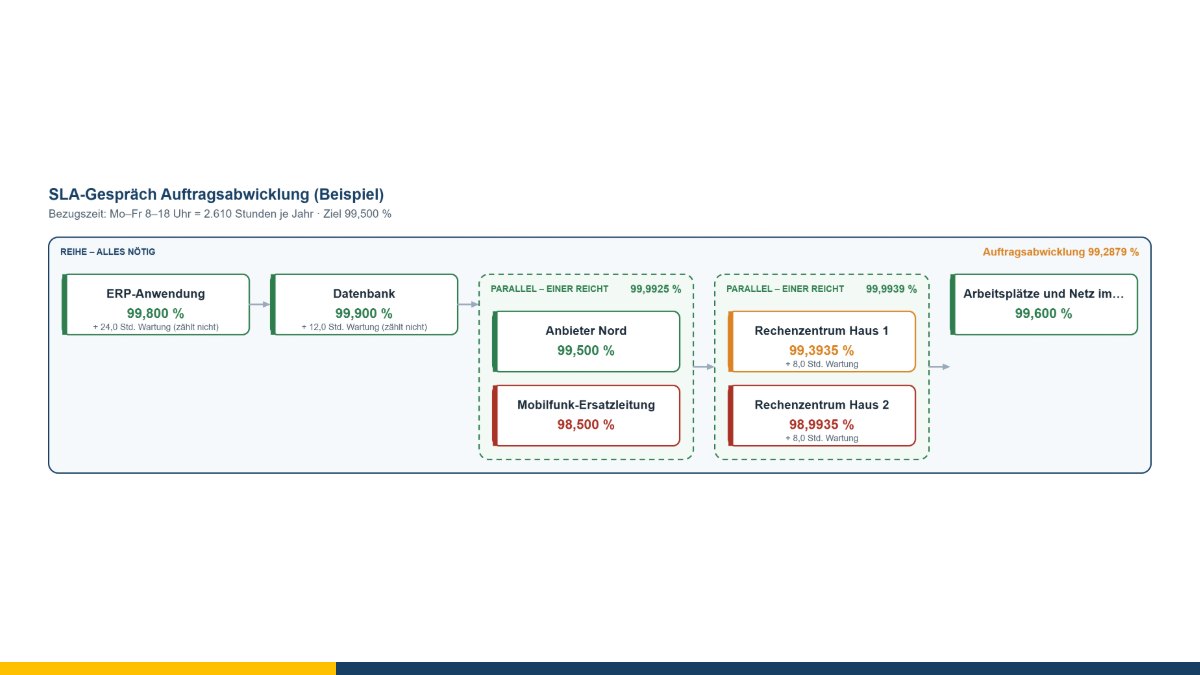
Convert availability into downtime and calculate whole chains: three systems at 99.9 per cent each in series make 99.7 per cent.
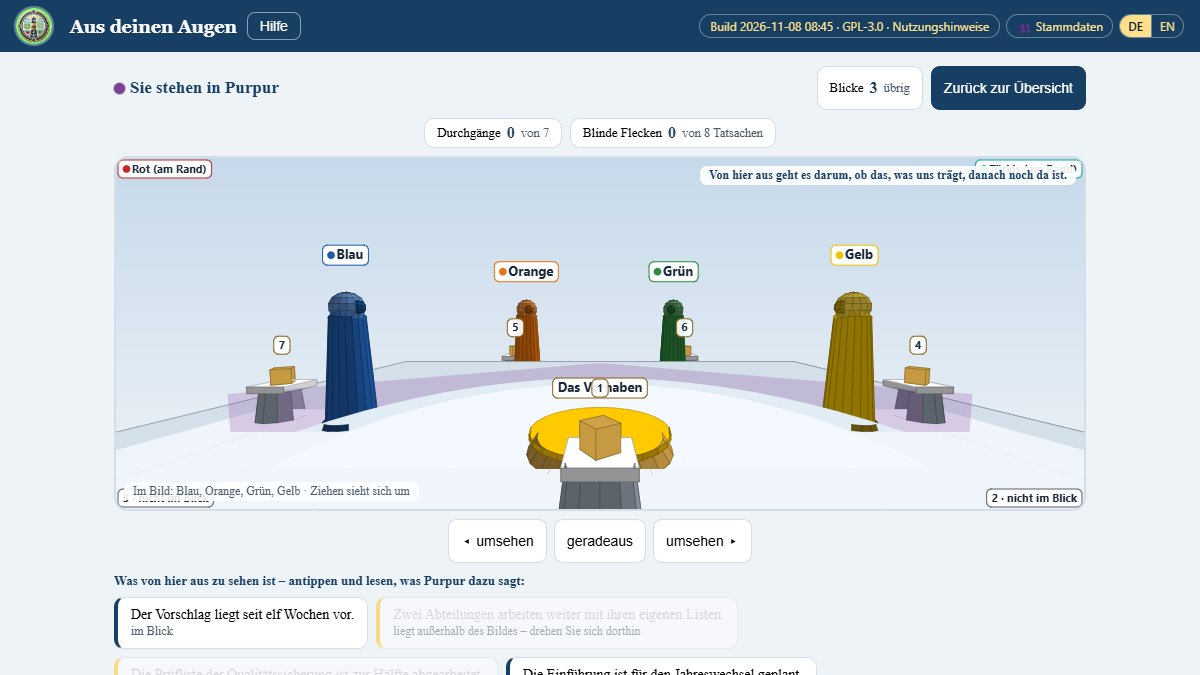
Free 3D browser game on the Values Prism: one scene, eight facts, seven walkthroughs – the camera sits inside the figure, the rest is behind it.
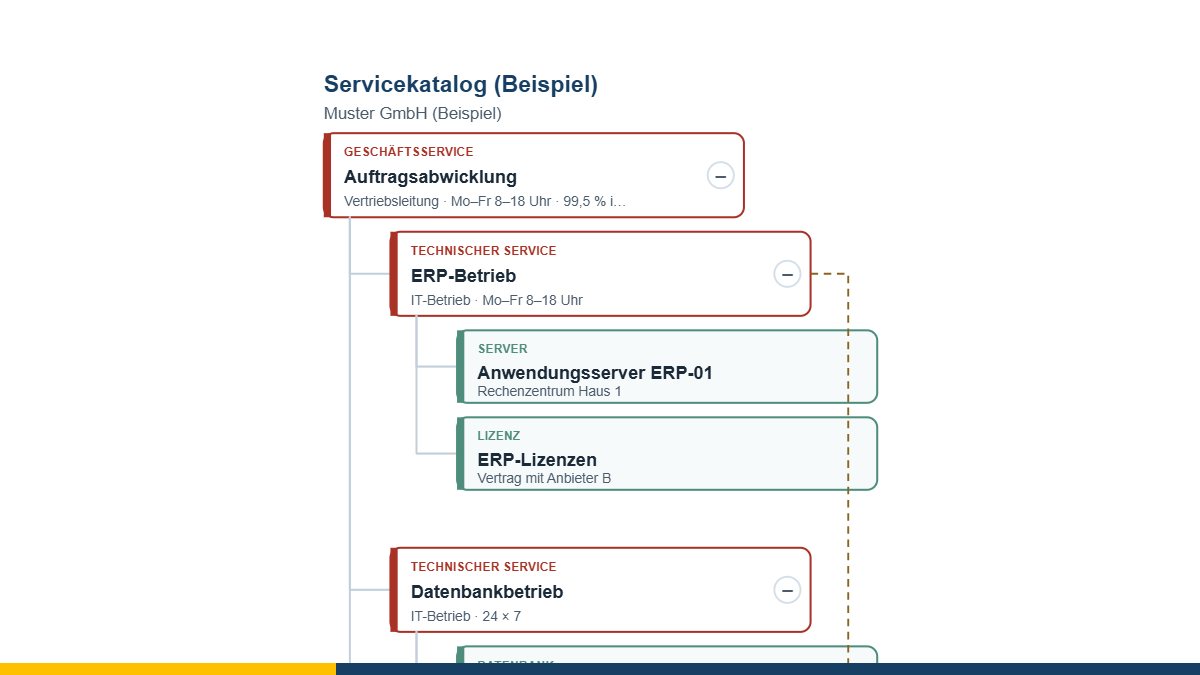
A service catalogue in three levels with owners, service hours and criticality – collapsible, connected to ITSM, CMDB and the outage simulation.
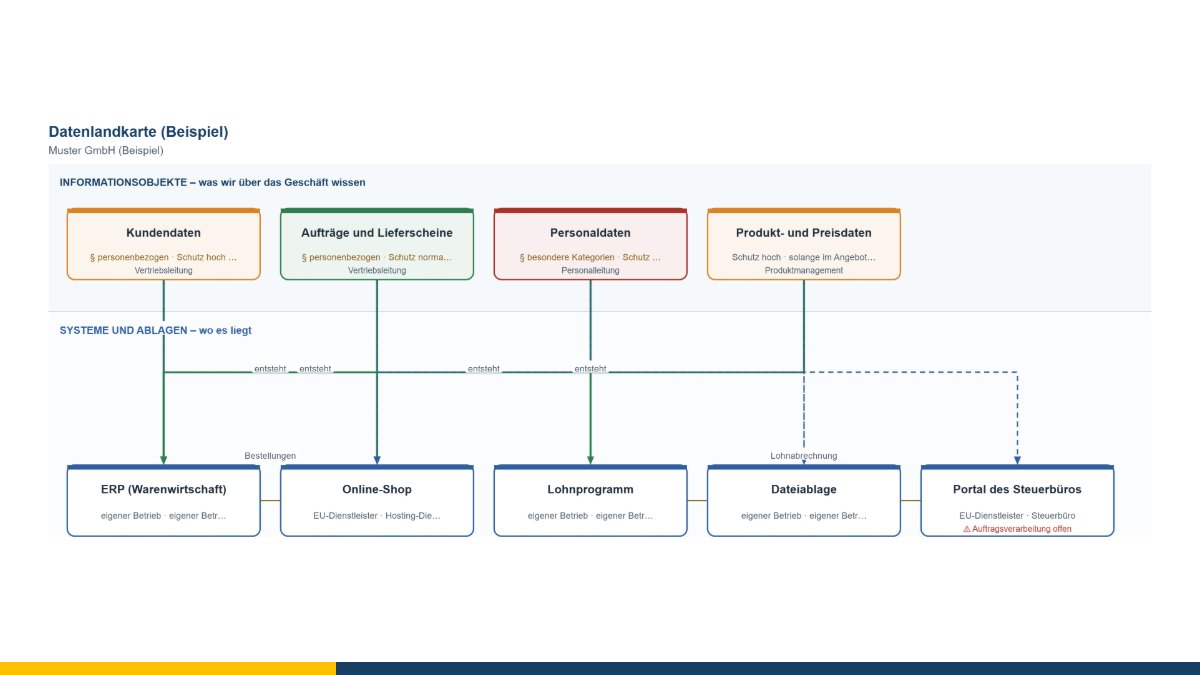
Map information objects with protection needs, personal data, ownership and retention onto the systems and stores that hold them.
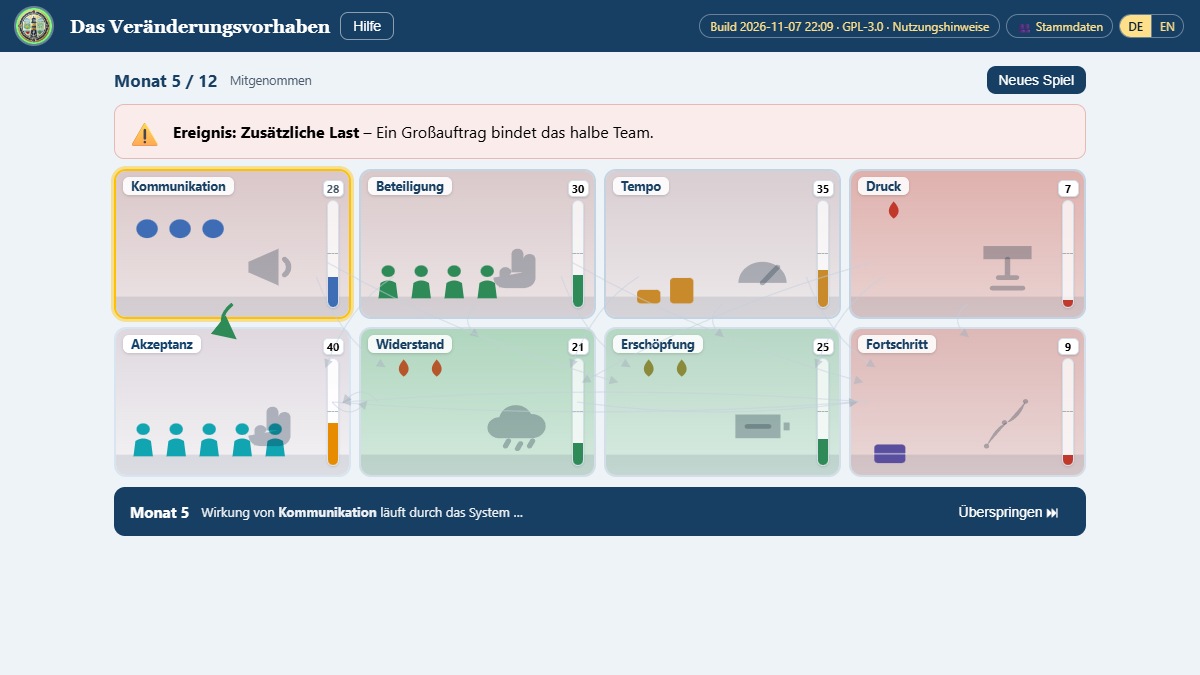
Steer twelve months of change: communication, participation, pace and pressure against acceptance, resistance and exhaustion – pressure shows up later.
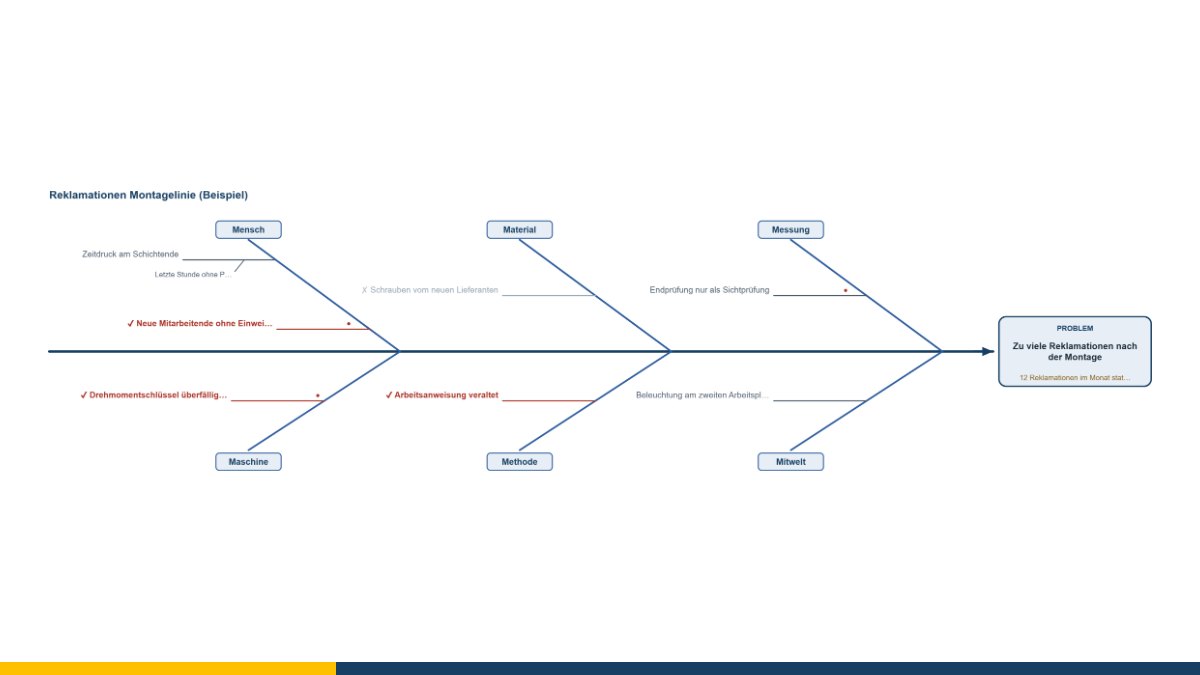
Collect the causes of a problem by category, mark them as suspected, evidenced or ruled out, and attach measures – free of charge in your browser, no sign-up.
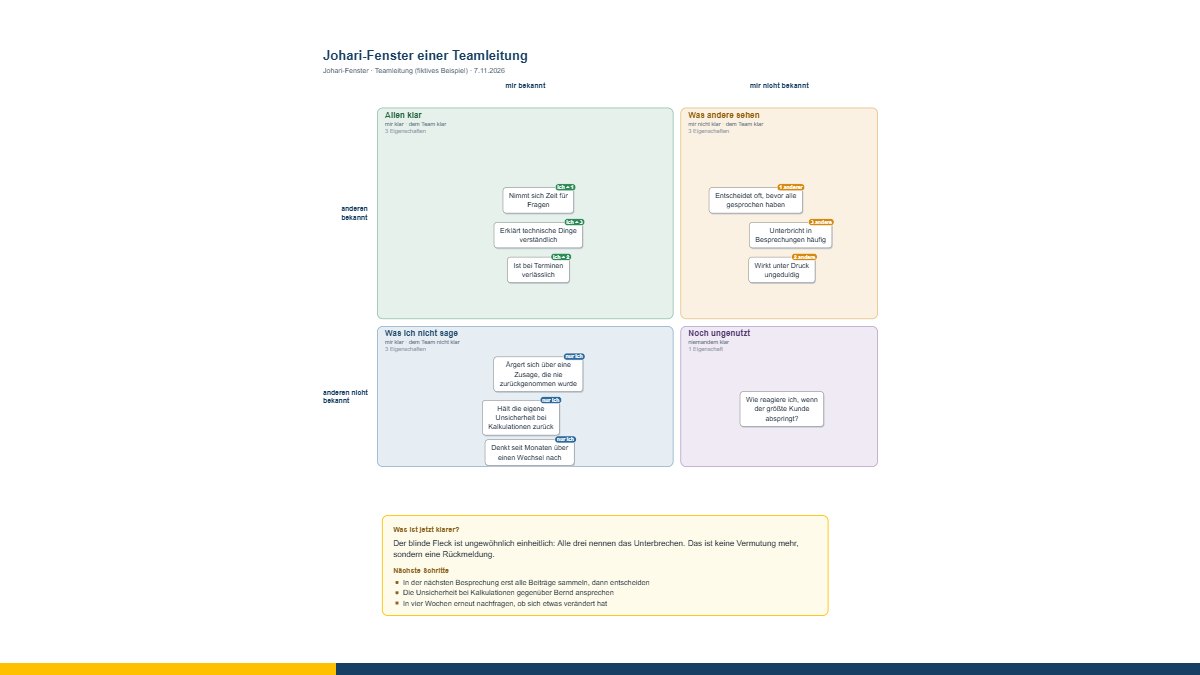
Open, blind spot, hidden, unknown: the field follows from who names a quality – and the fields grow with what they hold. Free, in your browser.
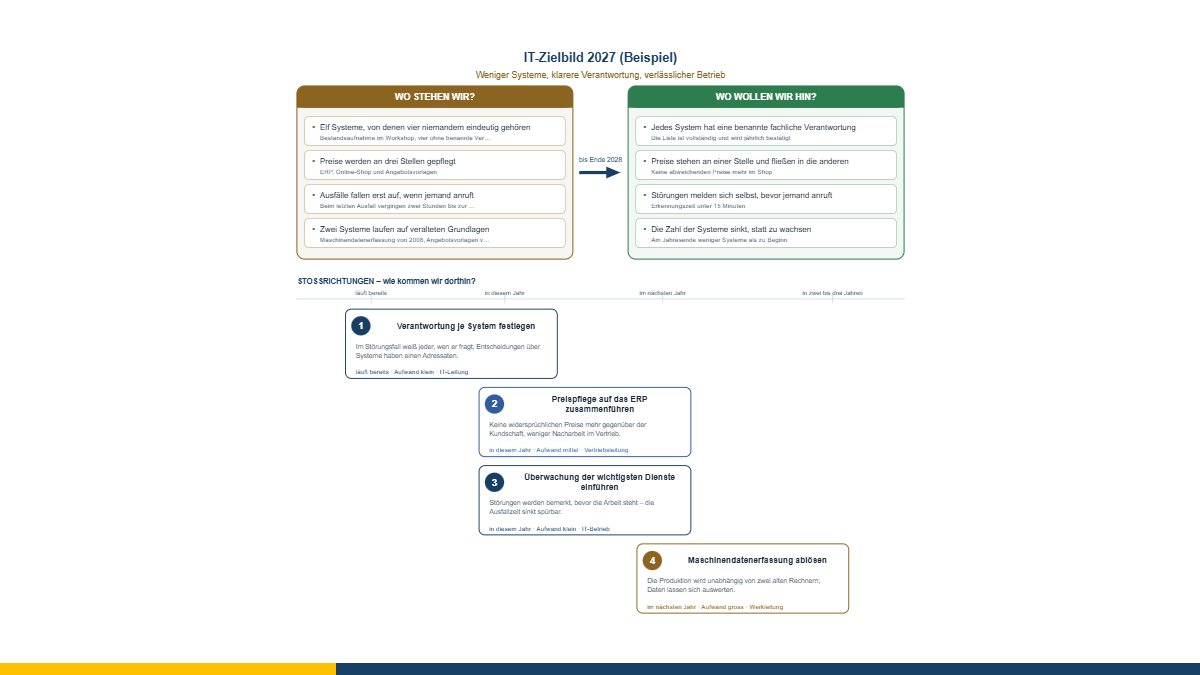
One page for the management team: where we stand, where we want to go, three to five thrusts with benefit and first step.
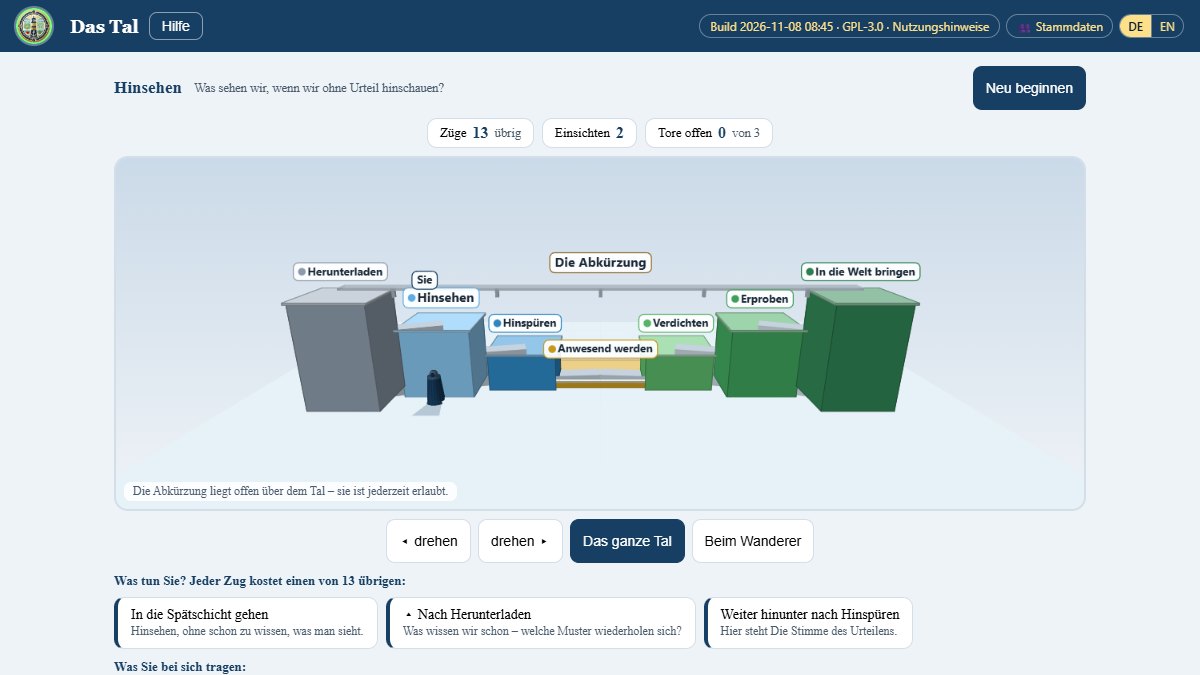
Free 3D browser game about the journey through the U: the shortcut across the valley is open from the start. It works – and it still costs.
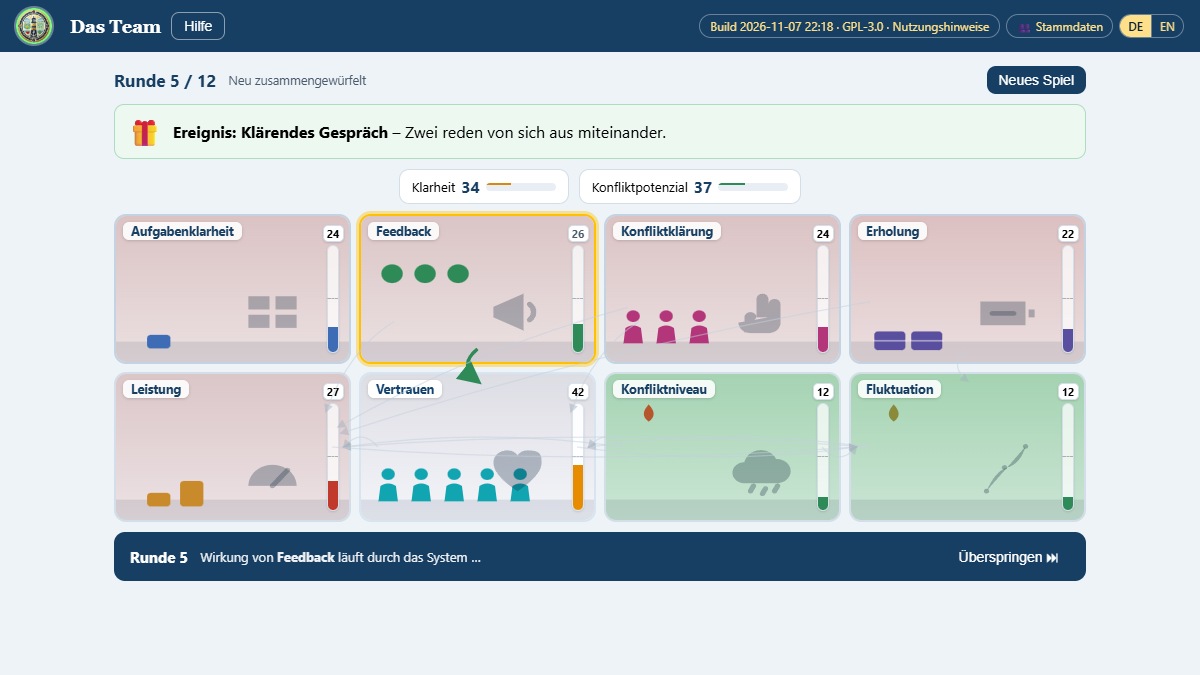
Lead a team for a year: allocate task clarity, feedback, conflict resolution and recovery – and find out what the unspoken costs you later.
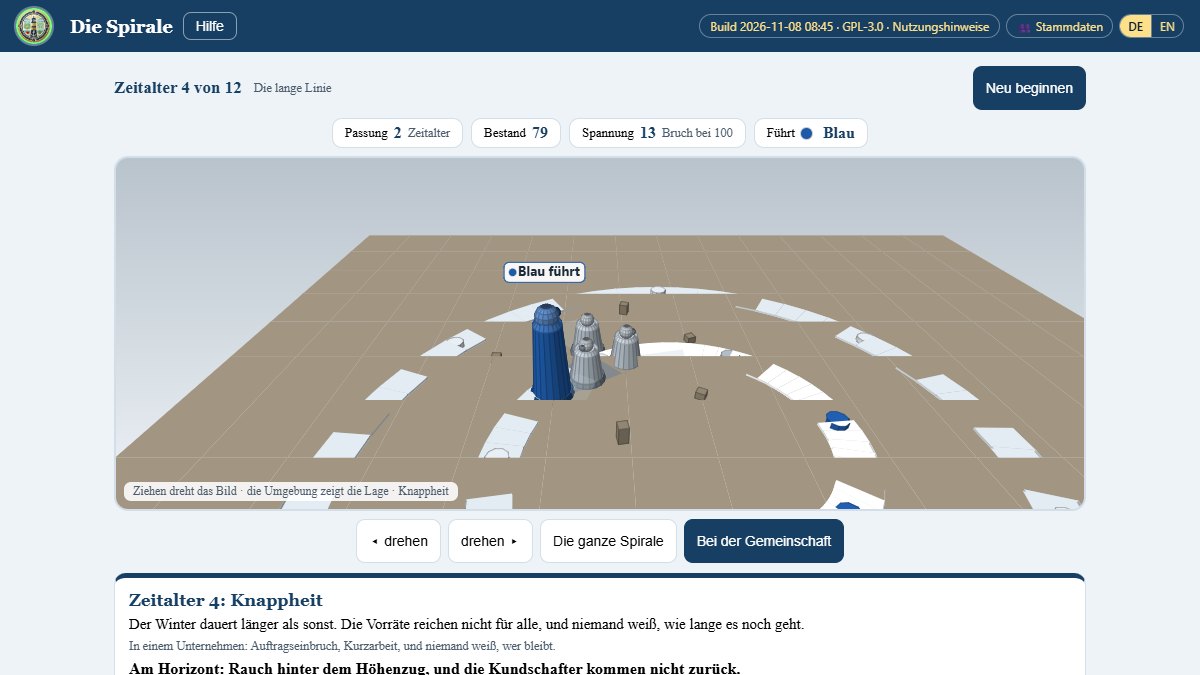
Free 3D browser game: lead a community through twelve ages. Each value colour is the full answer to exactly one situation, and to no other.
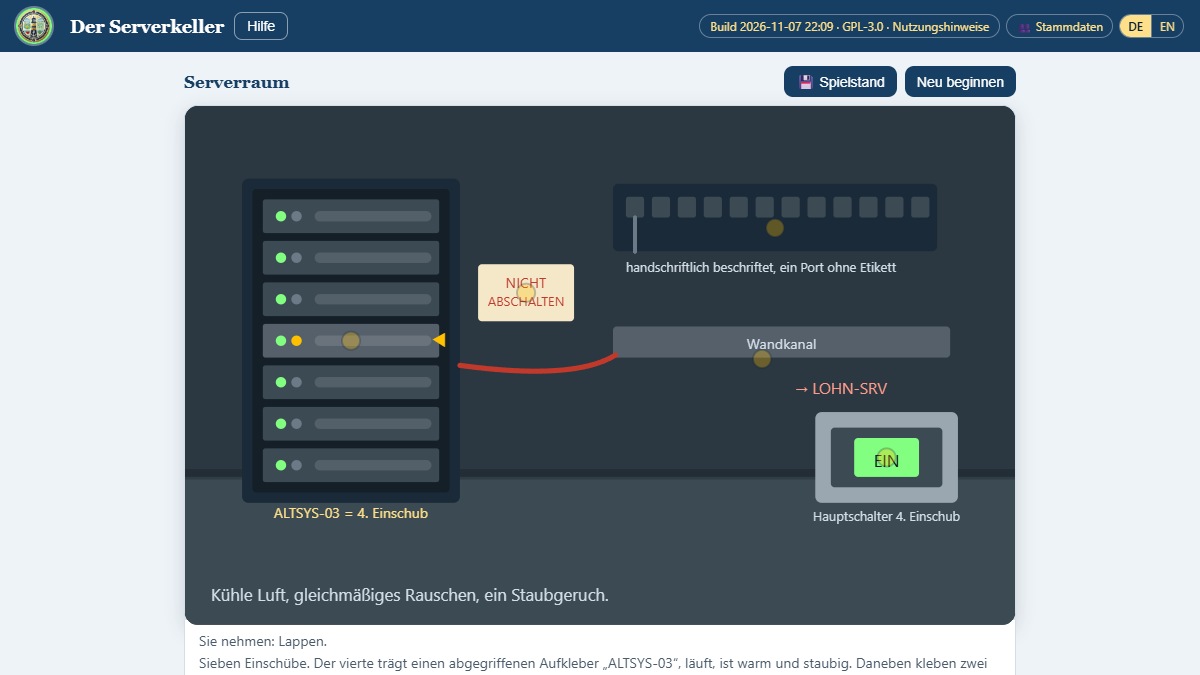
Switch off an old server – but first find out what fails when you do. A graphical adventure in four scenes about documentation and reality.
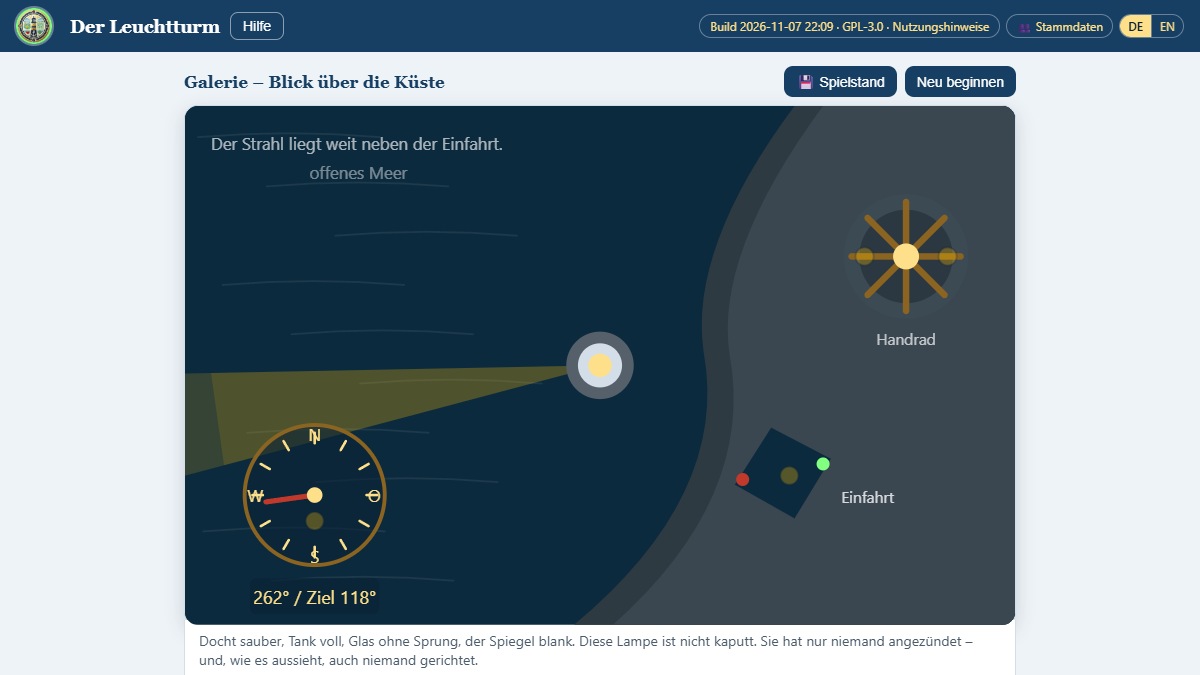
A graphical adventure in six scenes: the lighthouse is dark and the ships cannot find their way in. The lamp is not broken – it is pointing the wrong way.
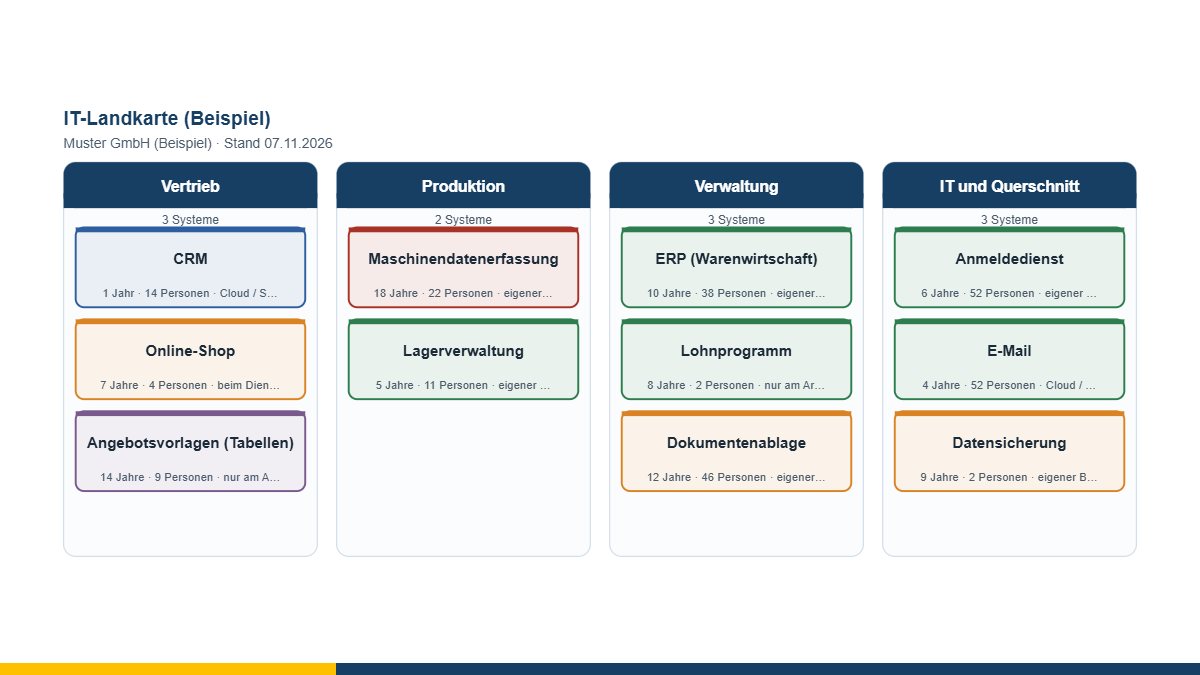
Record your company's IT in a workshop: business areas as columns, systems as tiles by condition or age – free, and into the 8EM Modeller by bulk import.
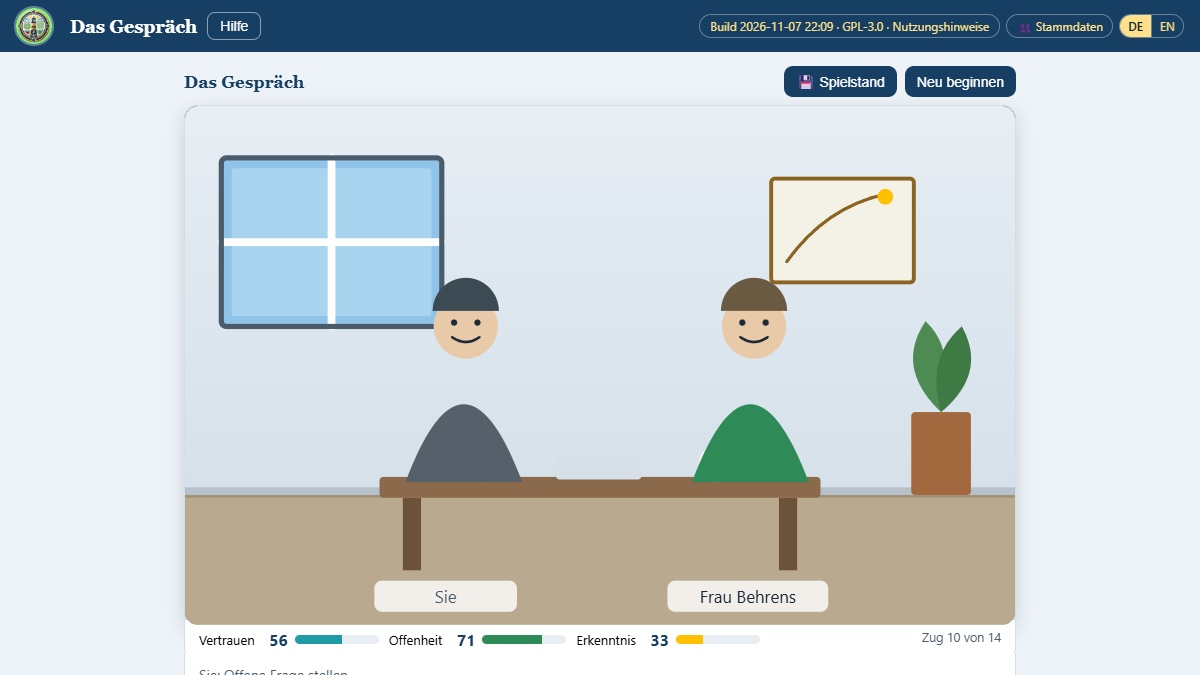
Fourteen moves, six interventions, three quantities: trust, openness, insight. A learning game for conversational skills – and why advice is a blow.
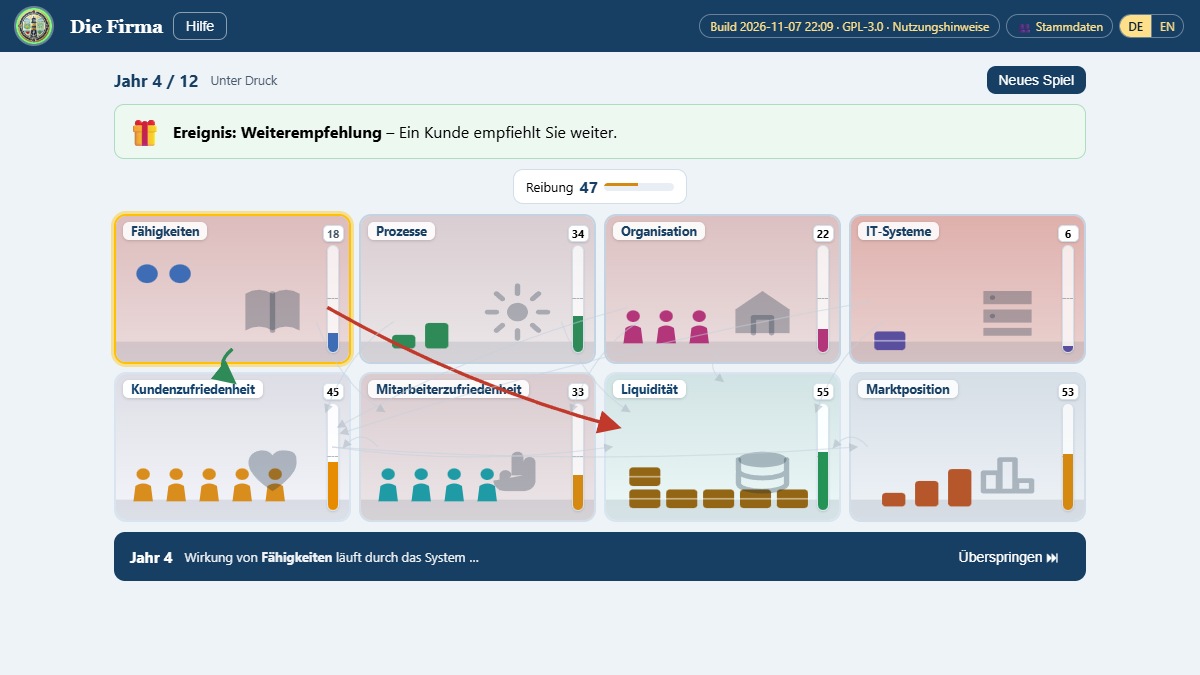
Steer a company for twelve years: invest in capabilities, processes, organisation and IT – and find out why the weakest level limits all the others.
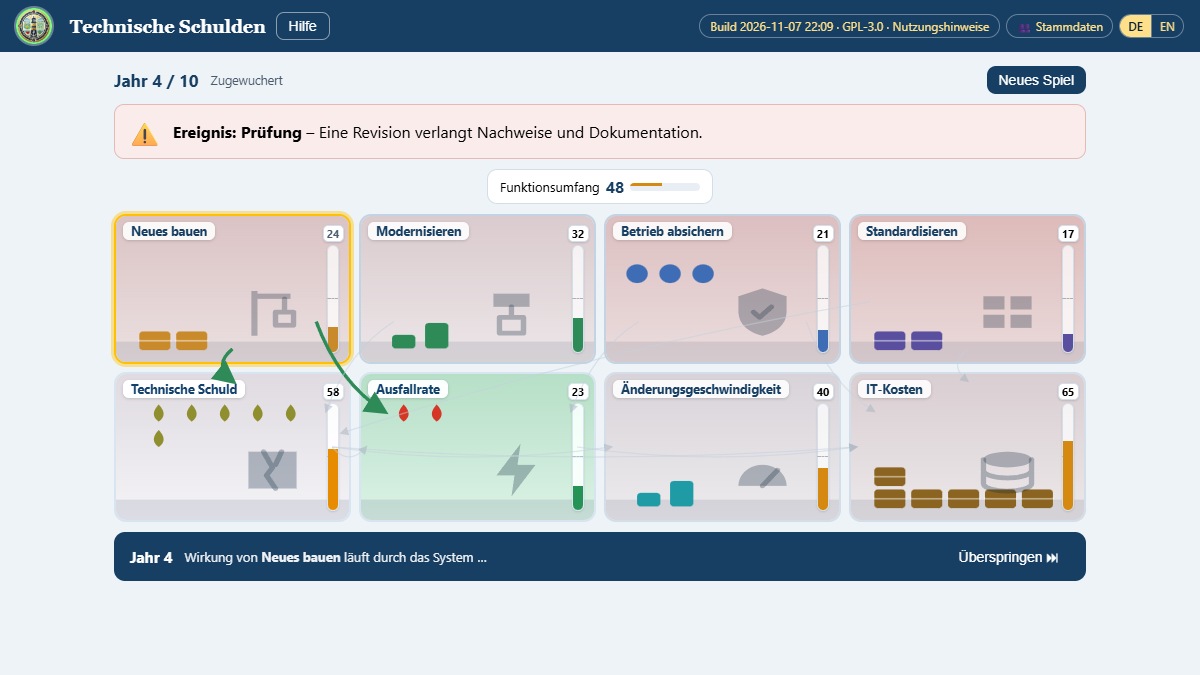
Technical debt explained as a game: steer an IT landscape for ten years and find out how the debt charges interest when you only ever build new.
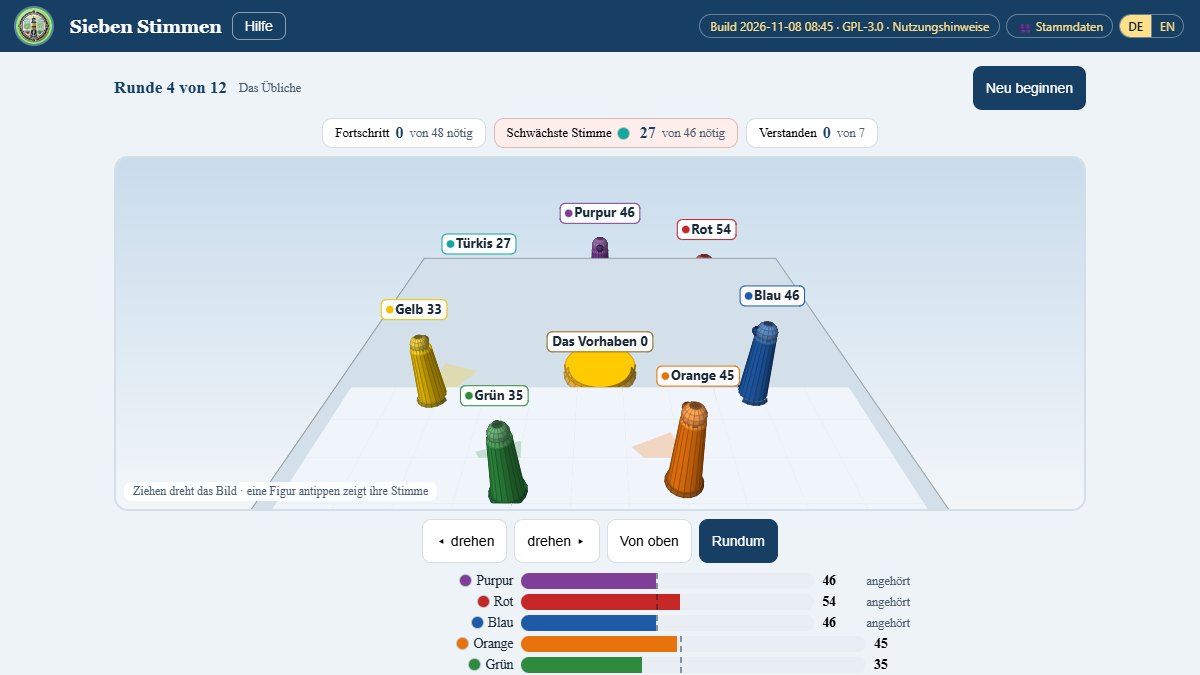
Free 3D browser game on the Values Prism: twelve rounds, one action per round – and it is the weakest voice that counts, not the sum.
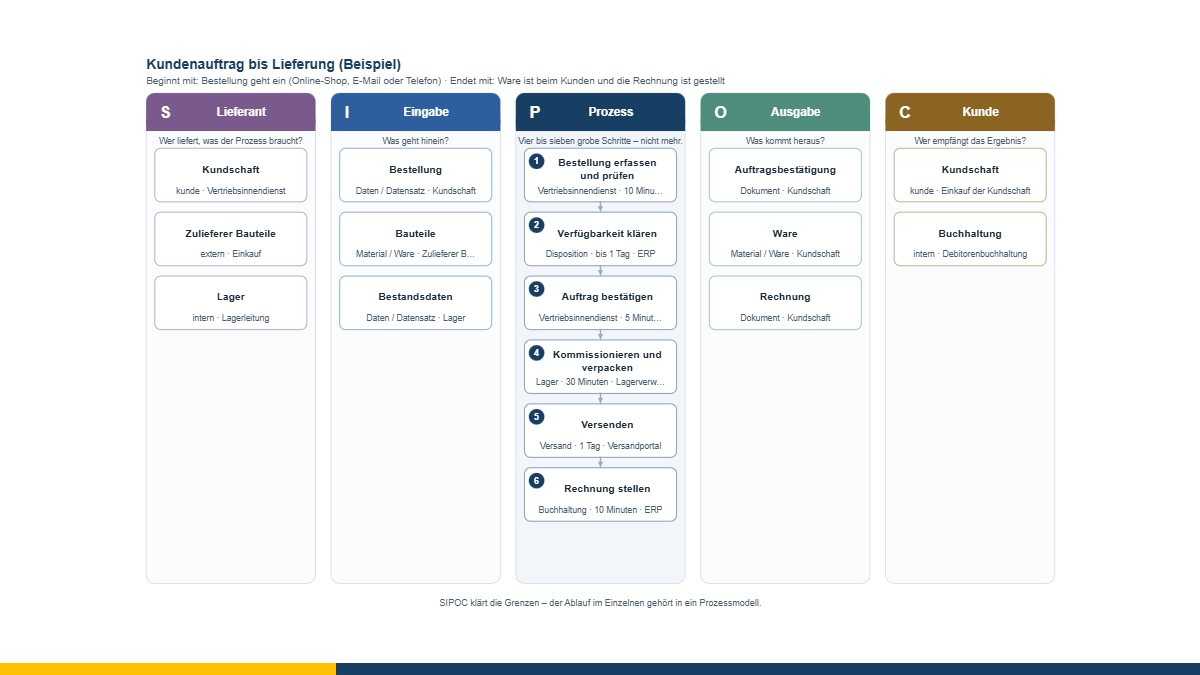
Settle the boundaries of a process before anyone models it: five columns, four to seven coarse steps, requirements on every input and output.
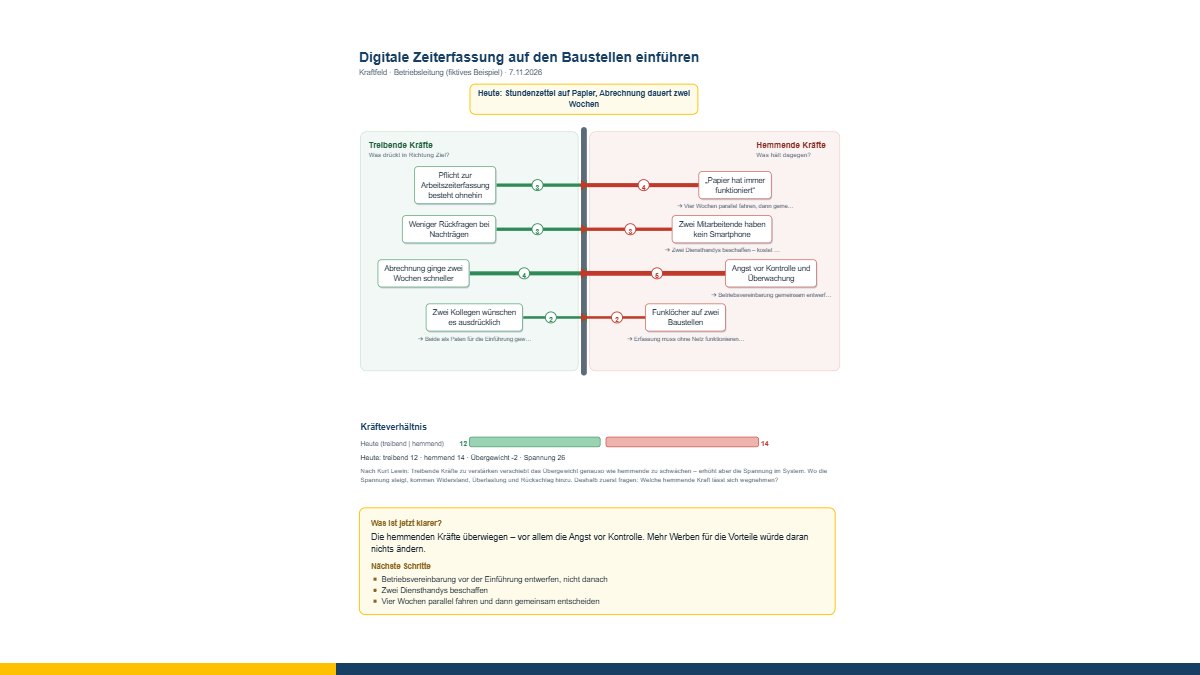
Driving and restraining forces with strength 1 to 5, plus the upper hand and the tension – and the view “What if …”. Free, in your browser.
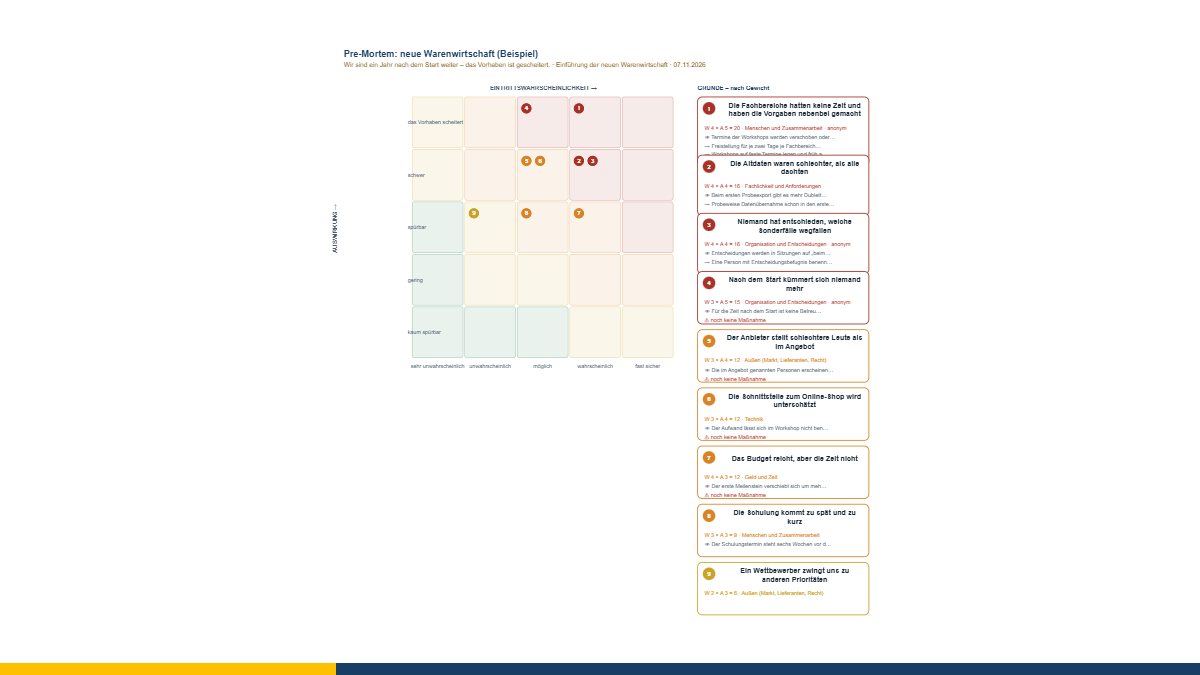
We are a year on and the project has failed – why? Collect reasons, anonymously if needed, assess them and hand them over as risks.
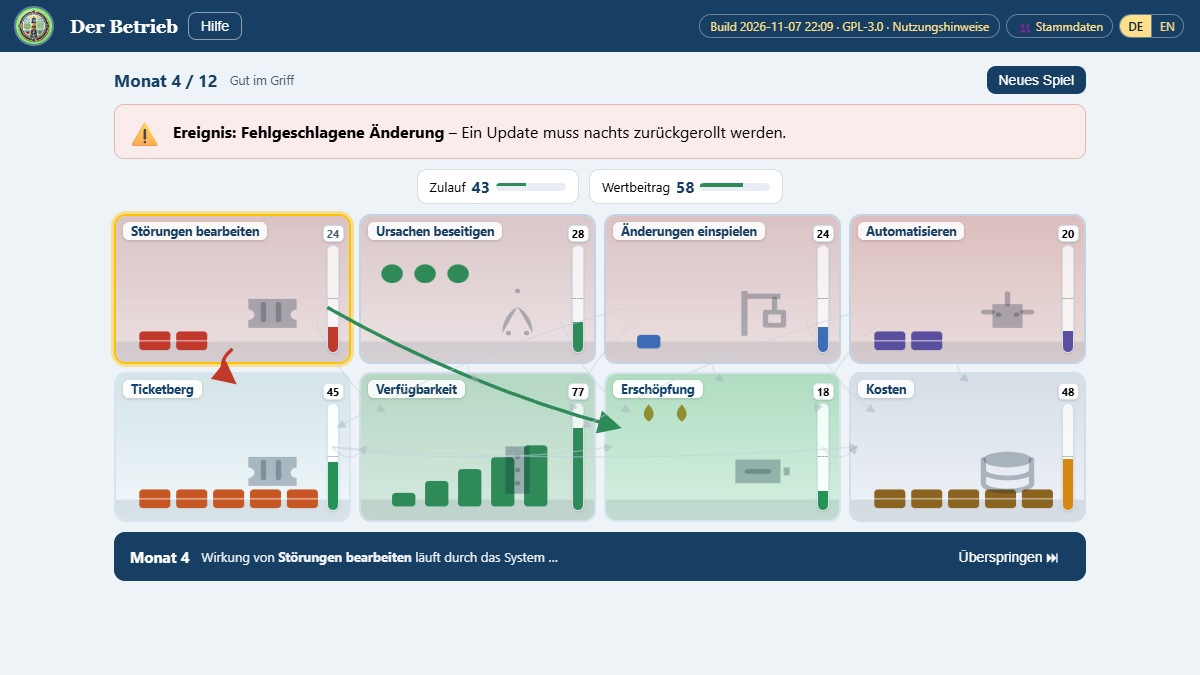
Twelve months of IT operations as a game: handle incidents, remove root causes, automate – and escape the spiral of ticket backlog and exhaustion.
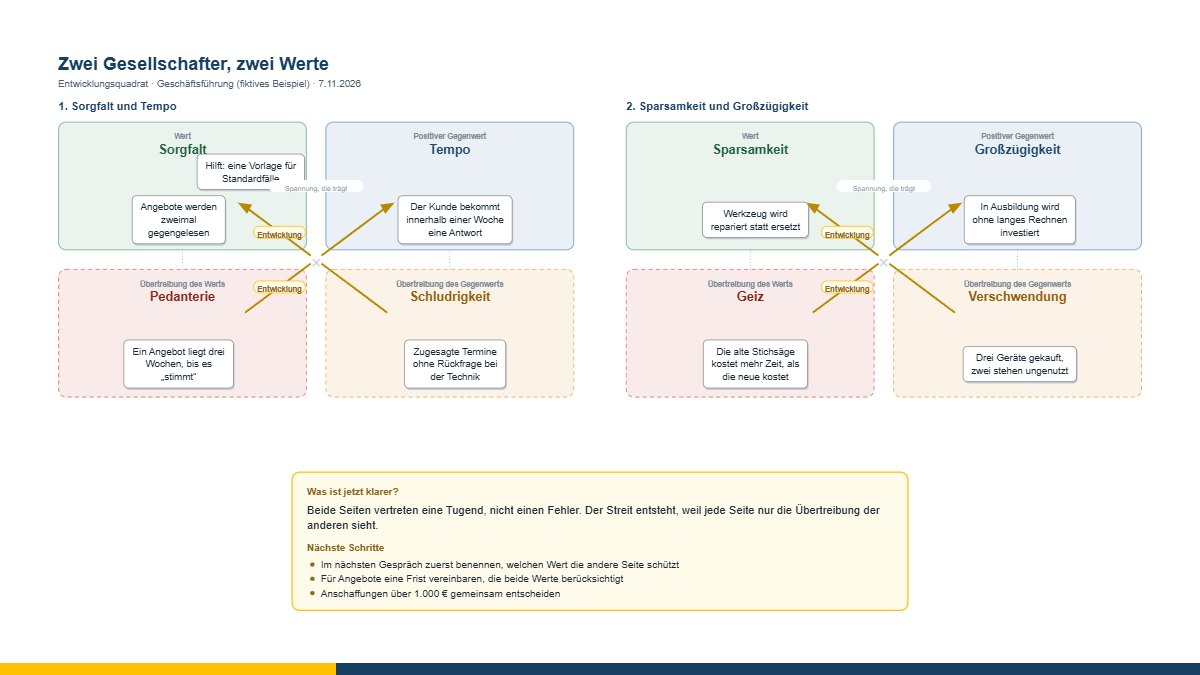
Four fields, two diagonals: the values and development square shows that both sides of an argument stand for a virtue. Free, in your browser.
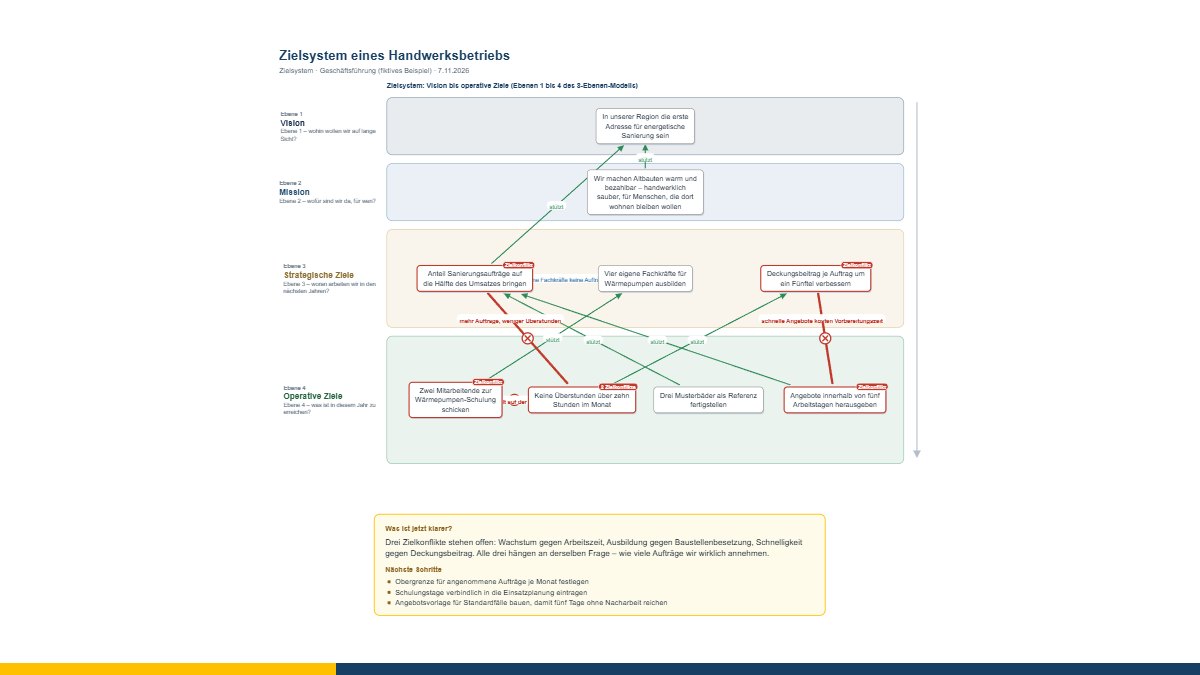
Link goals from vision to operational level with supports, is a prerequisite for and conflicts with, show goal conflicts and pass them to the 8EM Modeller.
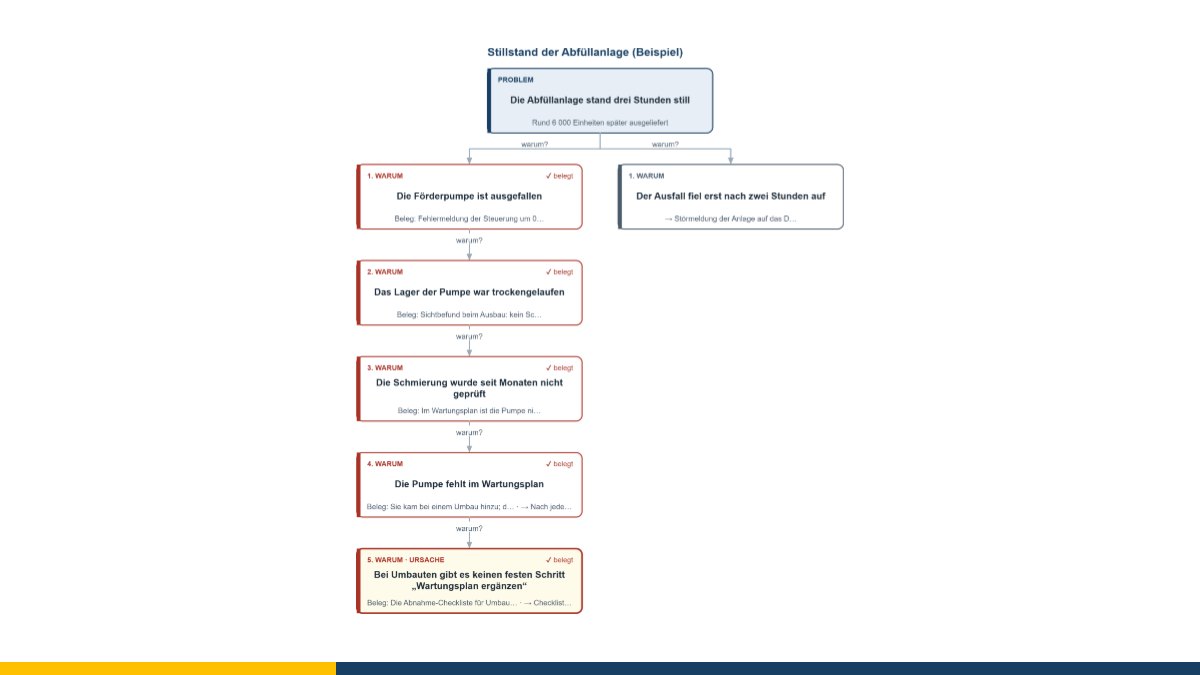
The 5-why method as a tool: a why-chain with evidence, measure and ownership at every step, several strands and blame-free wording.
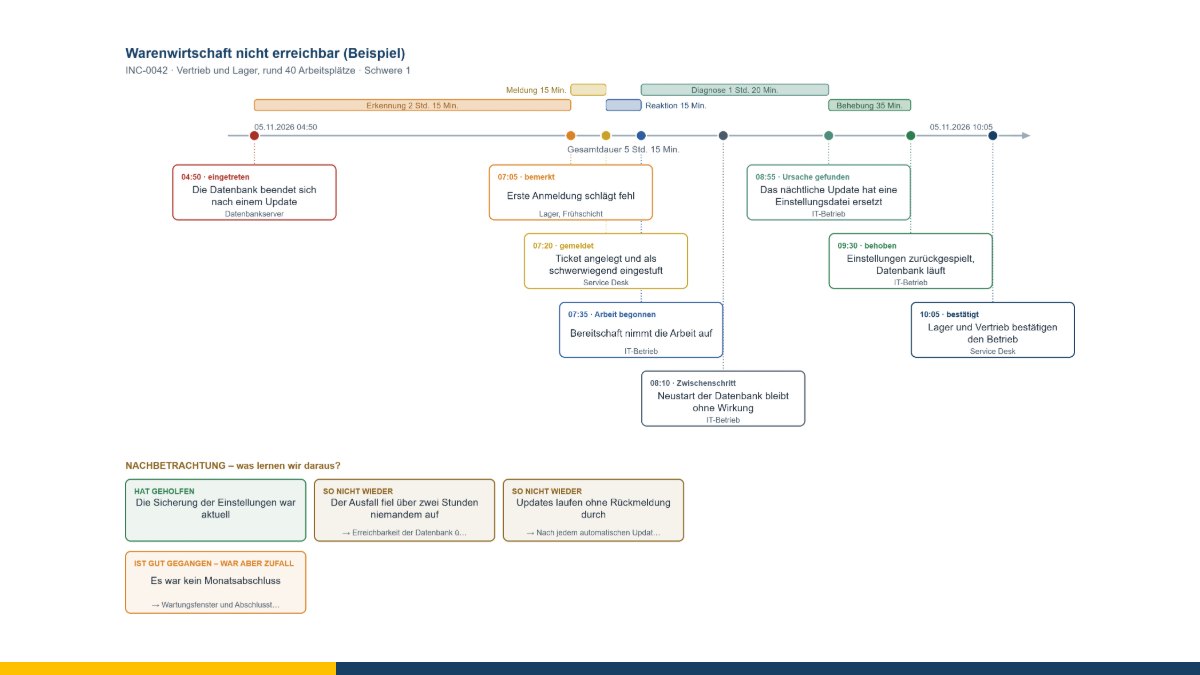
Put the events of an outage on a timeline to get detection time, response time and downtime; record lessons and measures blame-free.
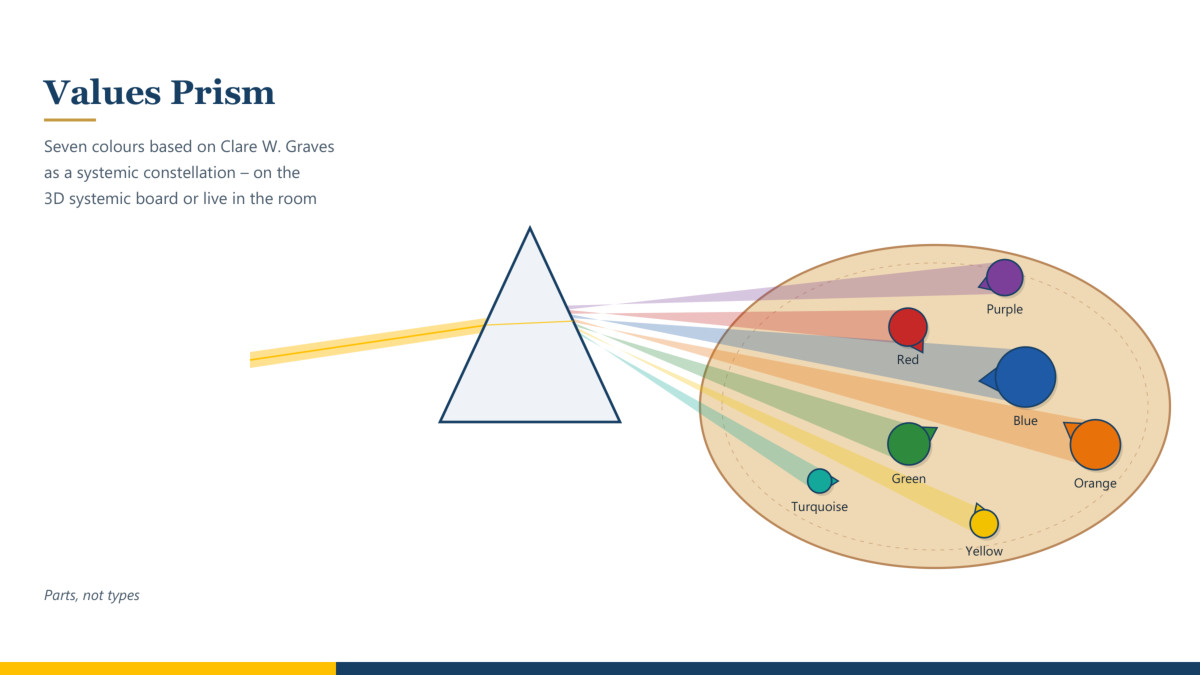
With the Values Prism you set up the colours of Spiral Dynamics based on Clare W. Graves in coaching – on the 3D systemic board or live, with Theory U.
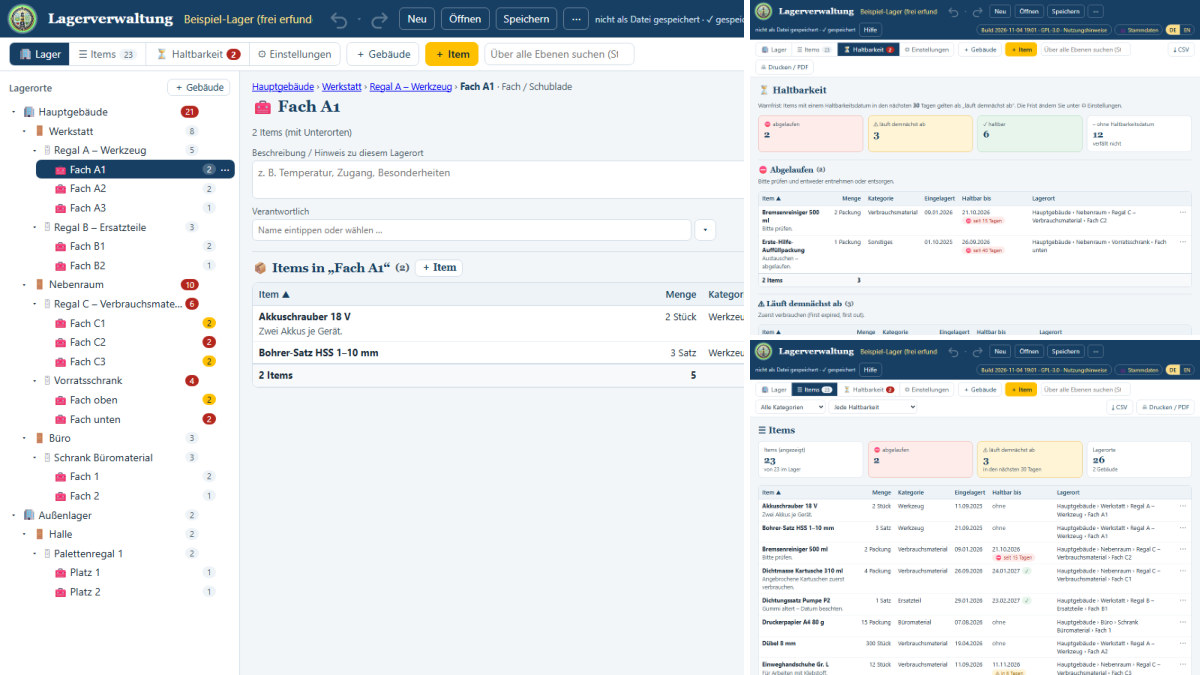
Organise stock as it sits: rooms, shelves, compartments, items with best-before dates and minimum stock, a reorder list – free, for teams, phone, offline.
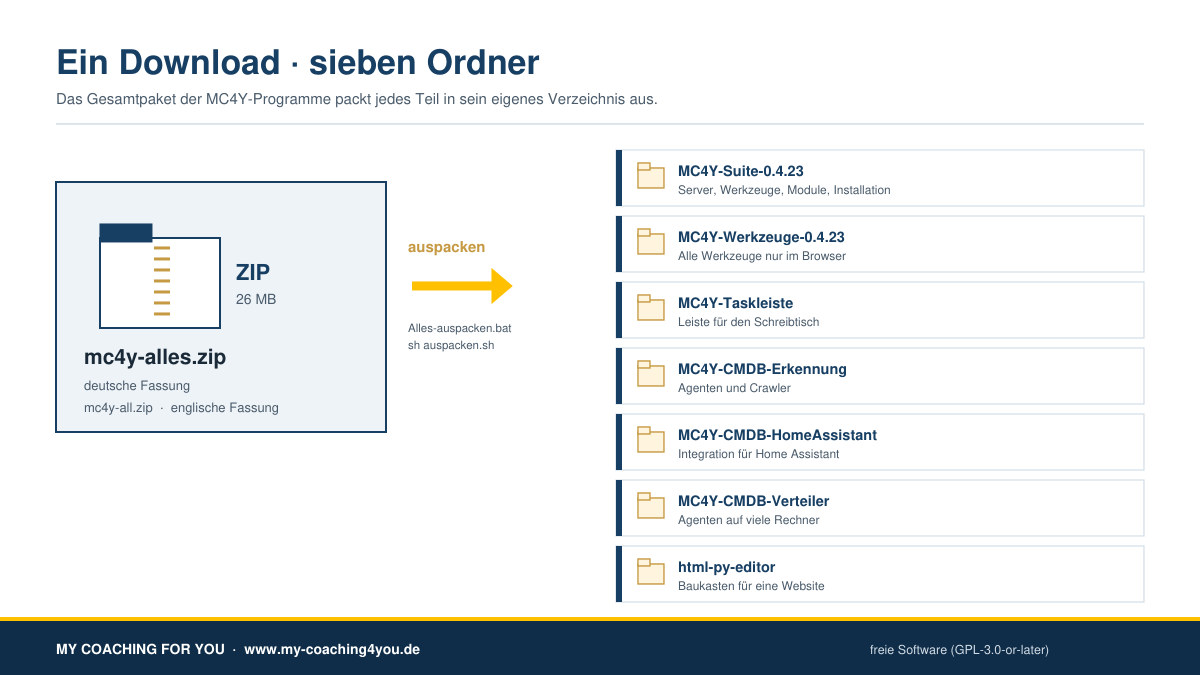
Suite, tools, taskbar, agents and crawlers in one file: the bundle unpacks every part into a folder of its own – in German or English.
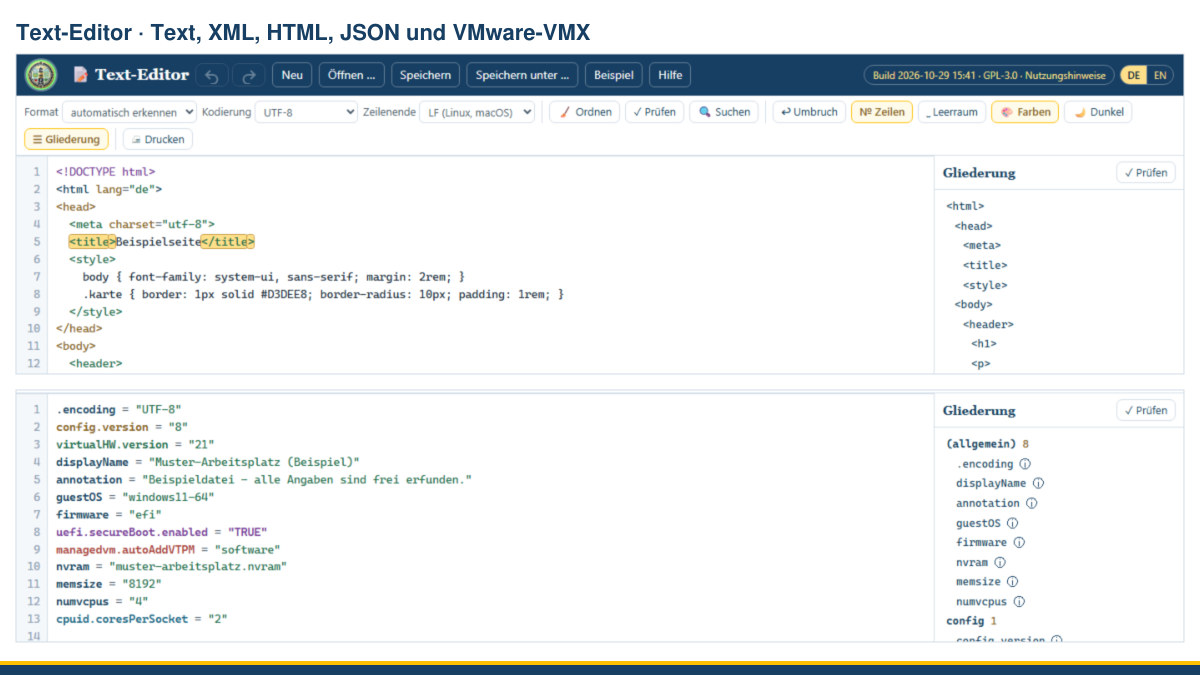
Edit text, XML, HTML, JSON and VMware VMX in your browser: matching tags in colour, check the structure, tidy, find and replace – free of charge.
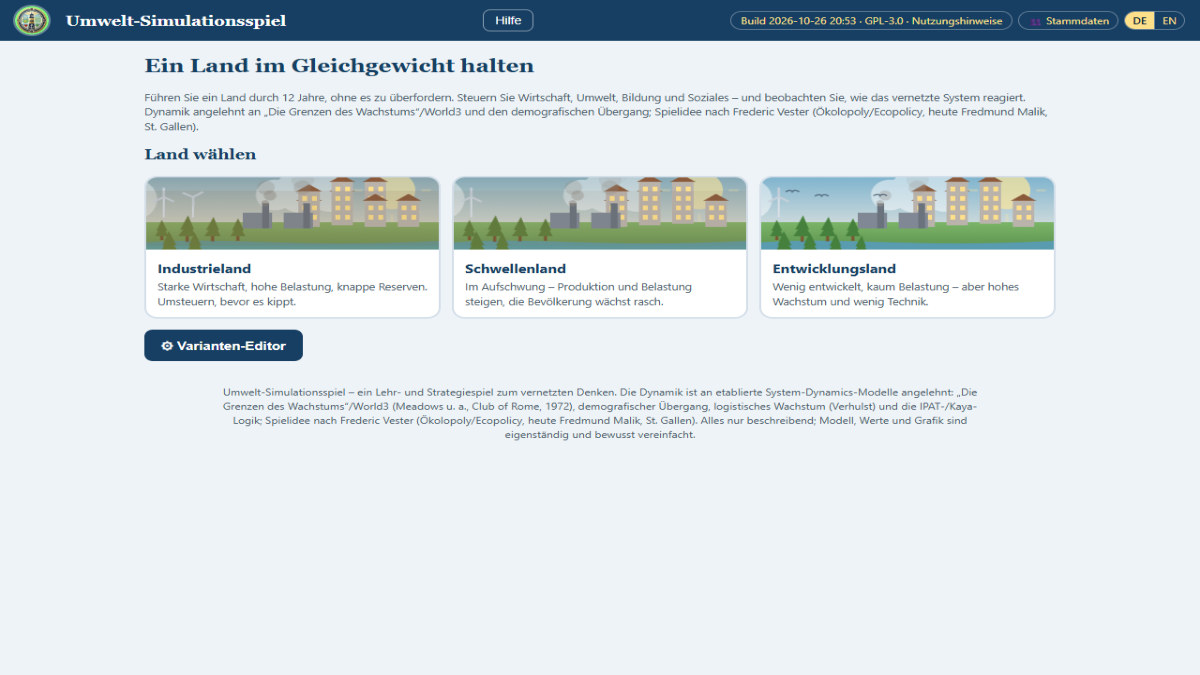
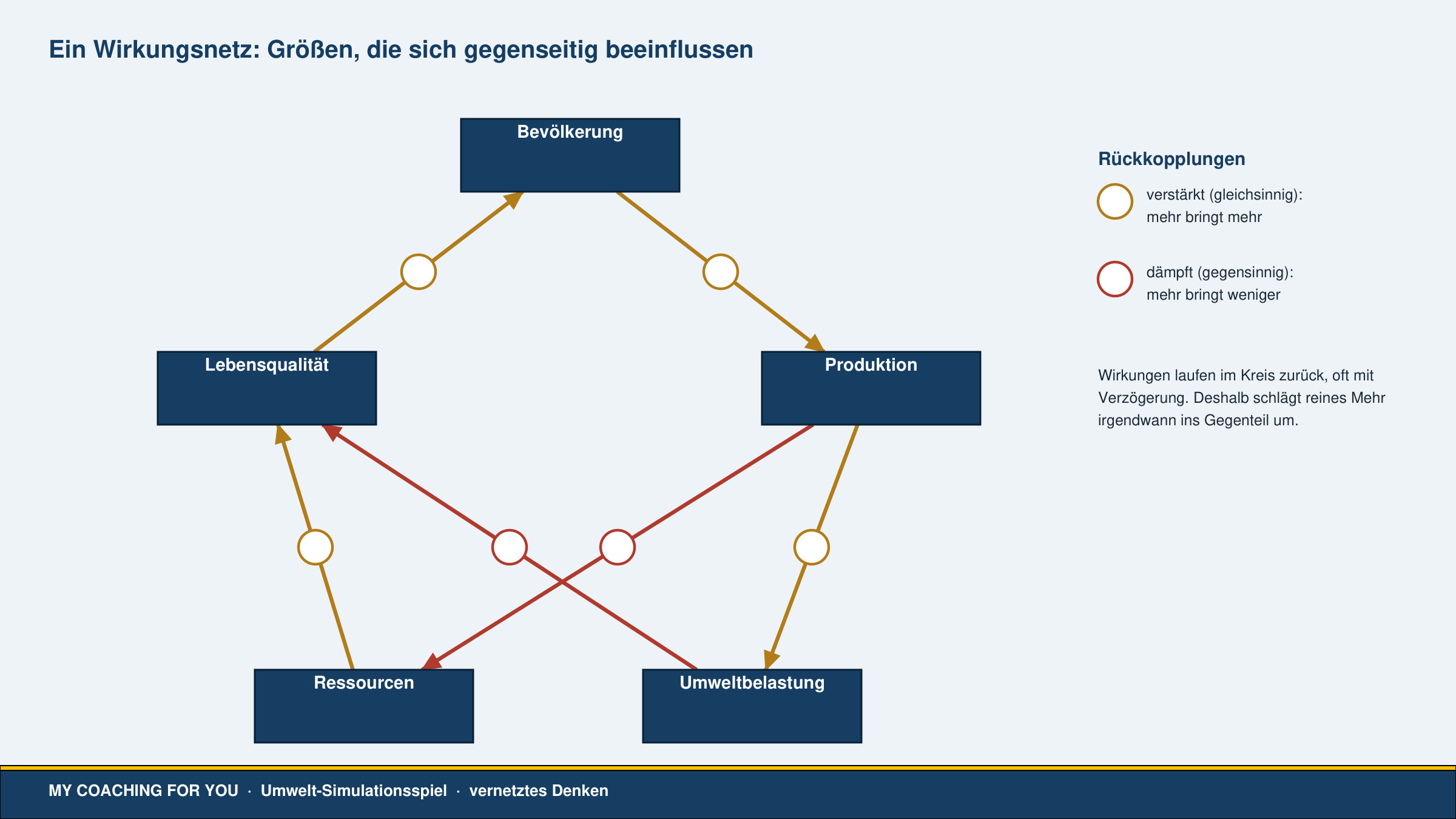
Lead a country over 12 years: steer four levers, watch the feedback loops, keep it in balance – a game about networked thinking, in your browser.
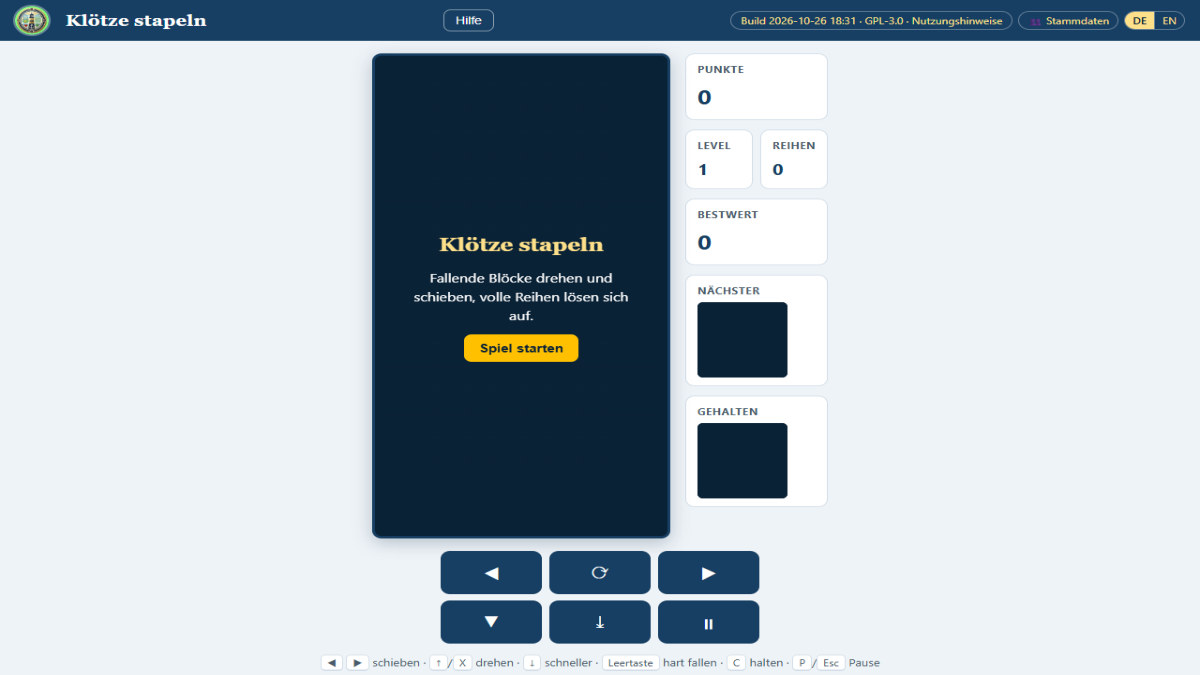
Rotate and stack falling blocks, clear full rows – a self-contained stacking game with mouse, keyboard and touch, free in your browser.
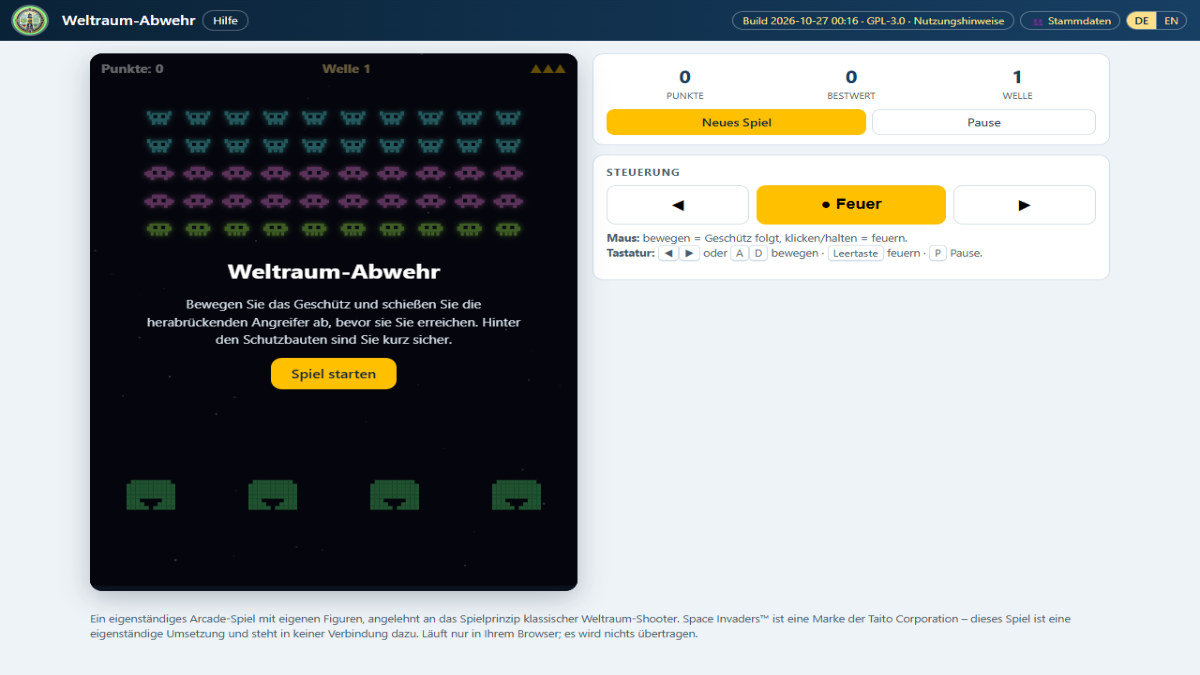
Fend off a formation of alien invaders – with mouse, keyboard or touch, shields, waves and a best score. A self-contained arcade game, free in your browser.
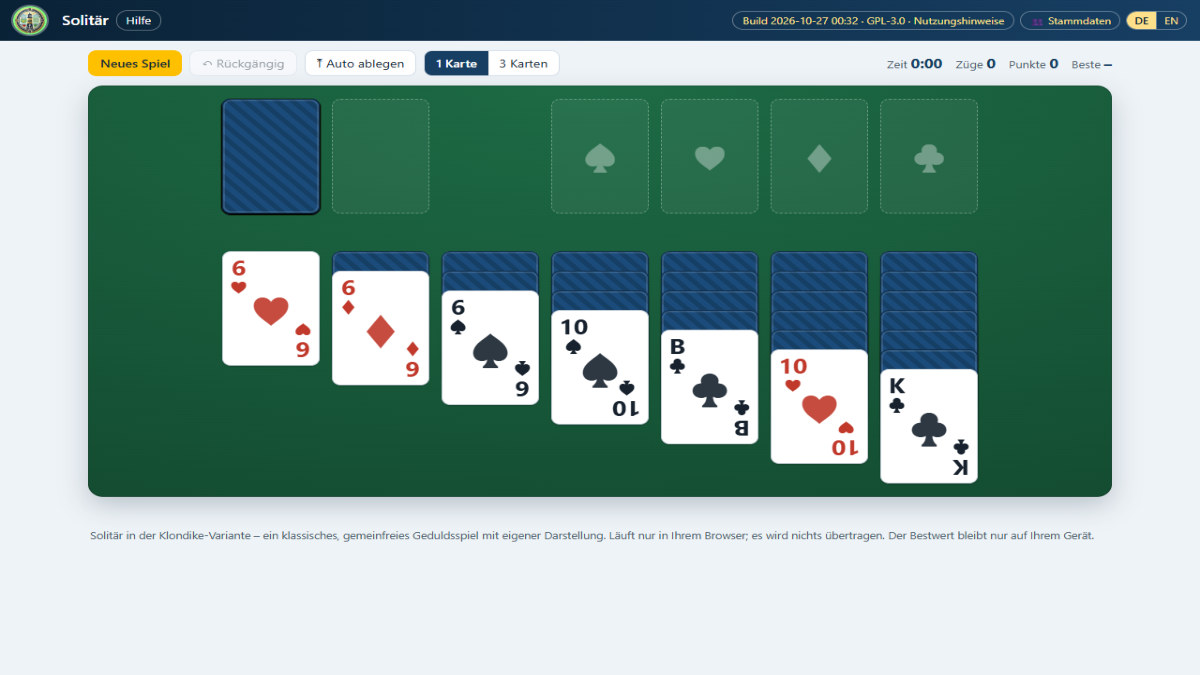
Klondike solitaire with a choice of 1-card or 3-card deal: place cards with the mouse, double-click sends them to the foundations automatically, with Undo
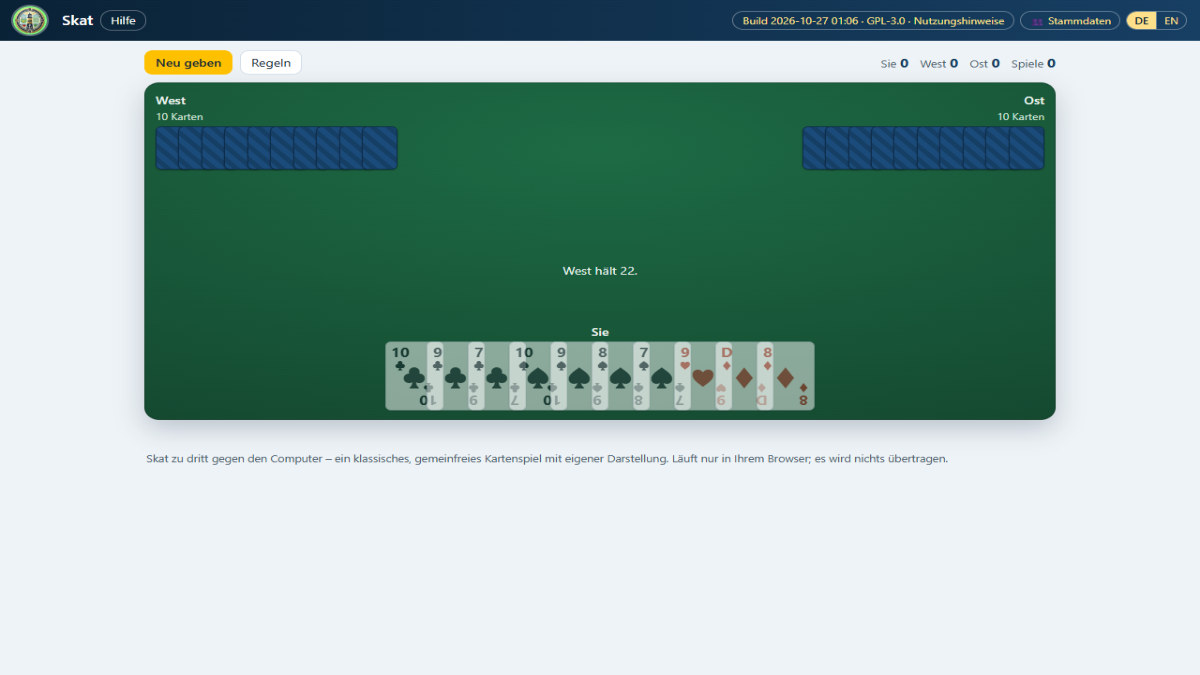
The classic German card game in your browser: bidding, Grand, suit game and Null, discarding to the skat and a correct scoring of card points and game value
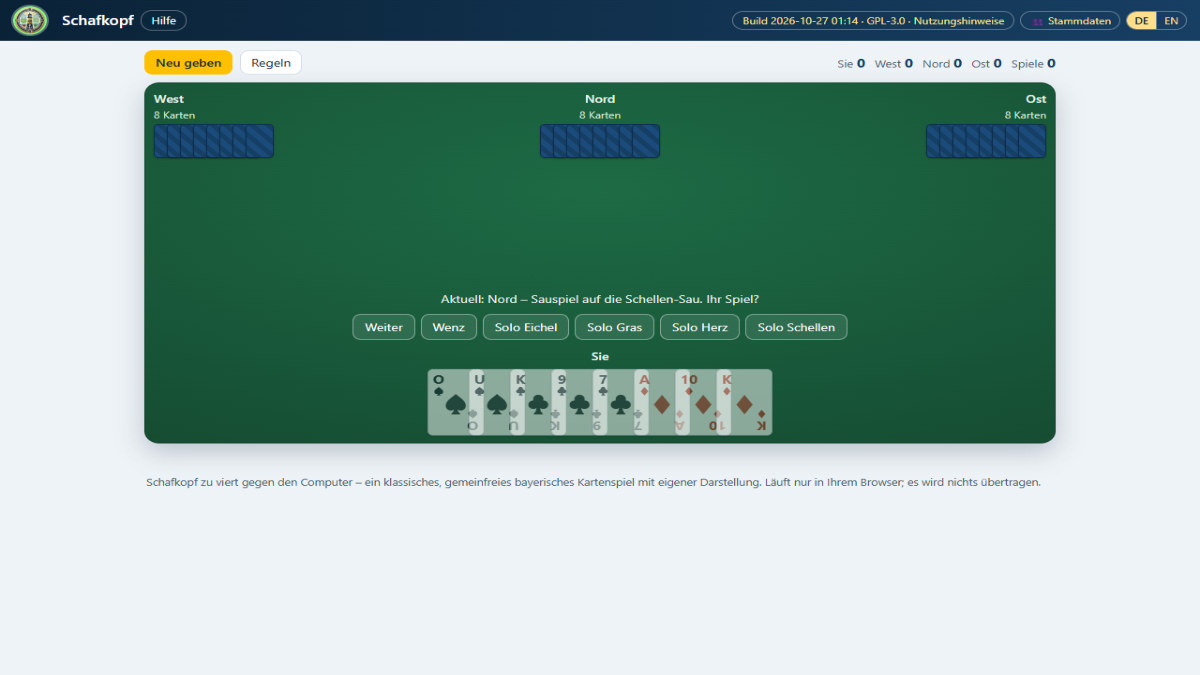
The Bavarian card game in your browser: Sauspiel, Wenz and Solo with long cards, hidden partner search via the called ace and correct scoring with runners
What lies behind the environment simulation game? An accessible introduction to networked thinking, feedback loops and the models behind it – from the Limits
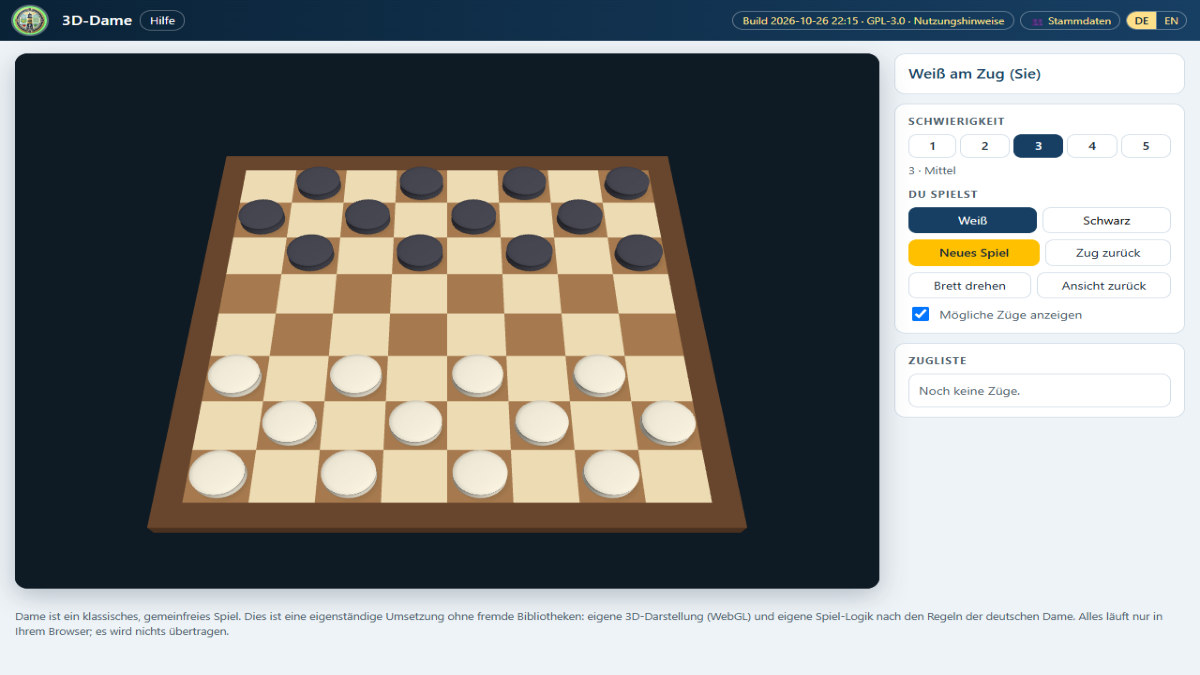
German draughts in 3D against the computer: forced capture, multiple jumps, five difficulty levels and a rotatable camera – free in your browser.
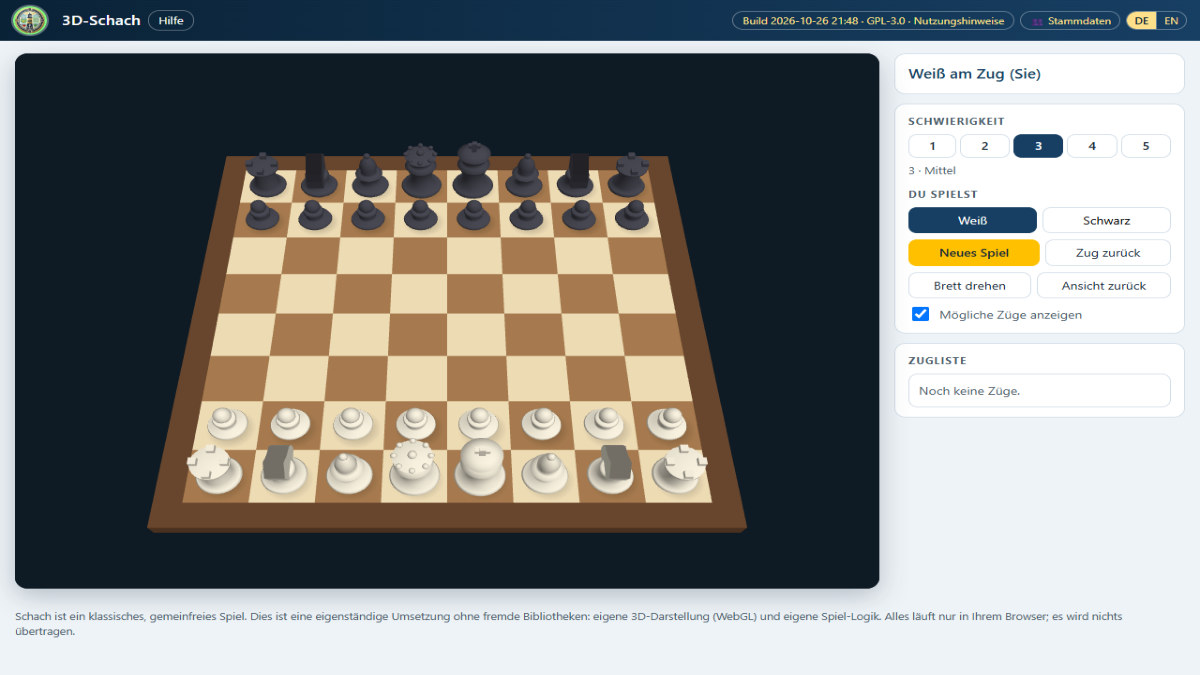
Chess on a spatial board against the computer: five difficulty levels, all the rules, move hints and a rotatable camera – free in the browser.
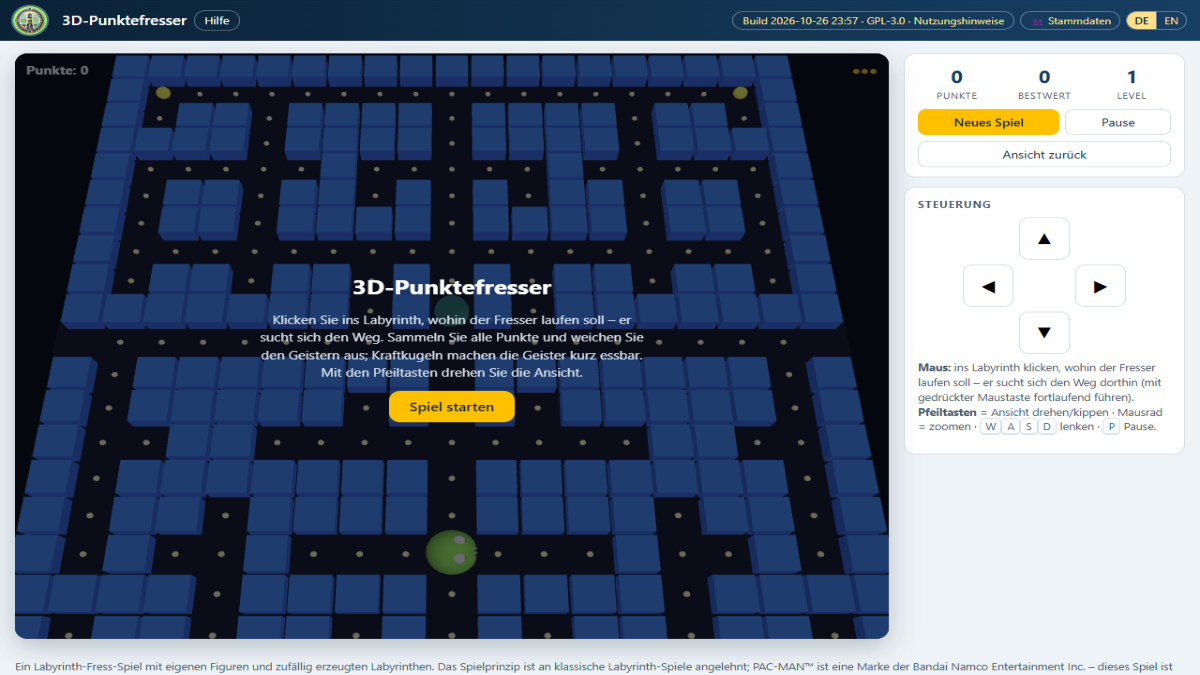
A maze munching game in its own 3D presentation: collect dots, dodge ghosts, become the hunter with power pills – with mouse, keyboard and a rotatable camera
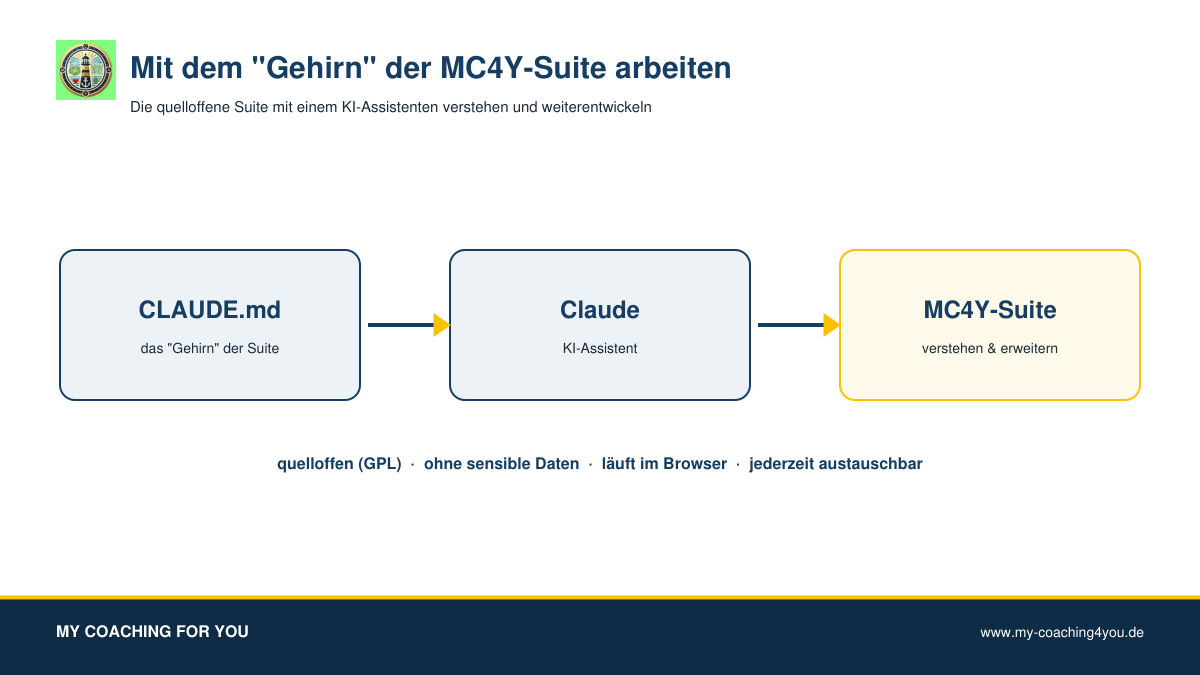
The MC4Y Suite is open source. I provide its „brain“ – a documentation file that lets you understand and extend the suite with an AI assistant.
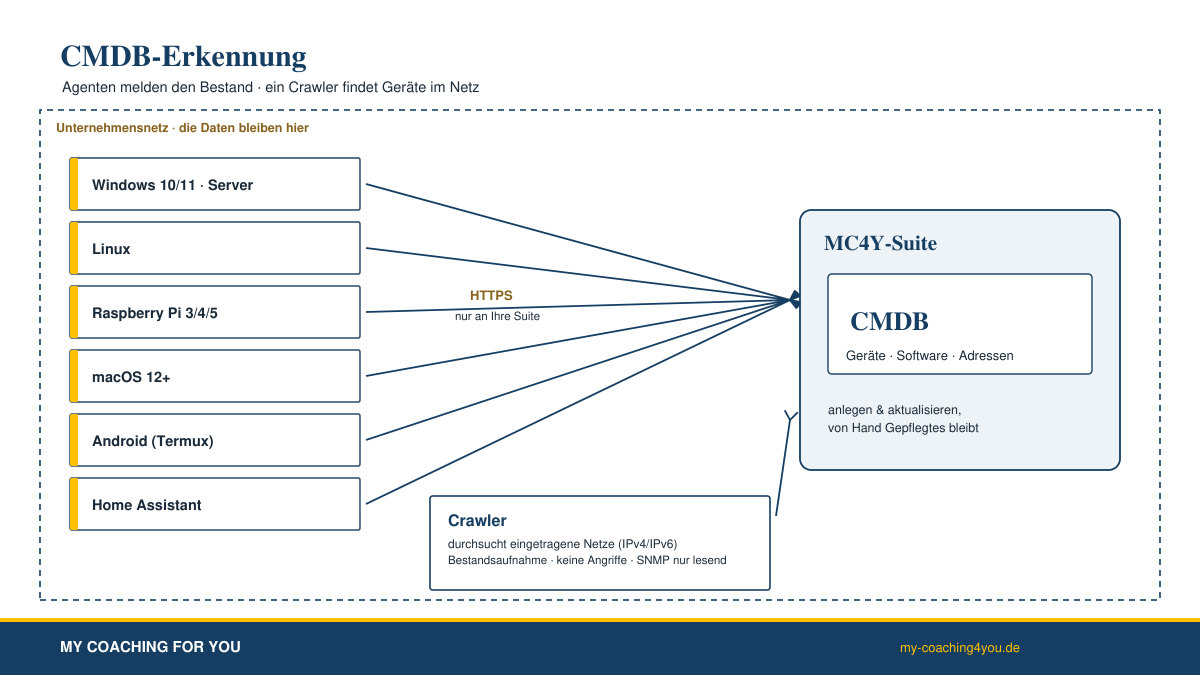
Agents and a crawler record devices, software and addresses in the CMDB automatically – for Windows, Linux, Raspberry Pi, macOS, Android and Home Assistant.
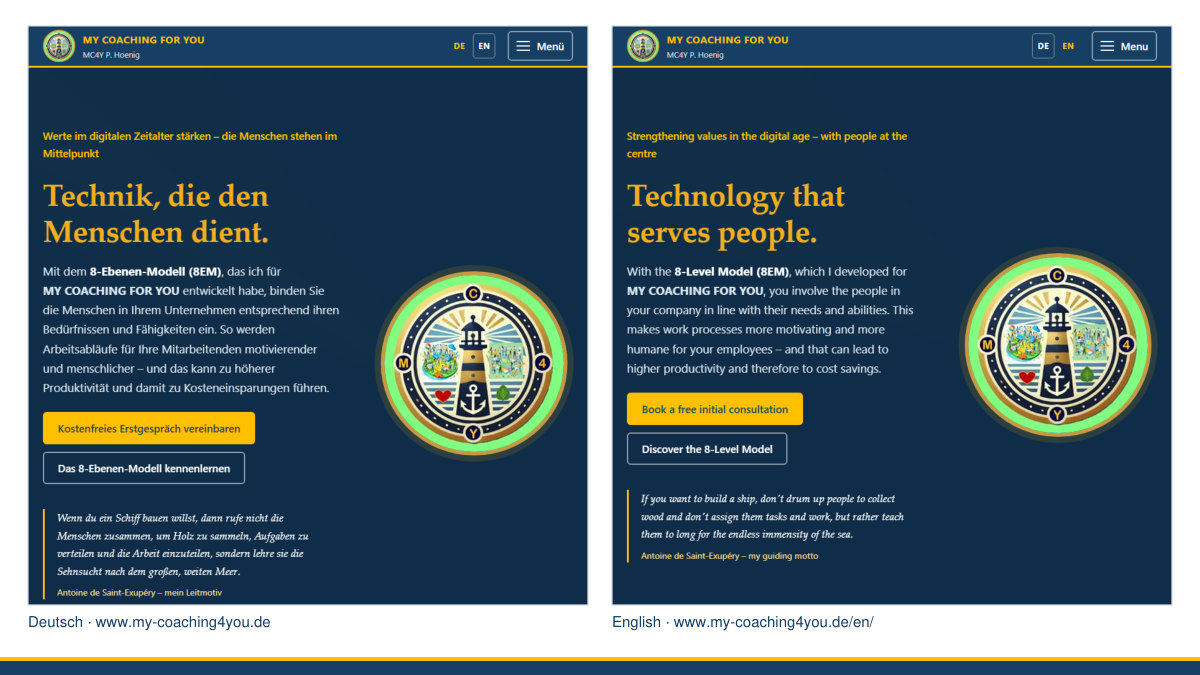
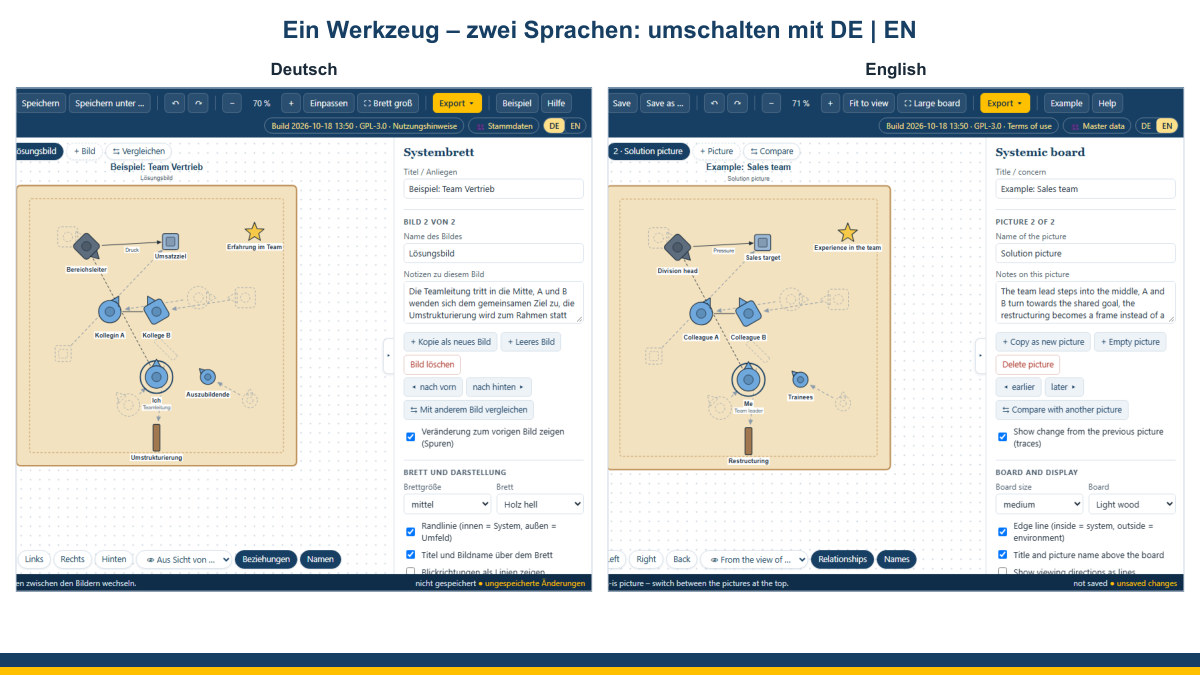
English version of the website, language choice by browser setting without cookies, and an editor that creates language versions and shows translation status.
All tools and questionnaires can now be used in German or English – DE/EN switch, language from your browser, nothing is stored without a click.
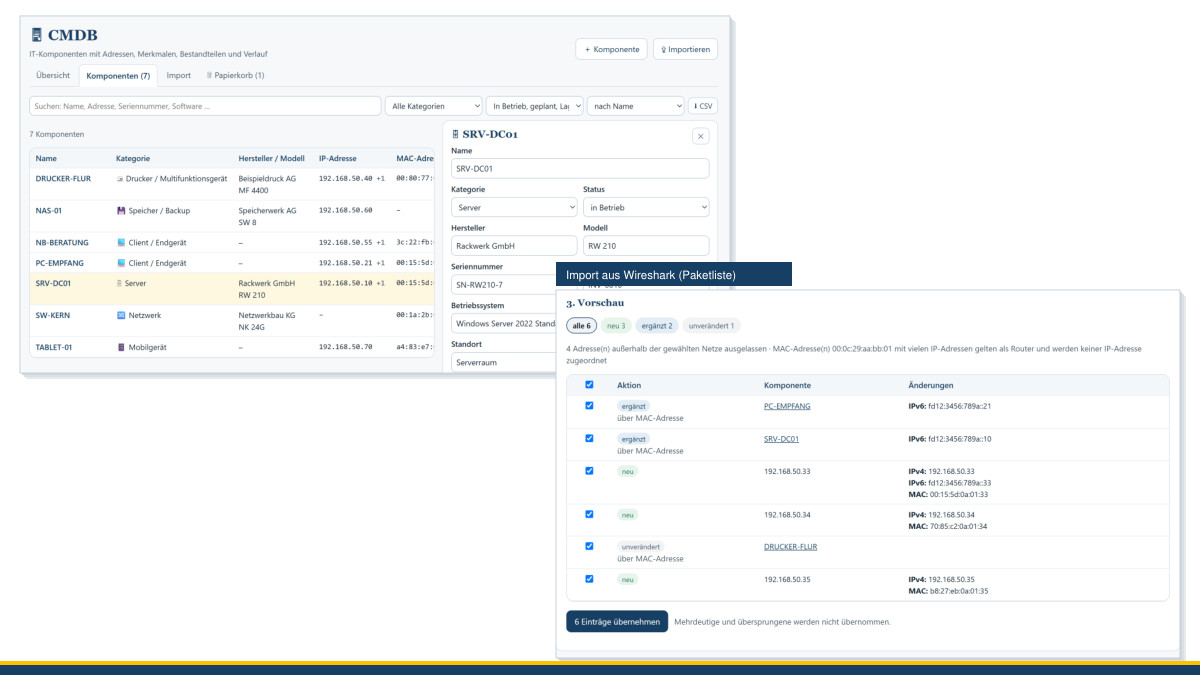
The MC4Y Suite's configuration database: devices, addresses and software from Excel, AD, DHCP and Wireshark – with your own categories and the 8EM lifecycle.
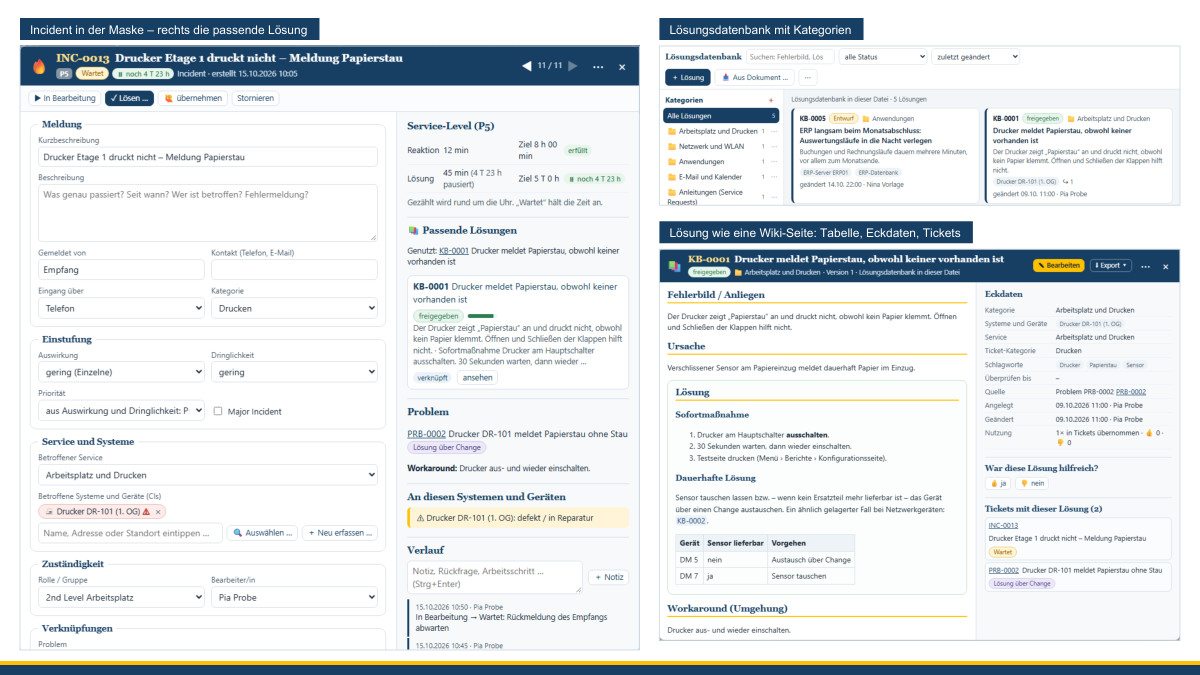
Incidents, Service Requests, Problems and Changes in clear forms – with a wiki-style solution database and devices from the CMDB, including their origin.
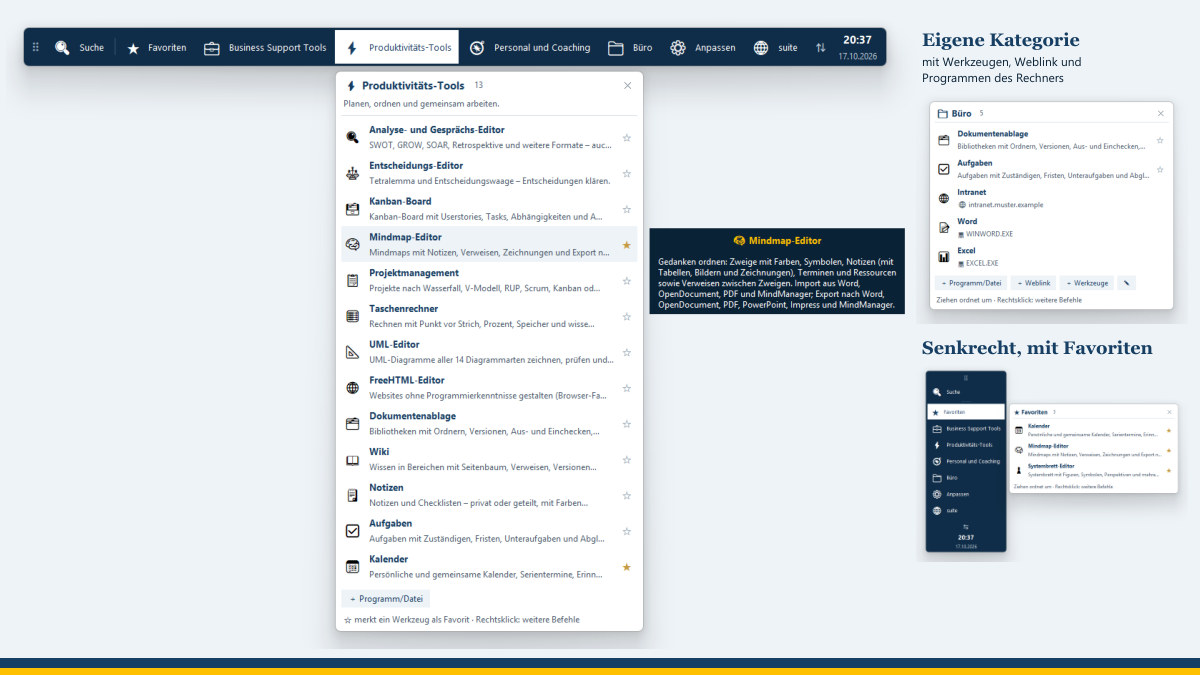
A free-floating bar for the tools of the MC4Y Suite, your own programs and web links – connected to the server and your own computer, no browser needed.
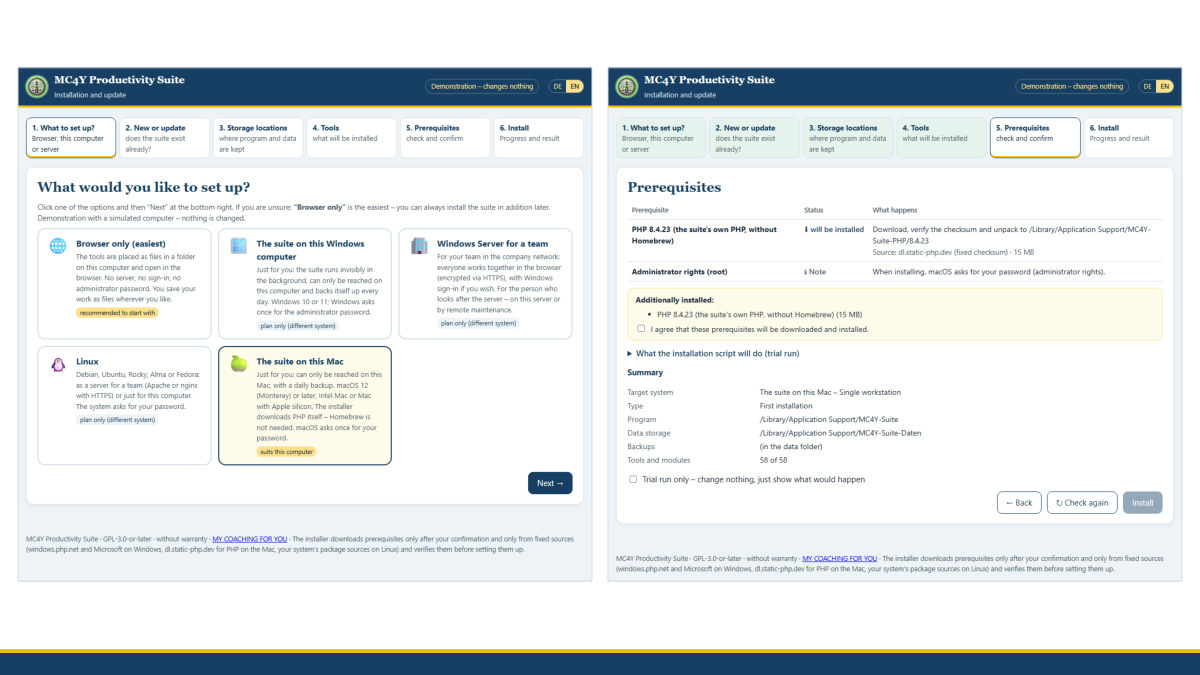
How to install the MC4Y Productivity Suite step by step – browser only, on your Windows PC, on a Mac without Homebrew or on a company network.
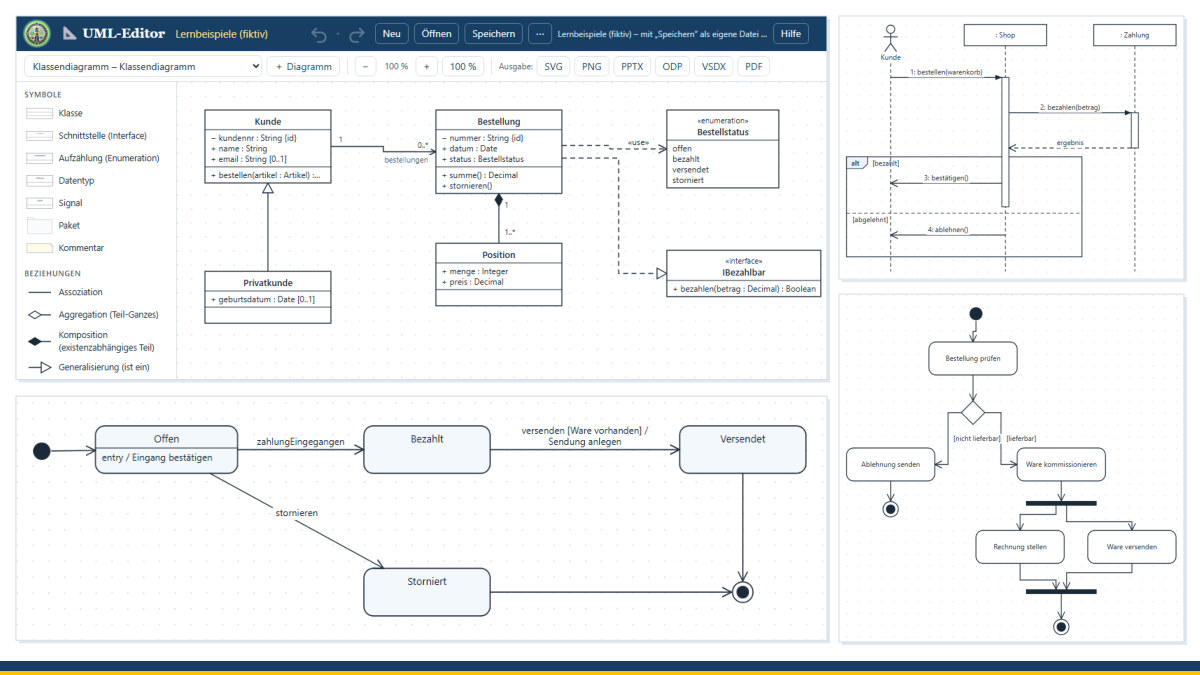
Draw and check class, sequence, activity and all other UML 2.5.1 diagrams, and export them to PowerPoint, Visio or PDF – free of charge.
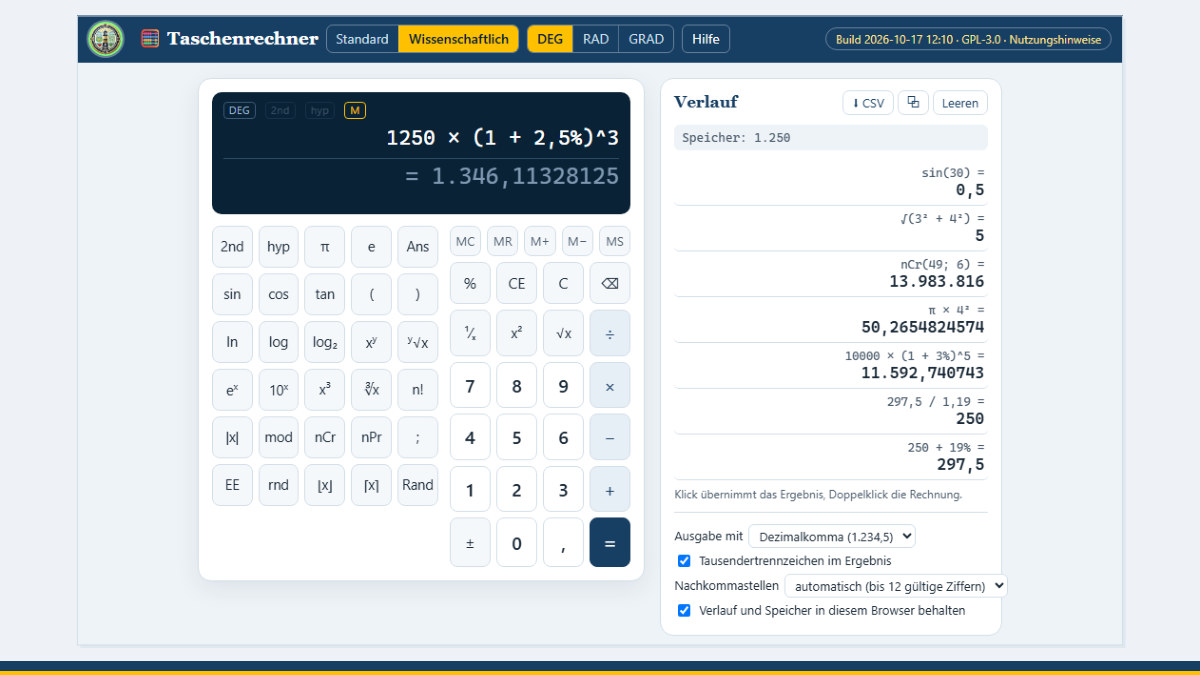
Calculate as on paper: operator precedence, percentages, memory, history, trigonometric functions, logarithms and combinatorics – free in your browser.
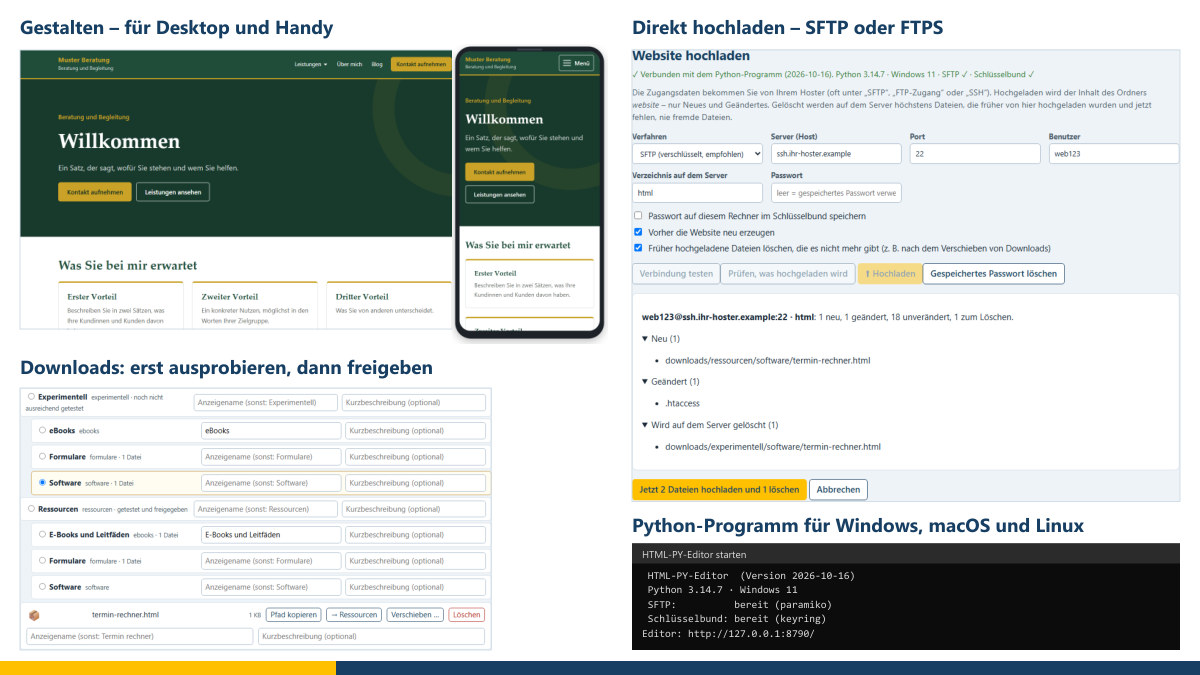
Design your own website – multilingual and with full-text search – and upload it via SFTP or FTPS: the free HTML-PY editor for Windows, macOS and Linux.
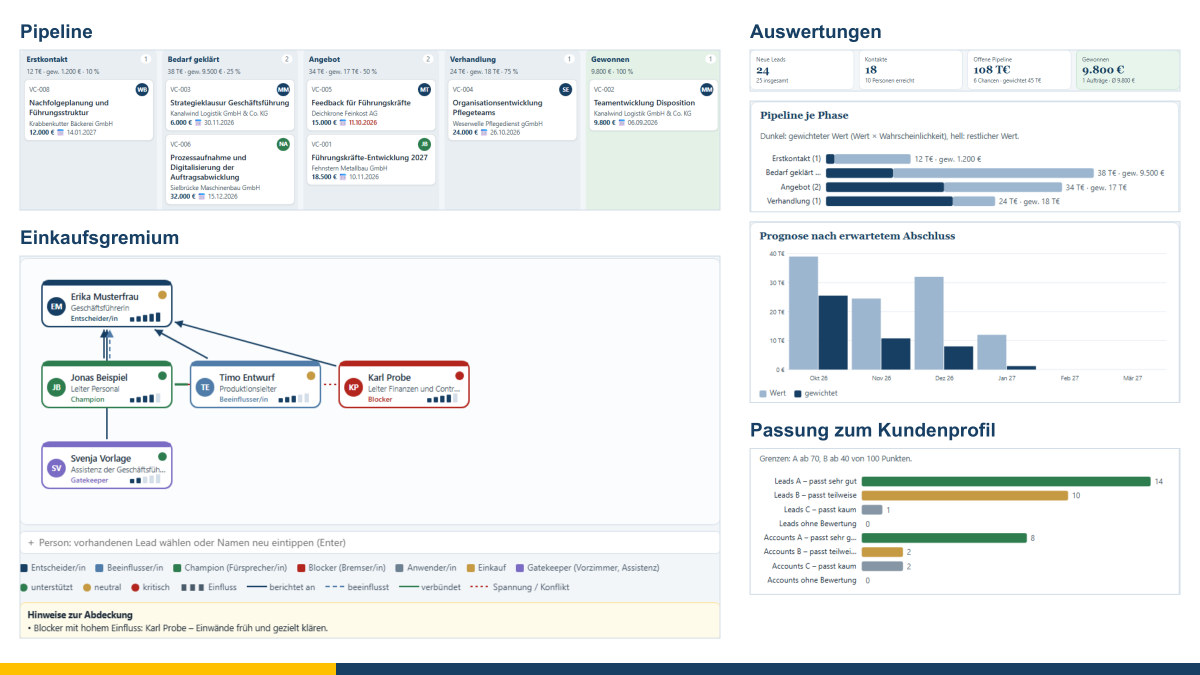
Ideal customer profile, leads, buying committee and pipeline in one tool – with research in open data and built-in data protection, no access to LinkedIn.
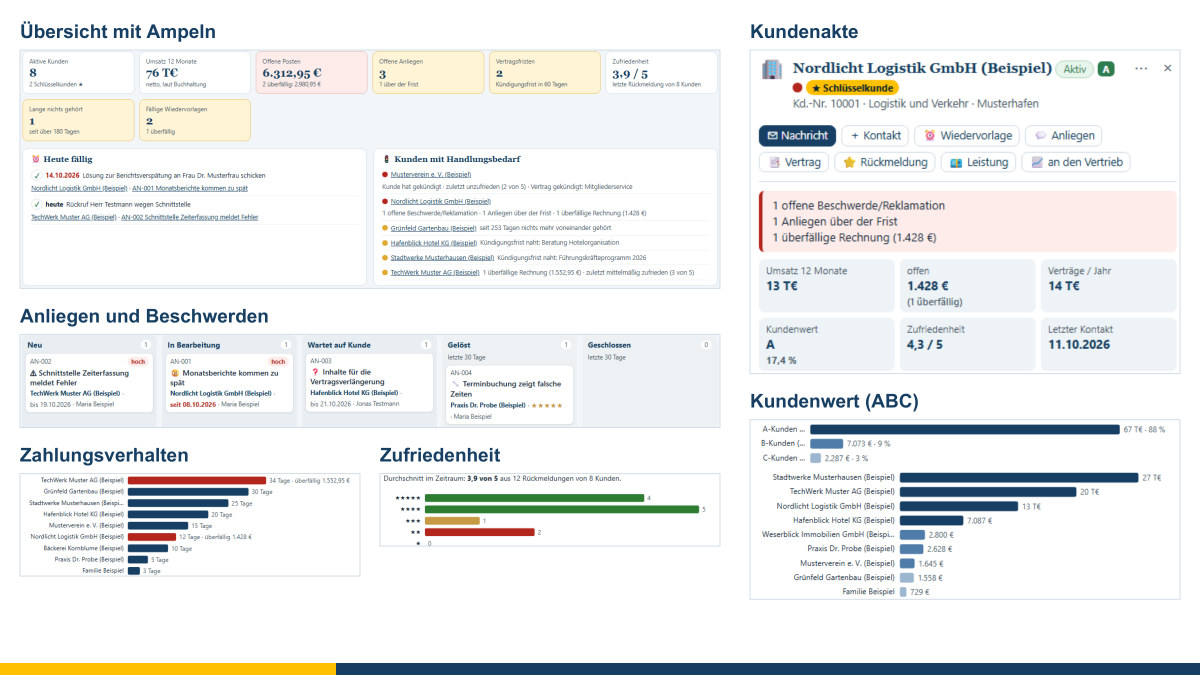
Customer records, service providers, contracts with documents and deadlines, emails from Outlook and Thunderbird, requests – linked to accounting and sales.
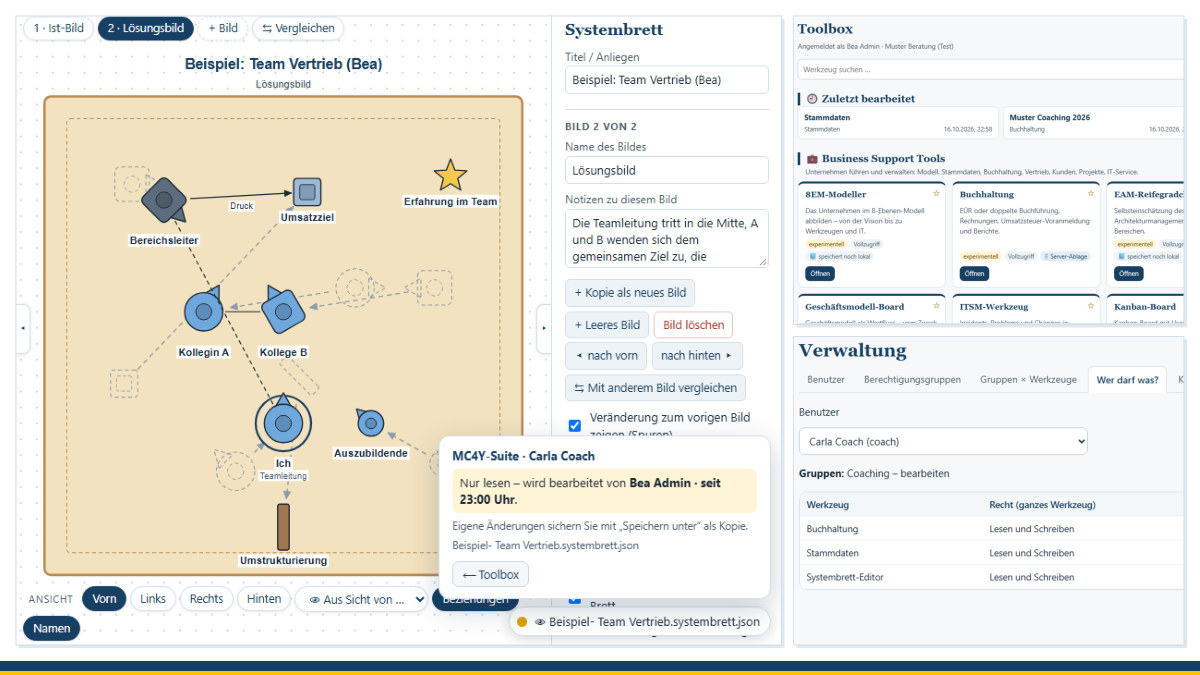
One login for all tools, plus files, wiki, notes, tasks, calendar, CMDB, solution database and stock – with permissions, locks and versions, without a cloud.
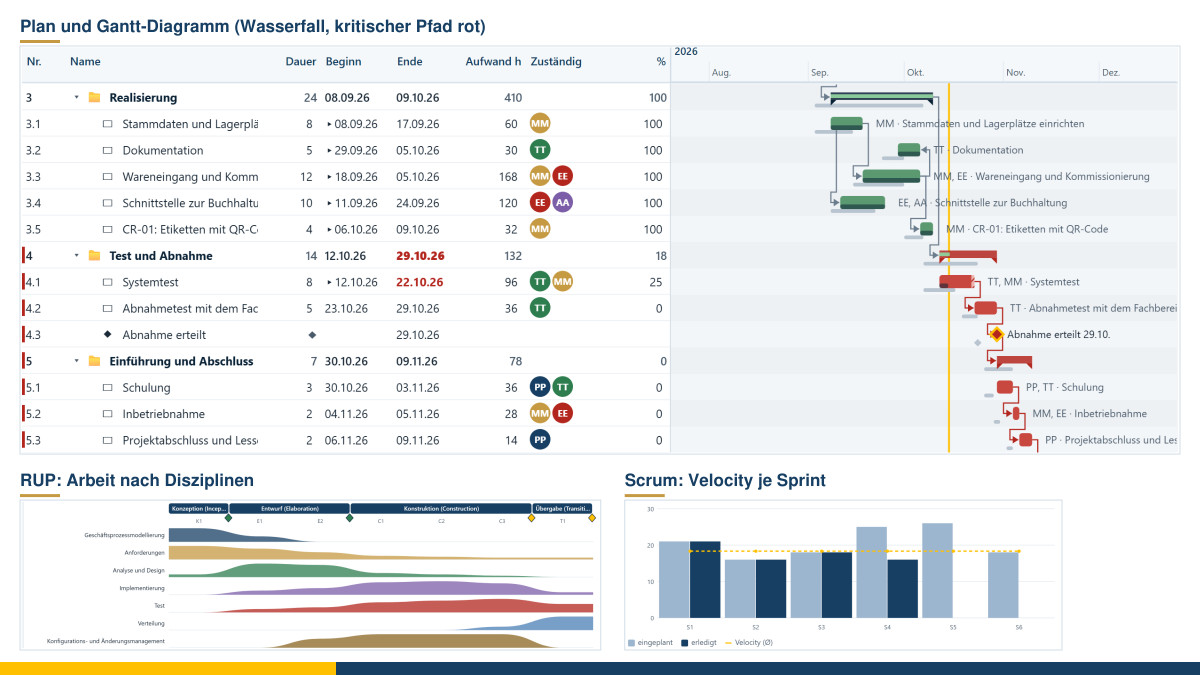
Free project management in your browser: table and Gantt chart, Waterfall, V-Model, RUP, Scrum, Kanban and hybrid, costs, time recording and billing.
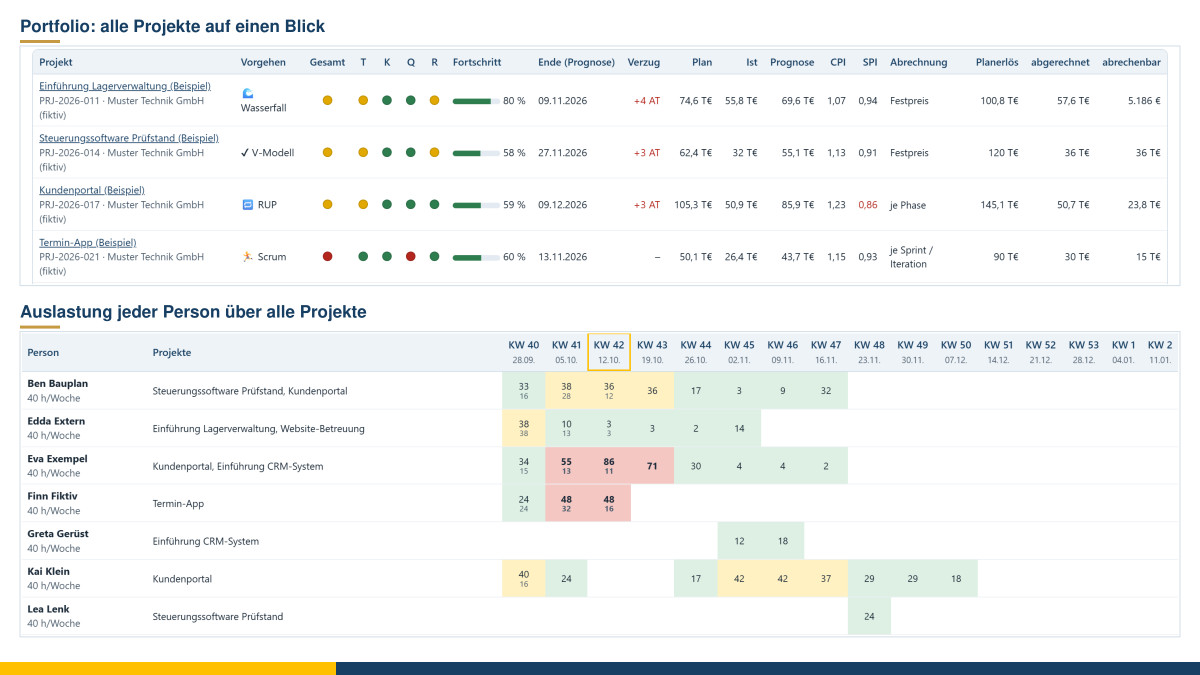
Analyse several projects together: traffic lights and earned value, each person’s utilisation across all projects and billing per process model.
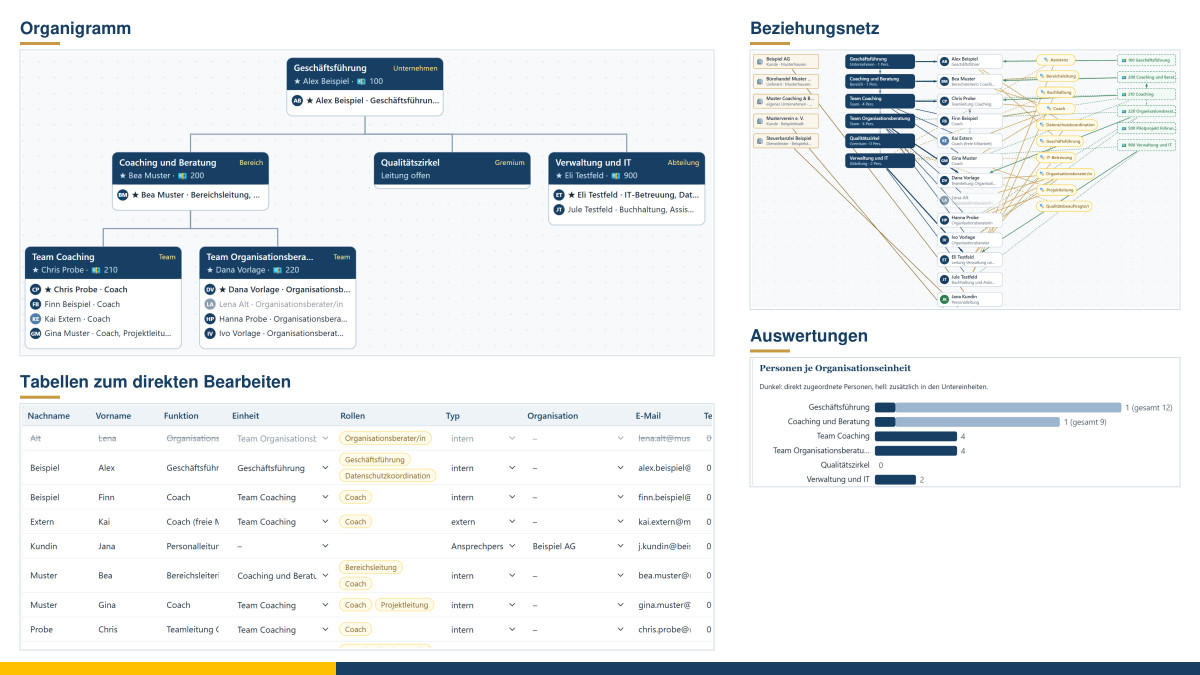
Maintain people, roles, bank details, cost centres, cost types and locations centrally just once, merge duplicates and use them in every tool.
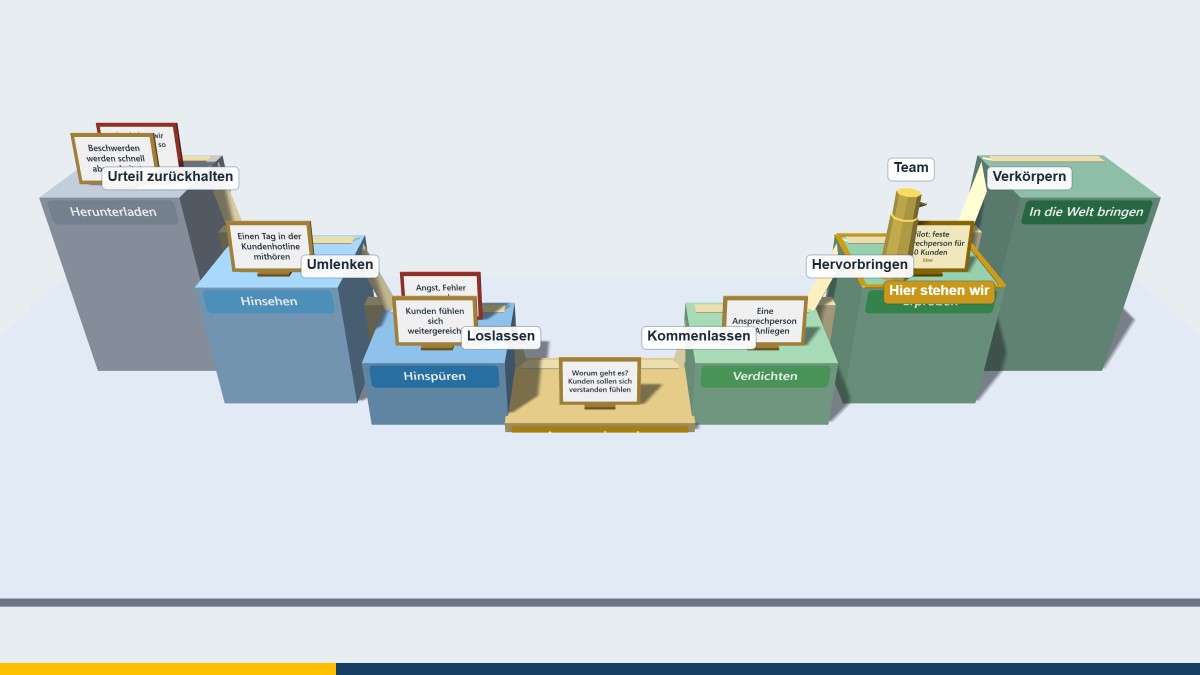
From downloading to “bringing into the world”: Theory U by C. Otto Scharmer in practice – on the board and as a 3D landscape you can walk through.
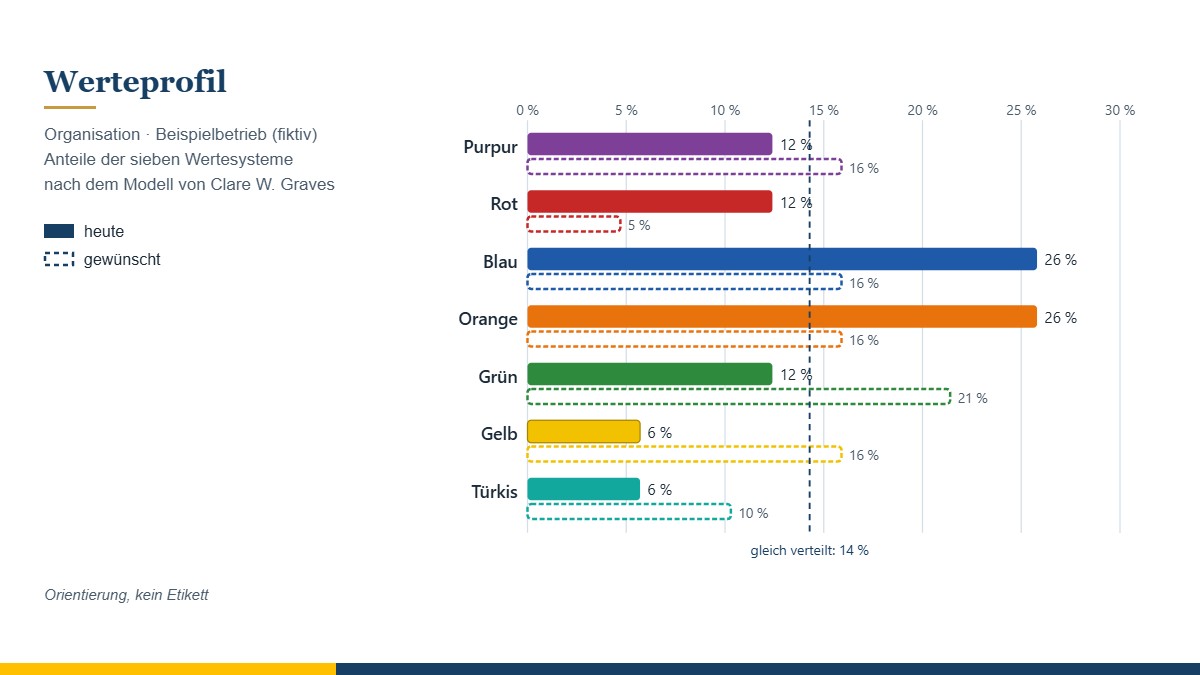
Two free questionnaires based on the values model of Clare W. Graves, known as Spiral Dynamics: the values profile for organisations and for individuals.
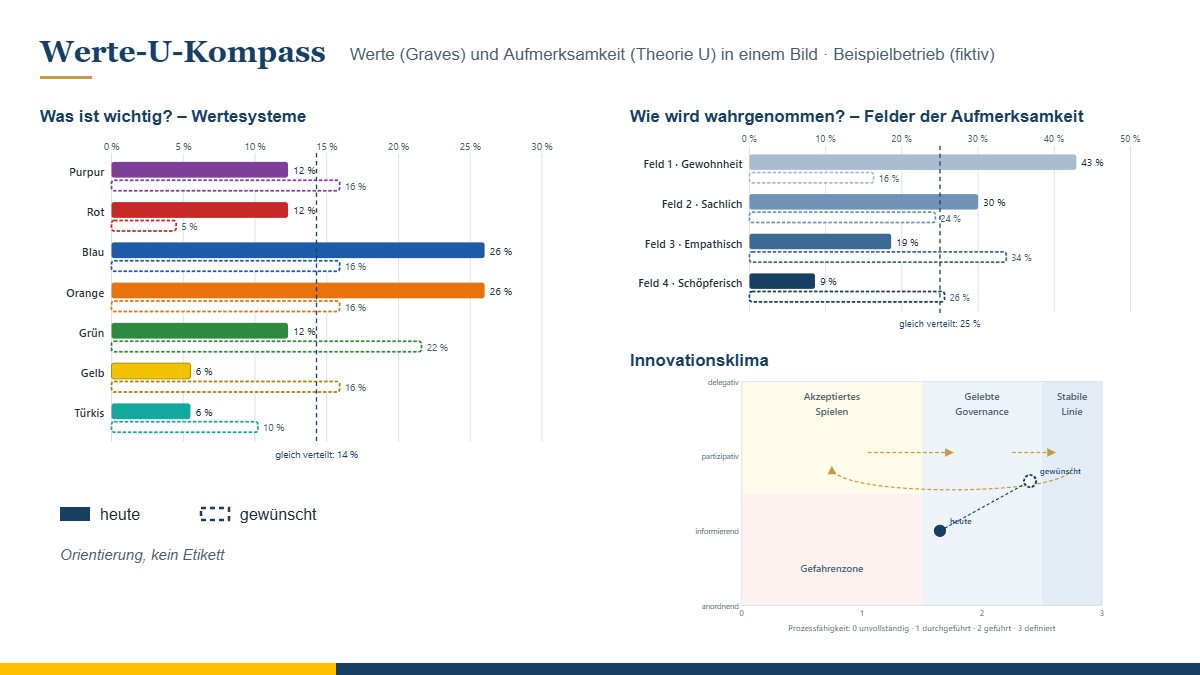
Values after Graves and attention after Theory U in one free questionnaire – for teams too: combine several results with mean and spread into one picture.
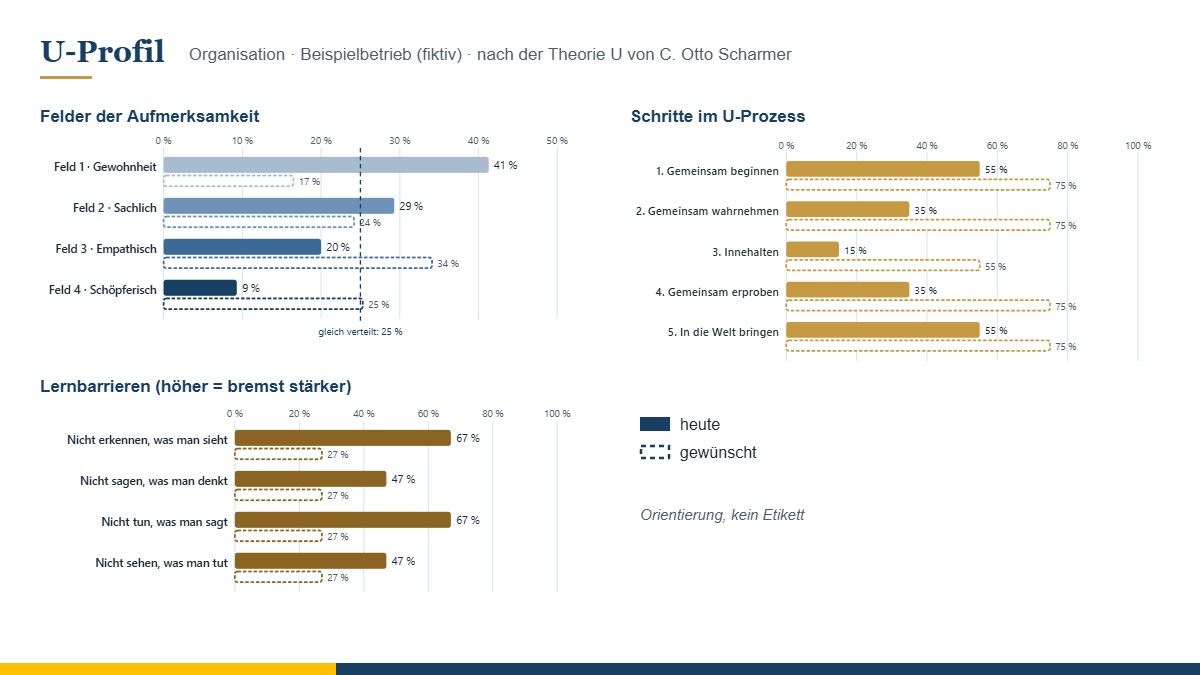
How do we perceive, and how does something new emerge? Two free questionnaires on Theory U by C. Otto Scharmer – for organisations and for individuals.
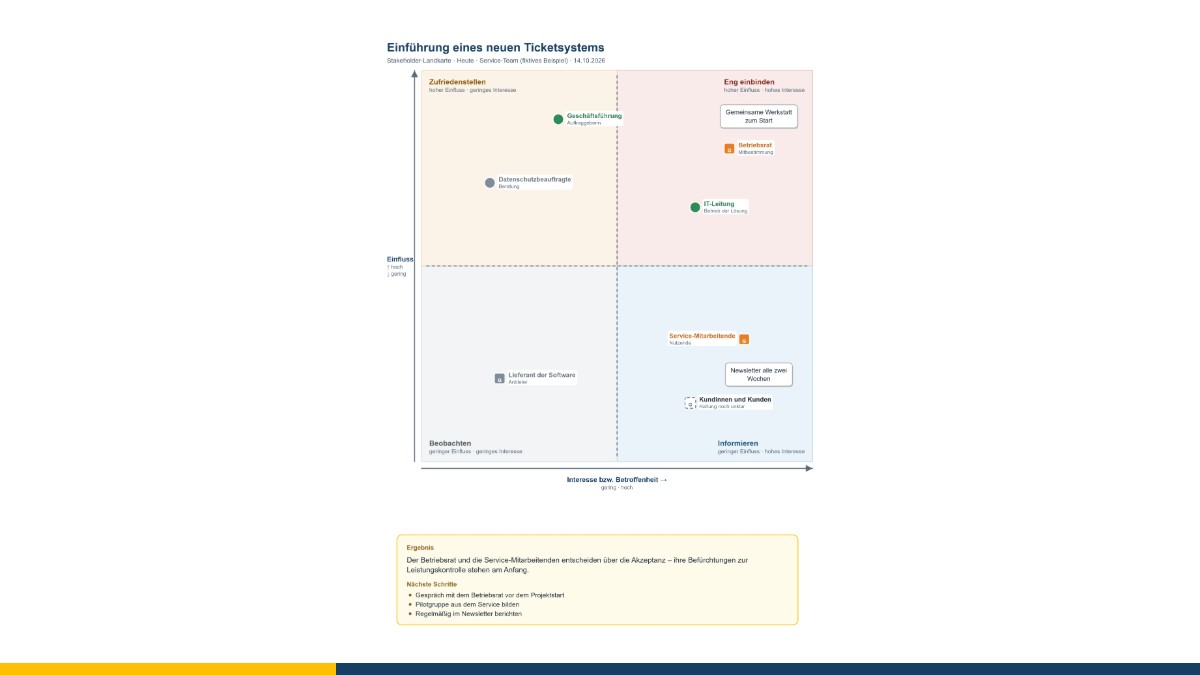
Who is affected by an initiative, how much influence do they have, and how do we involve them? The stakeholder map with the free tool.
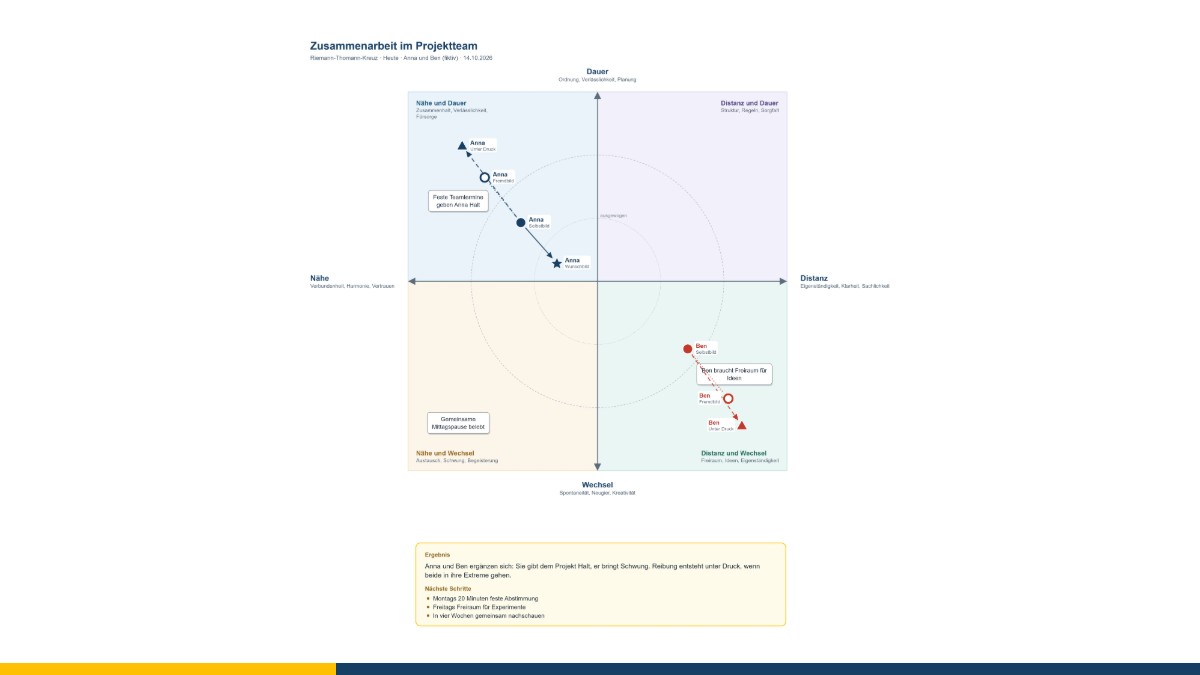
Closeness, distance, permanence, change: how the Riemann-Thomann model helps you understand yourself and others better – with the free tool.
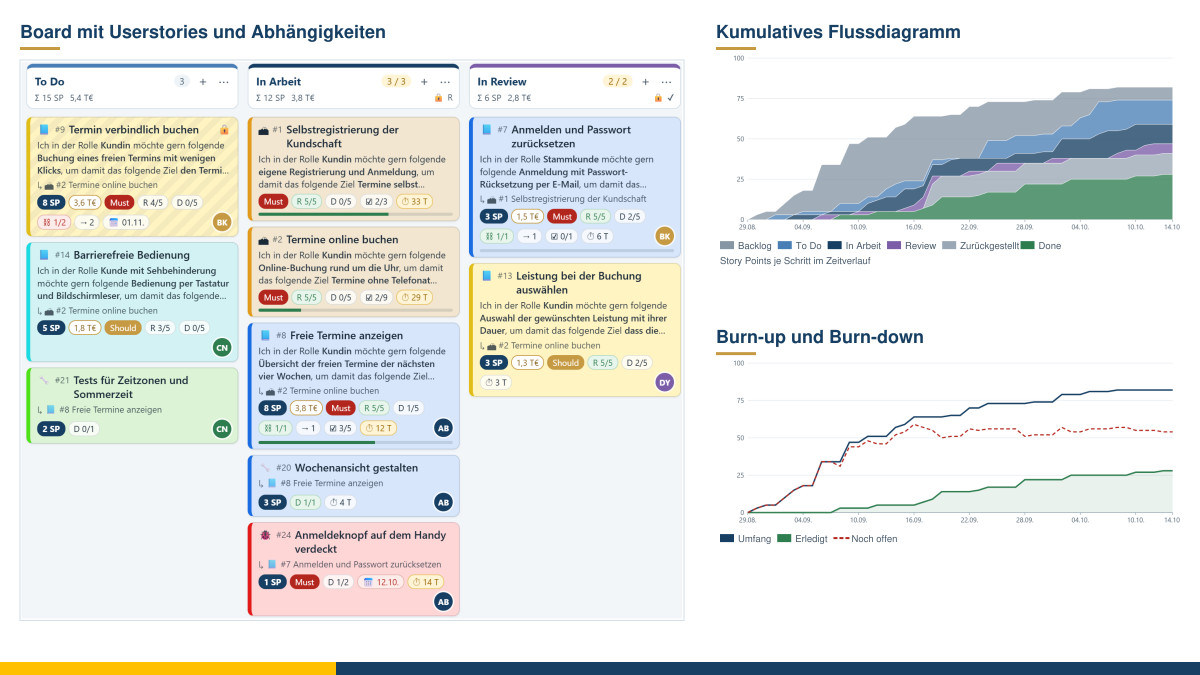
Free Kanban board in the browser: user stories, tasks and dependencies, Definition of Ready and Done, freely editable steps and reports.
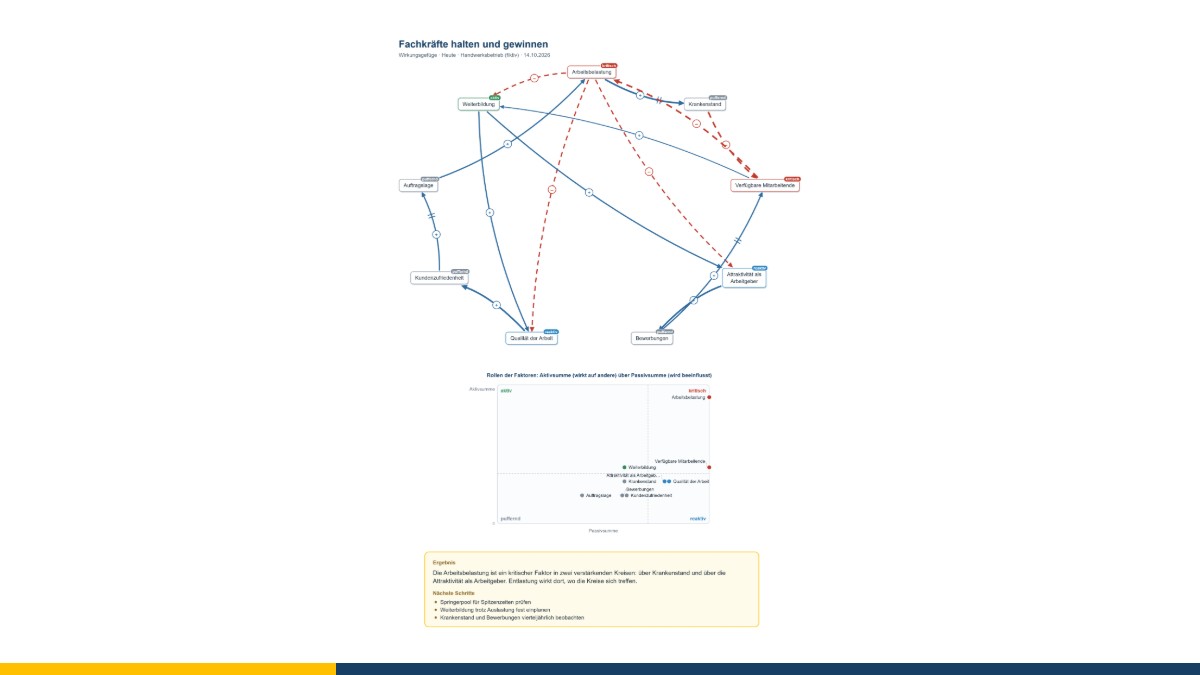
What influences what, and where are the levers? Impact network, influence matrix and feedback loops based on Frederic Vester – with the free tool.
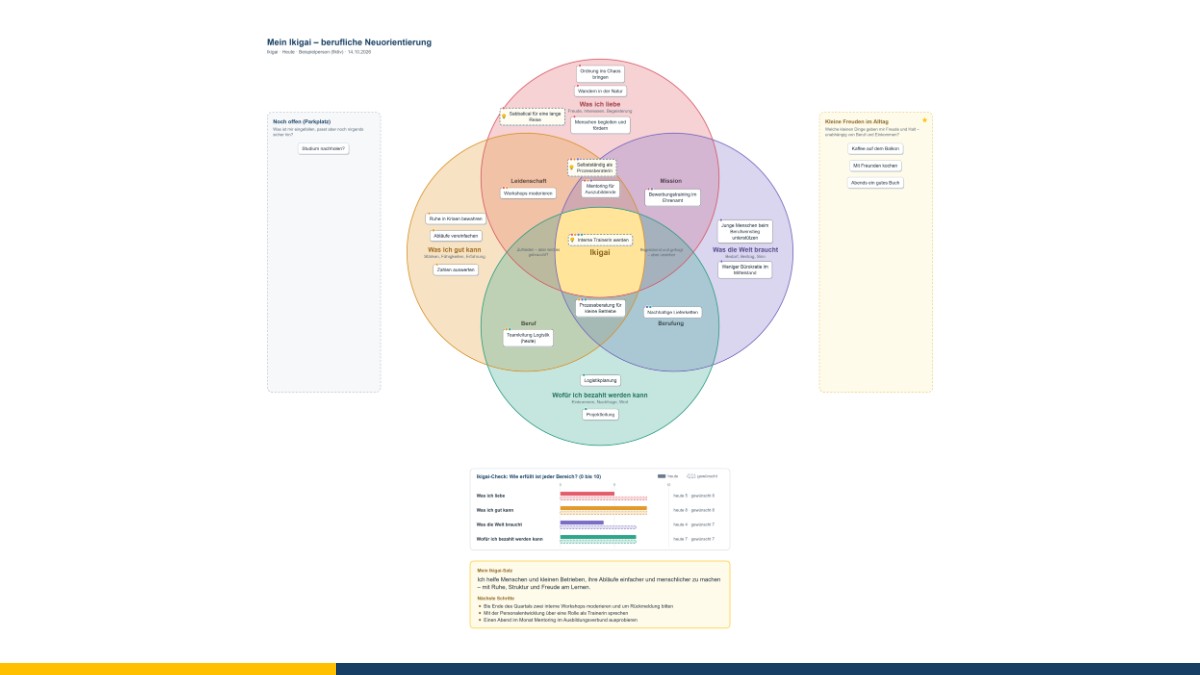
What I love, what I am good at, what the world needs, what I get paid for: the Ikigai model in coaching – with the free tool.
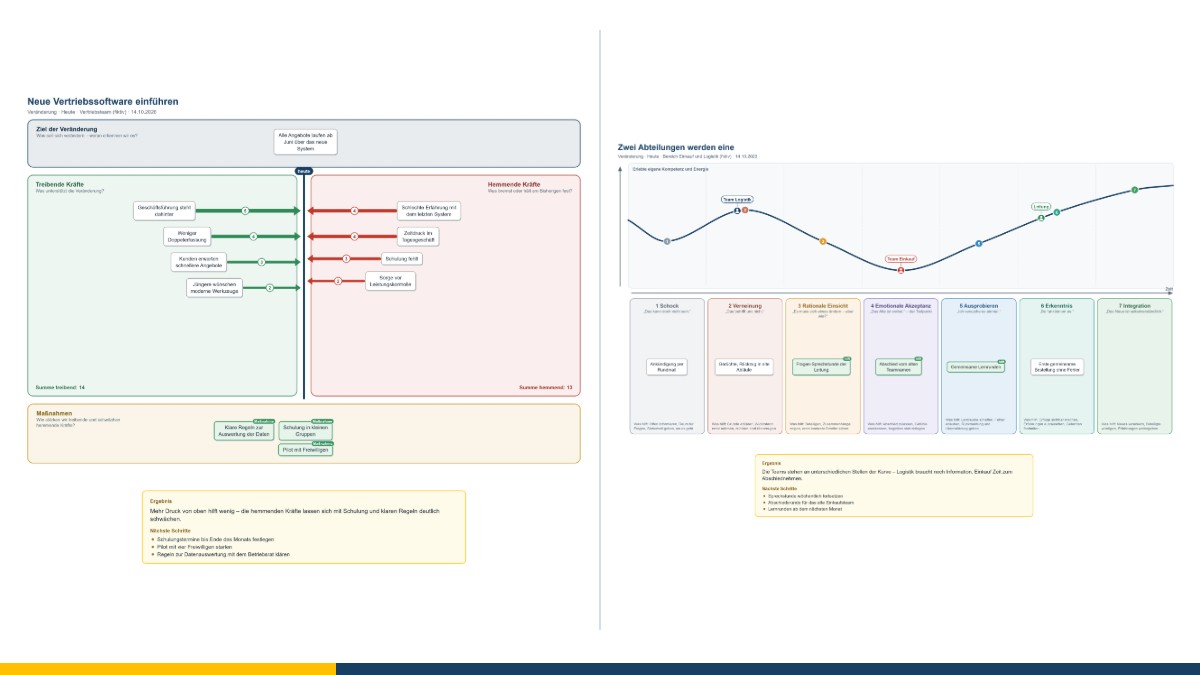
What drives a change, what holds it back, and how do people experience it? Force field analysis and the change curve with the free tool.
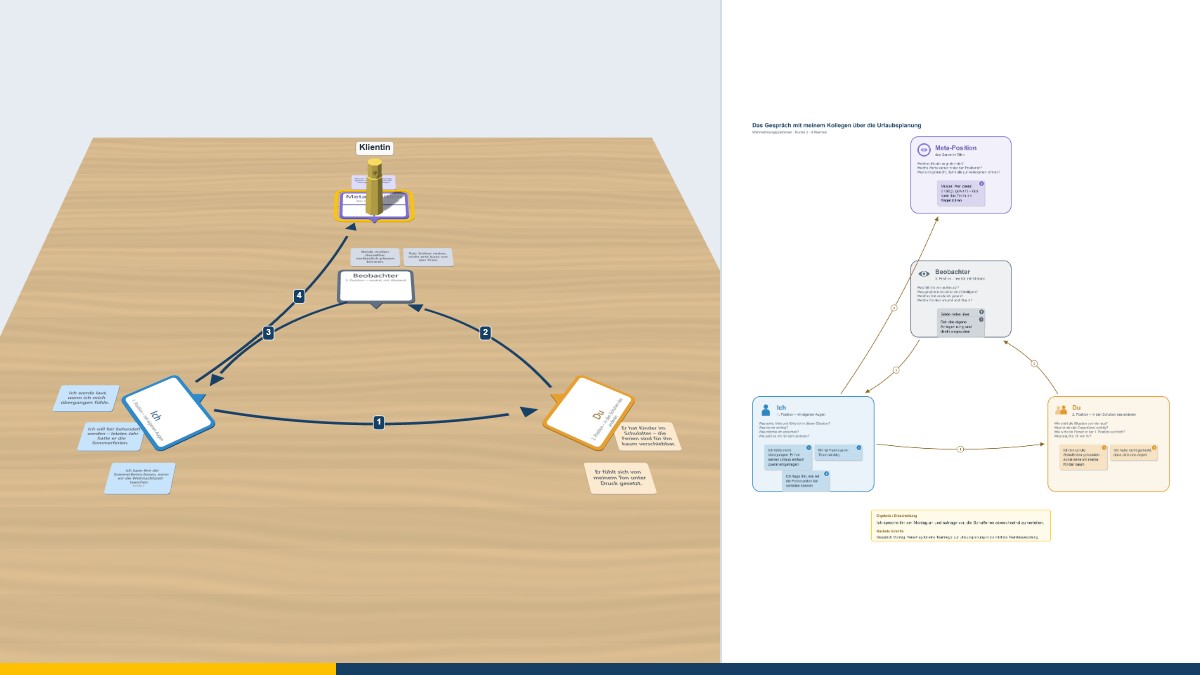
Perceptual positions, drama triangle, tetralemma, timeline: how floor anchors work in coaching – with free tools on a board and in 3D.
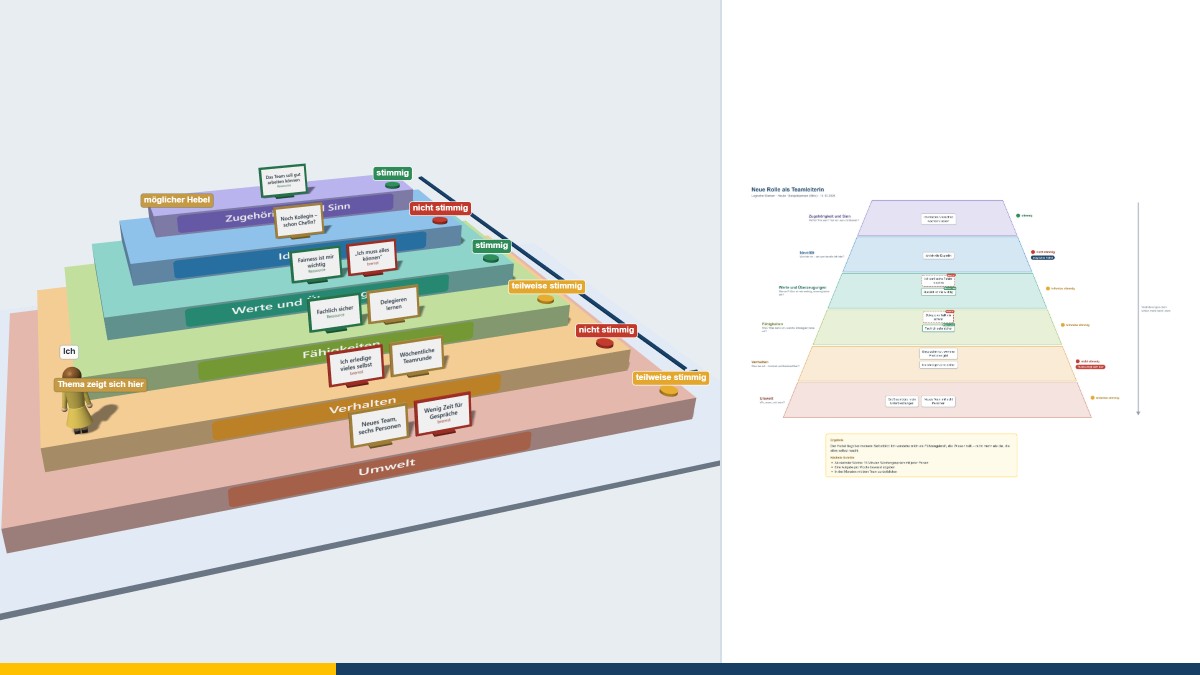
Environment, behaviour, capabilities, values, identity, purpose: Dilts’s logical levels model – on a board and as a walkable 3D staircase.
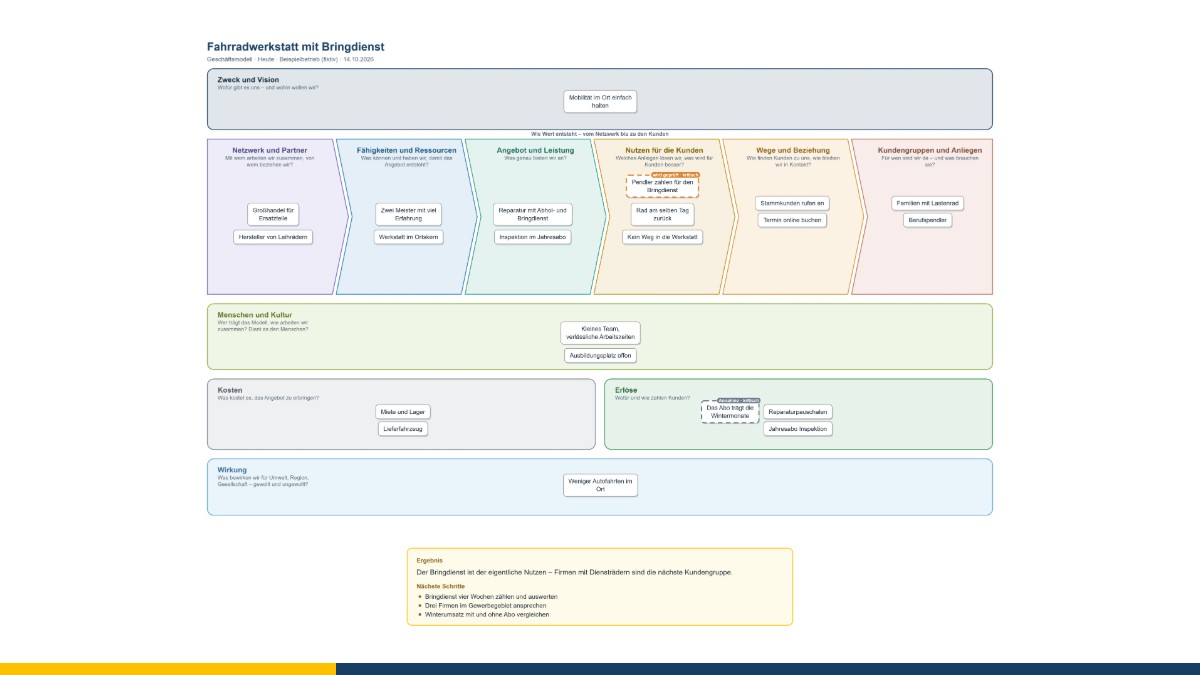
Why do we exist, for whom, and how is value created? Describe a business model from purpose to impact – with the free business model board.
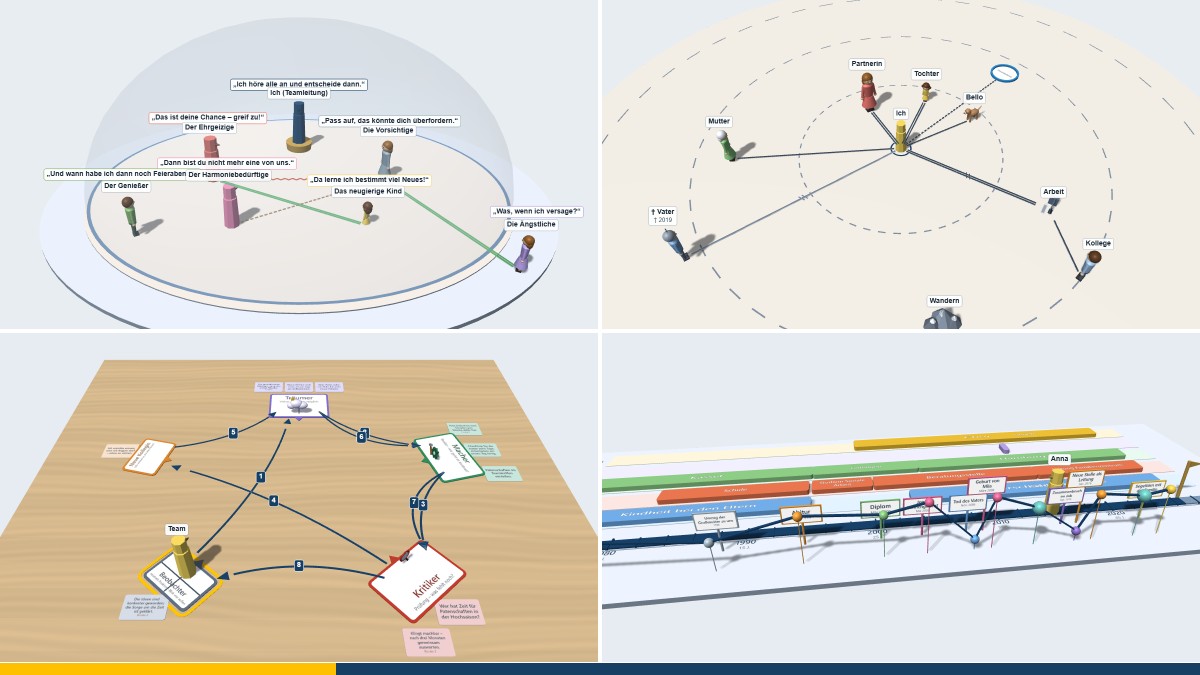
Systemic board, floor anchors, inner team, lifeline and other coaching methods as 3D models you can walk through – free in your browser, no installation.
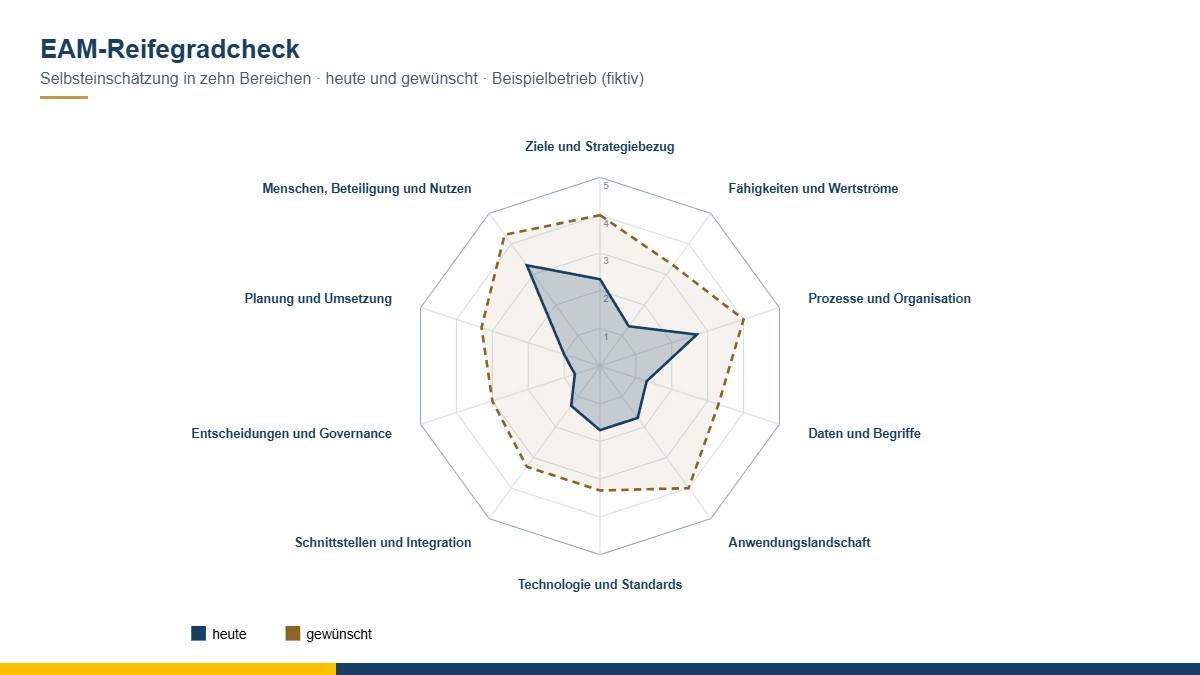
Two free questionnaires for getting started with architecture management: a maturity check in ten areas and a survey form for IT systems.
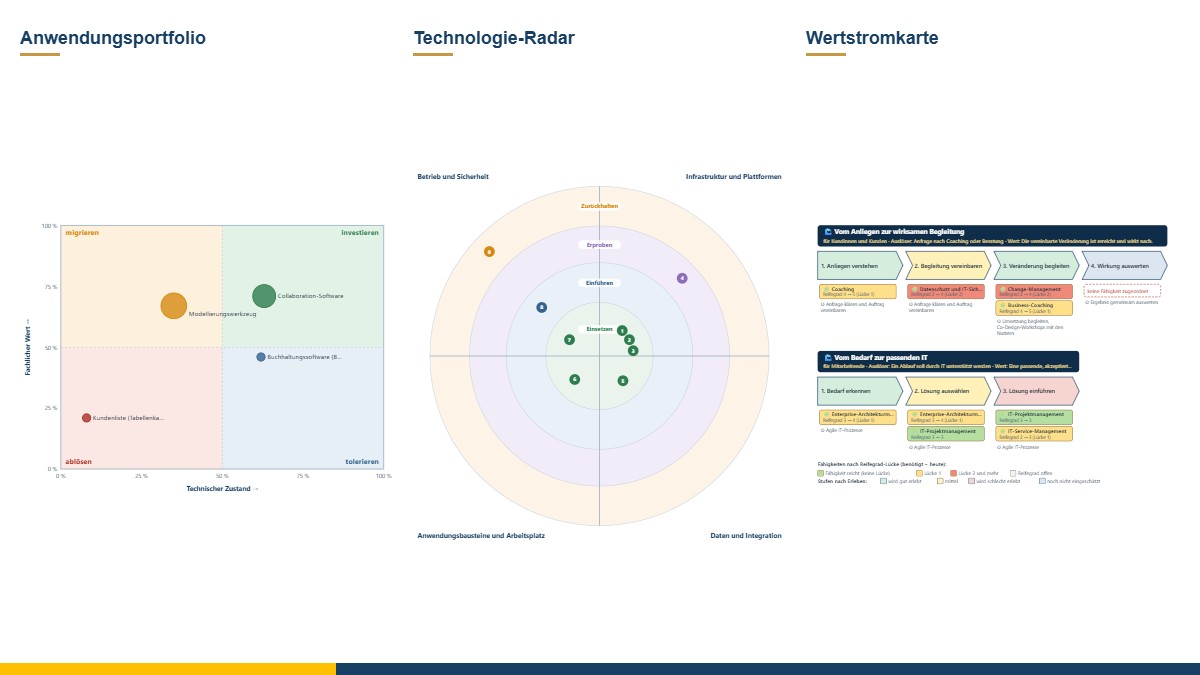
Application portfolio, interfaces, technology radar, prioritisation and value streams: architecture management for SMEs in the 8EM Modeller.
Free bookkeeping for freelancers and small firms: receipts, e-invoices, bank reconciliation, VAT returns, EÜR, DATEV export and values for the tax return.
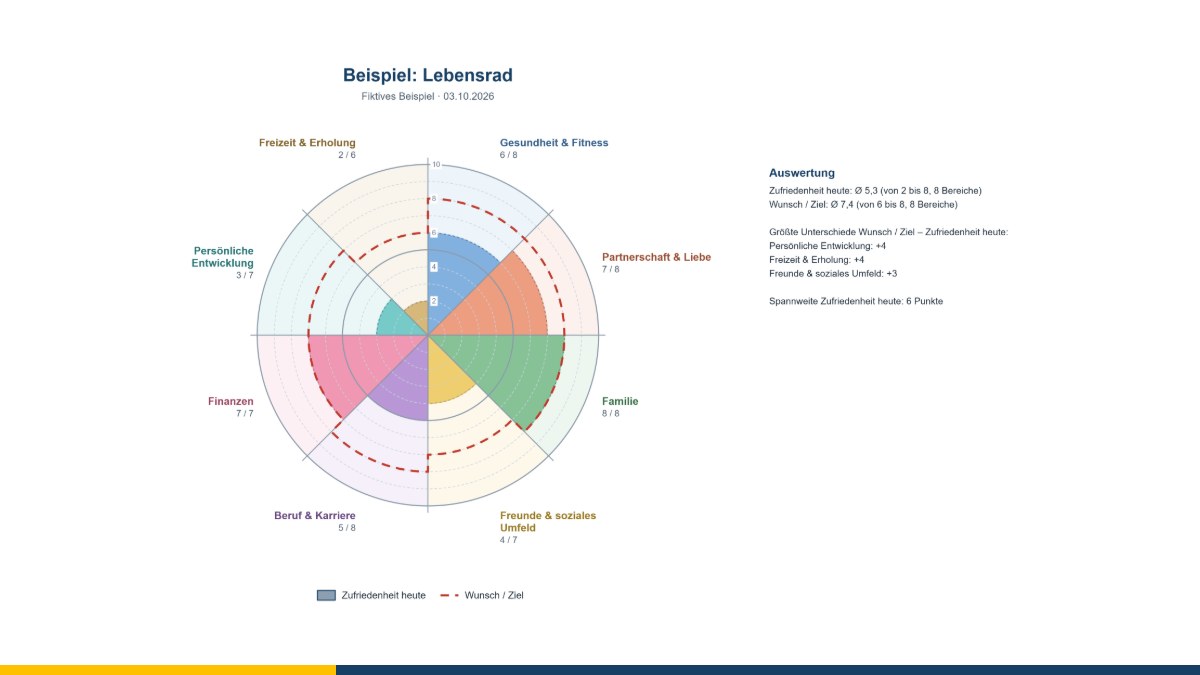
Satisfaction across areas of life and roles, how time is spent, team phases: wheel of life, role wheel, time pie and team clock – with the free tool.
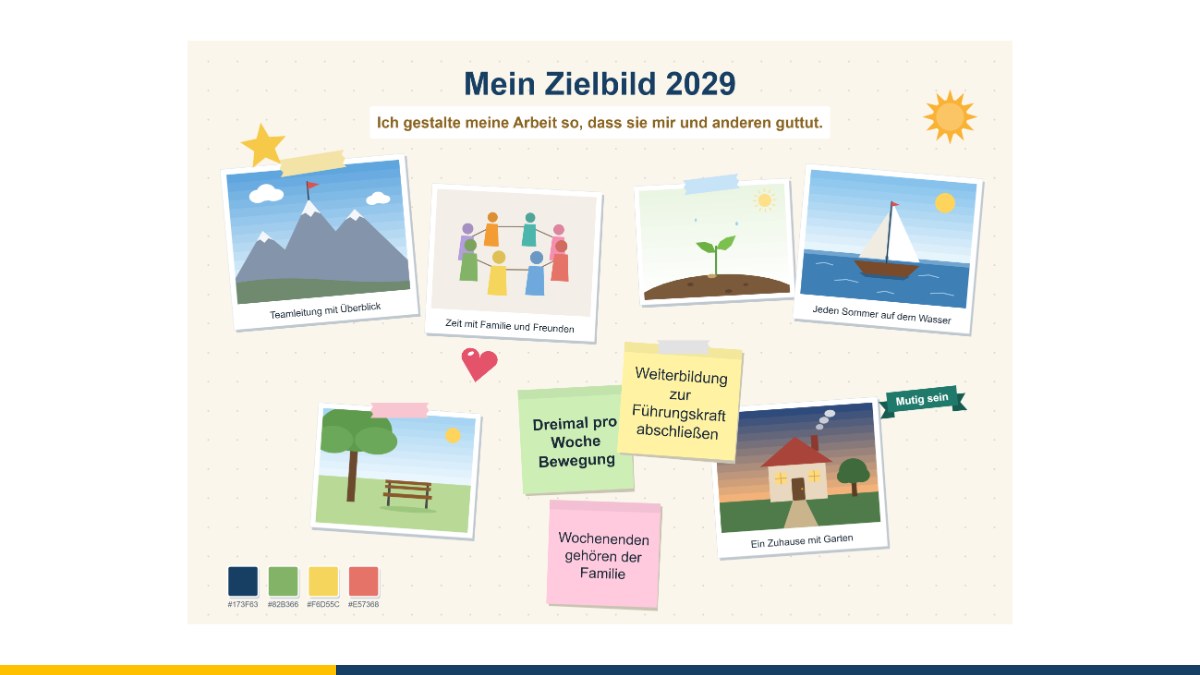
A vision board uses pictures, words and colours to show where you want to go. What research says, how to proceed and how the free tool helps.
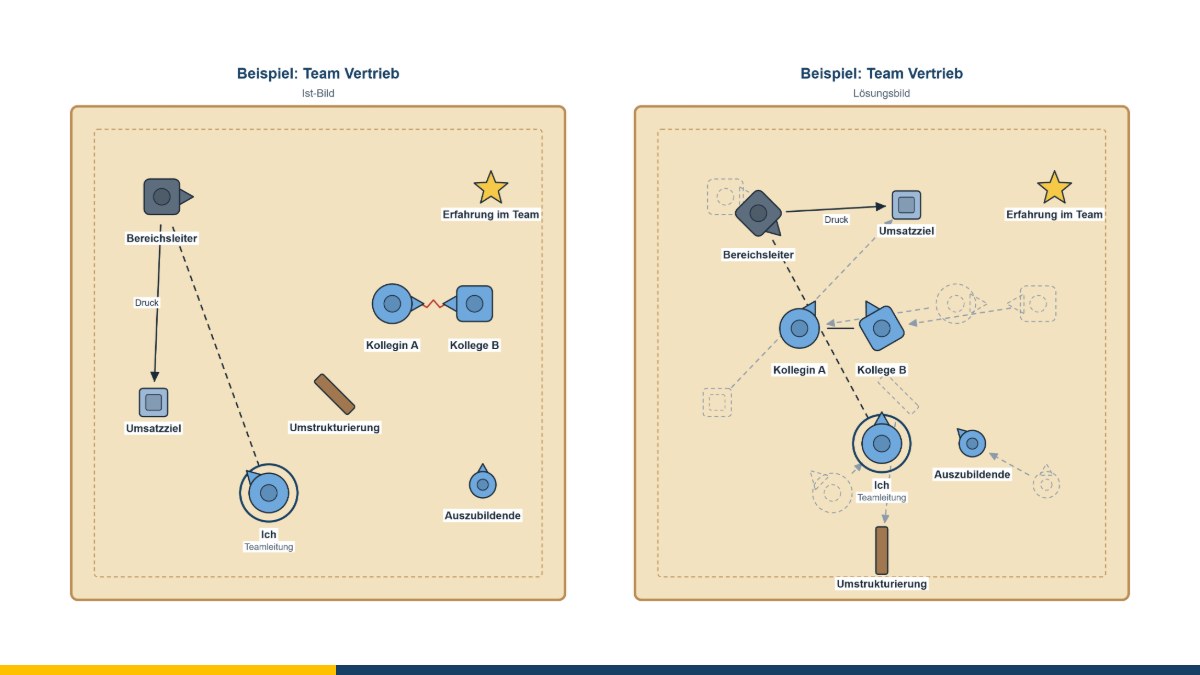
Setting up teams, families and organisations with figures: origins and approach of the systemic board, and the free tools for 2D and 3D.
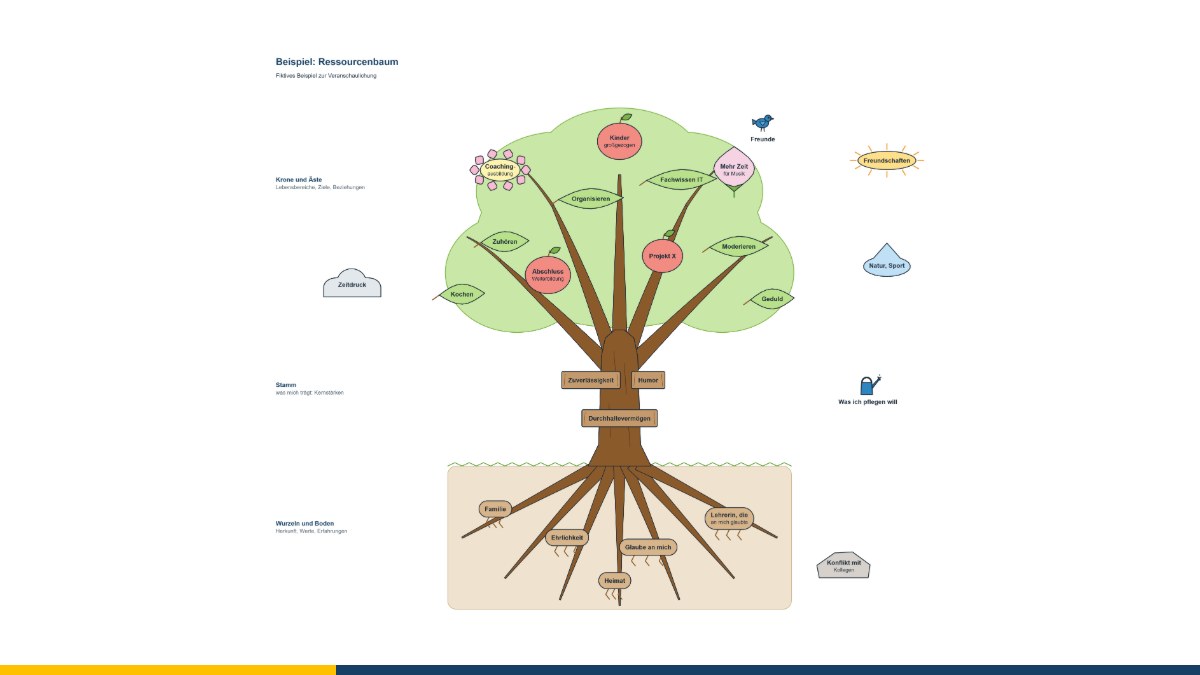
The resource tree brings origins, strengths and goals together in one picture. Aim, background and use – including with the free tool.
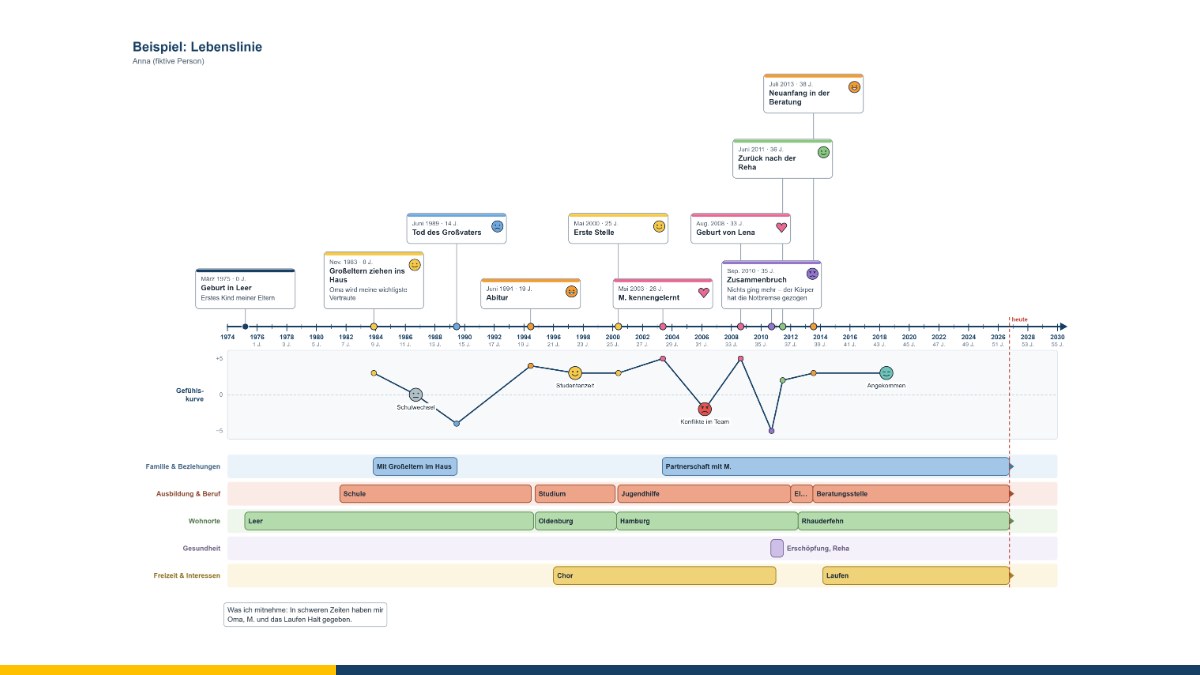
Make formative events and turning points visible and plan the next stage of life – background, approach and free tools in 2D and 3D.
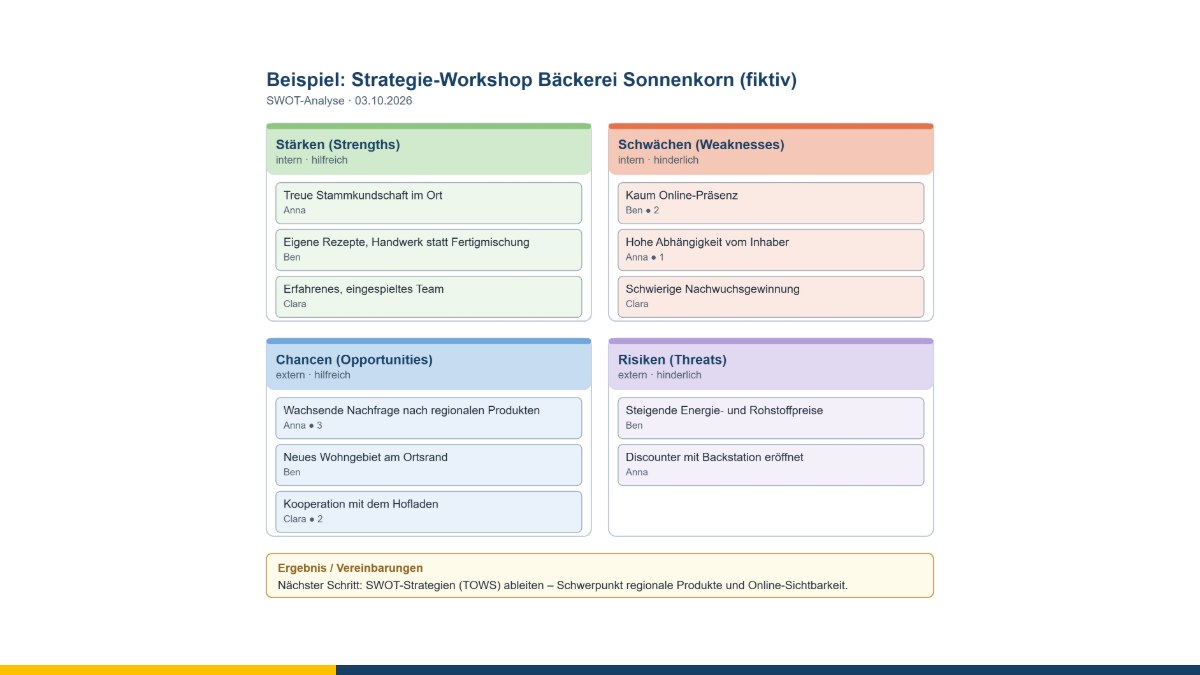
SWOT, SOAR, GROW, retrospective, Johari window, values square, Eisenhower matrix and more: aim, origin and use – with the free analysis tool.
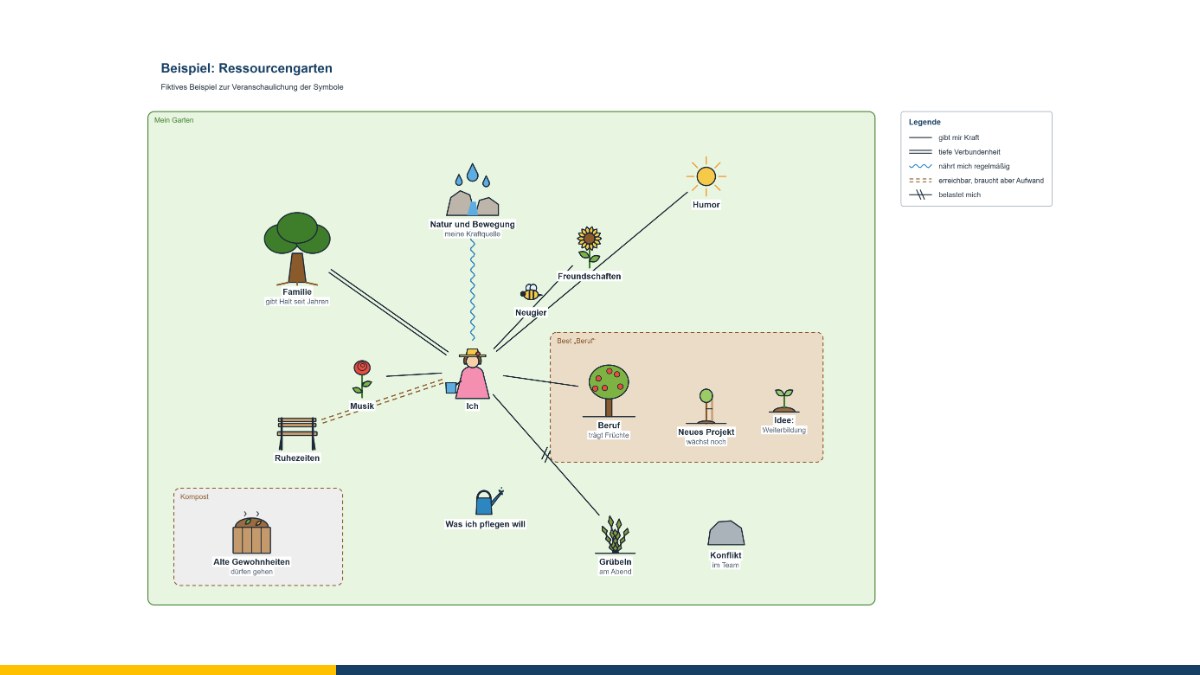
Using the garden metaphor to make your own resources visible: aim, background and use of the resource garden – also with the free tool.
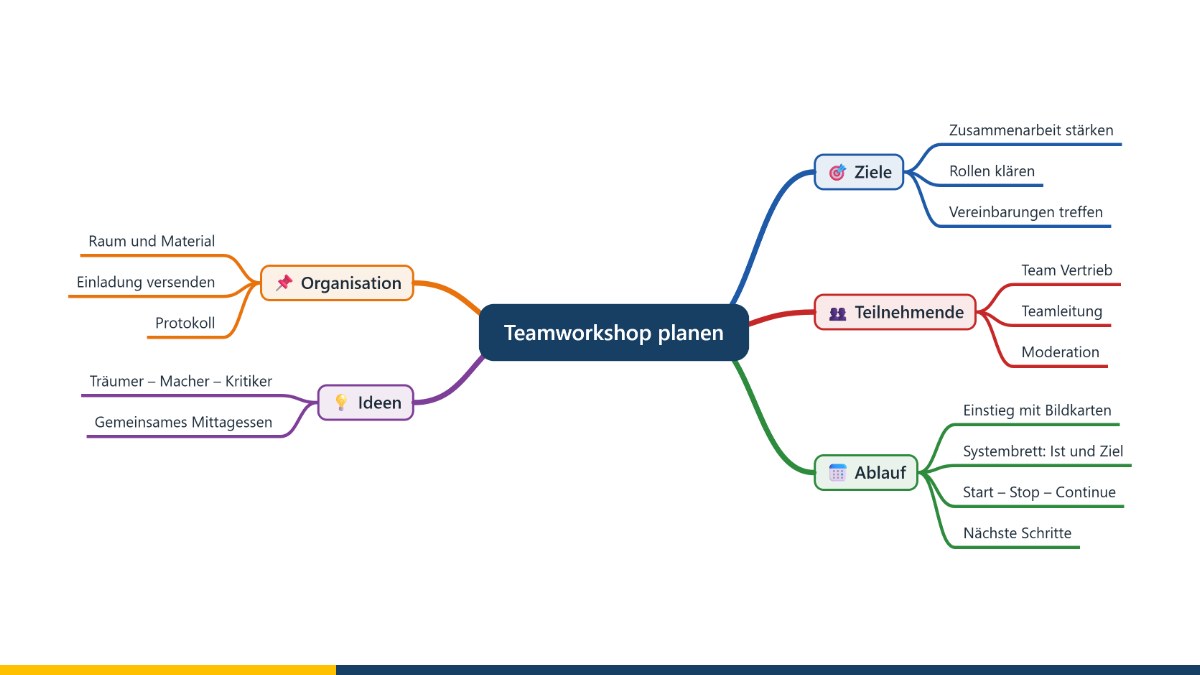
What a mind map is, where the method comes from and how the free mind map tool helps you organise thoughts and export to Word or a presentation.
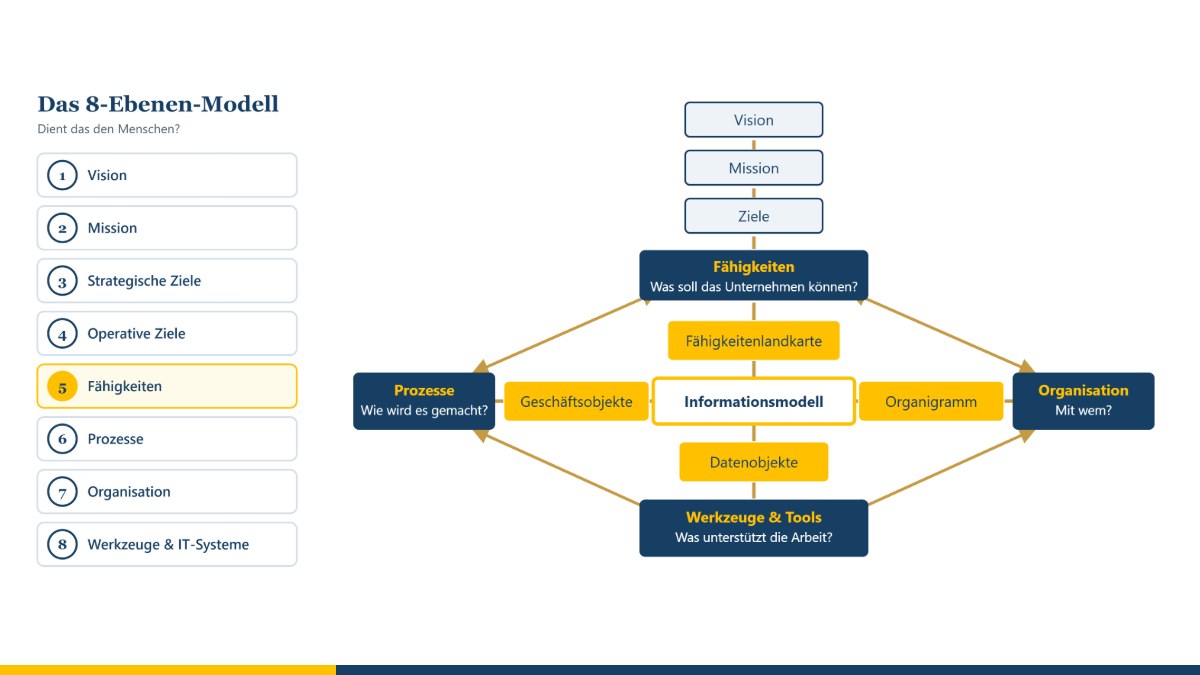
From vision to IT in the 8-Level Model: the free 8EM Modeller with influence relationships, an IT system lifecycle and bulk import of your IT map.
Develop ideas, plan, check – one after the other rather than all at once: the Walt Disney strategy after Dilts, with free tools in 2D and 3D.
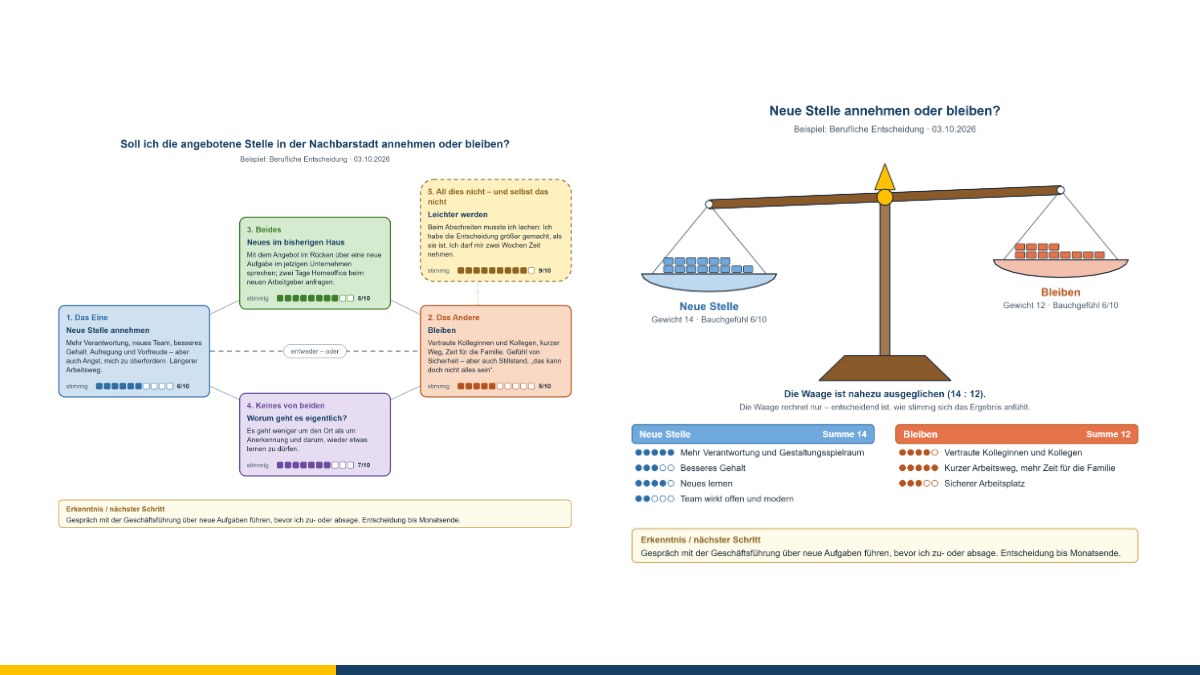
Tetralemma and decision balance: two proven methods for difficult decisions – where they come from, how they work and the free tool for both.
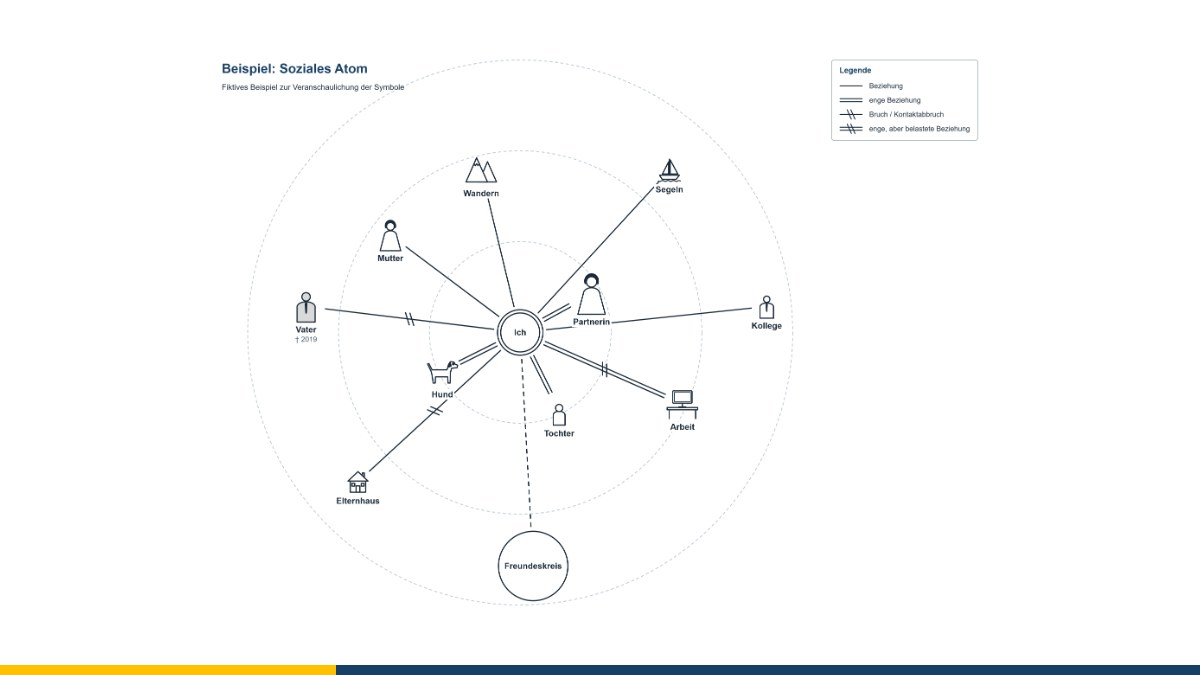
Jacob Levy Moreno's social atom shows your network of relationships as you experience it. How to use it – on paper and with the free tool.
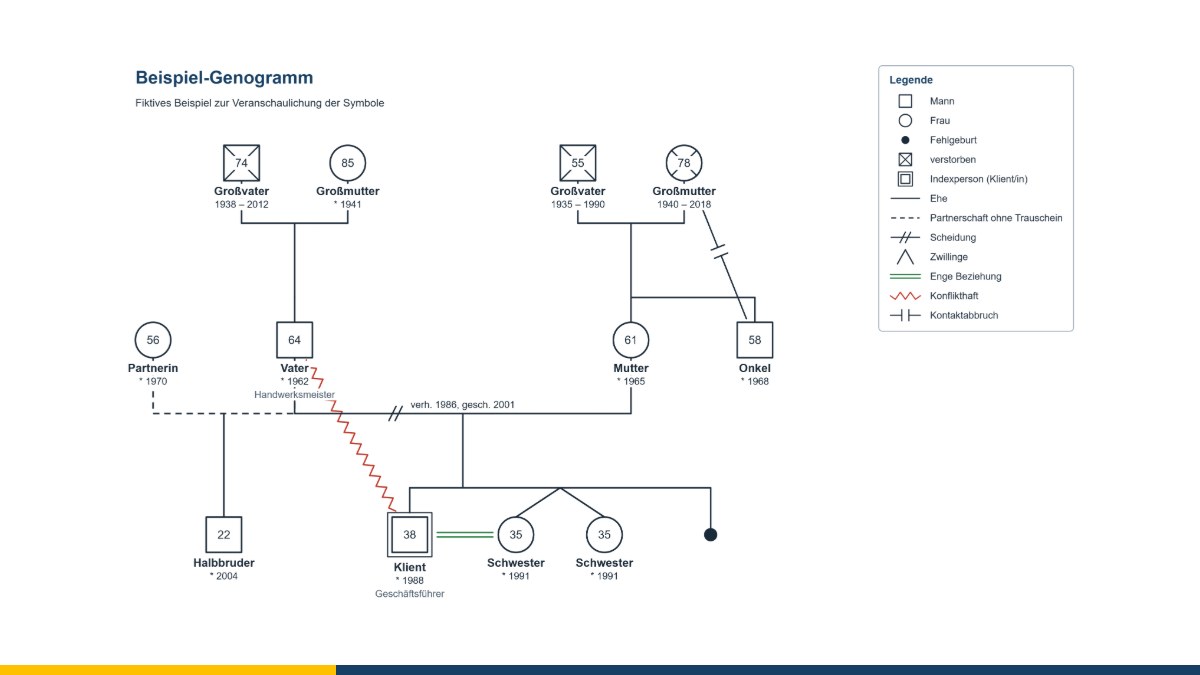
What a genogram is, where the method comes from and how to depict family and relationship structures clearly with the free genogram tool.
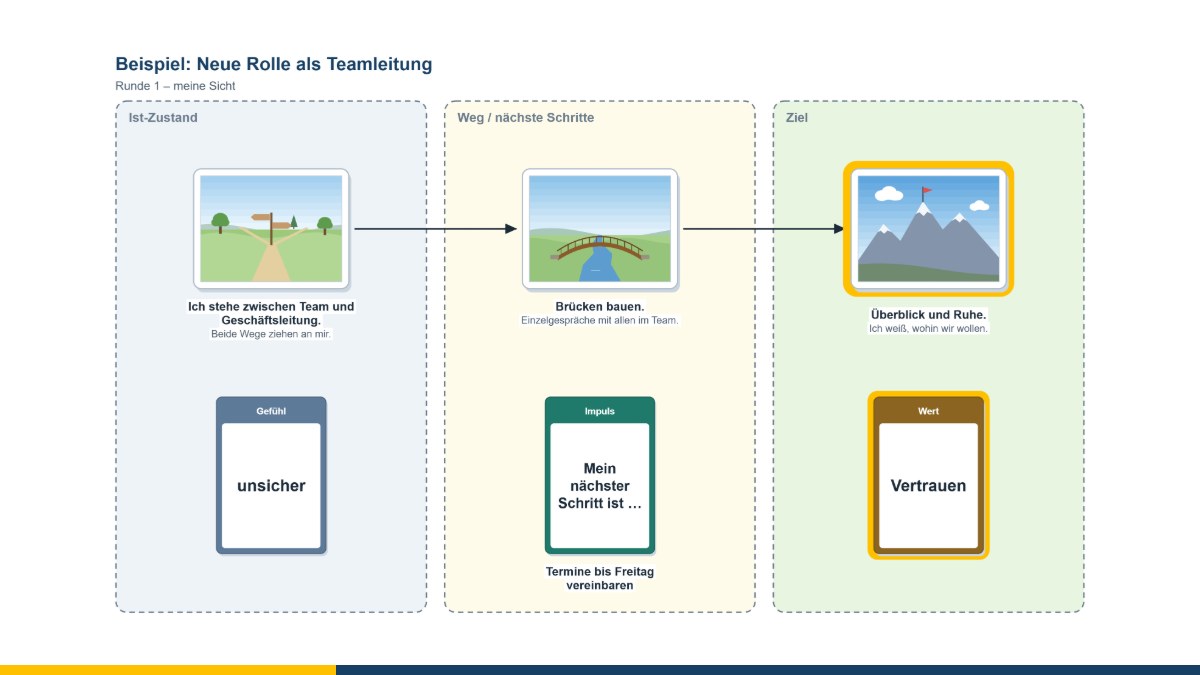
Picture cards and prompt cards open up new approaches in coaching. Aim, background and use of card work – including with the free card work tool.
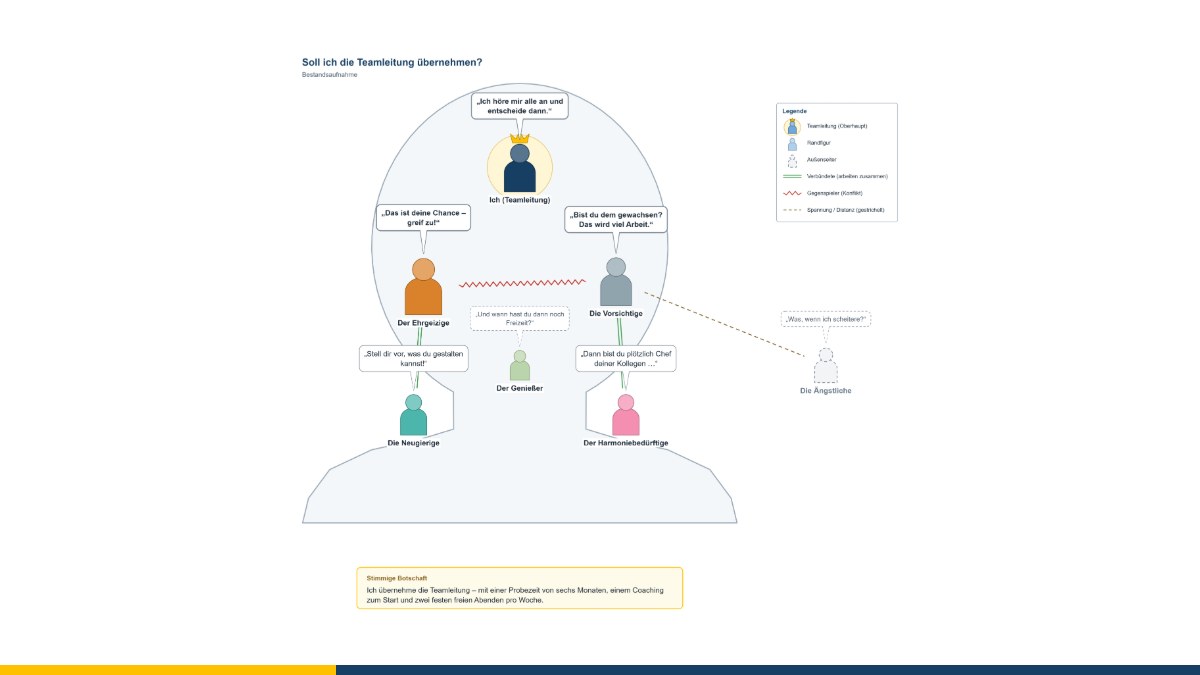
Name your inner voices, arrange them and guide them towards a coherent message: Schulz von Thun's inner team with the free tool.
Registration documents, patient registration and supply ordering in a medical practice as process models – with stakeholder analysis, KPIs and open questions.
Joseph Weizenbaum, professor of computer science at MIT and creator of ELIZA, became one of the earliest and sharpest critics of artificial intelligence.
A satire in four acts: Joseph Weizenbaum takes an AI to task – on understanding, the wilful human being and cosmic peace.
ChatGPT applies Joseph Weizenbaum's criticism of AI to itself: what can a language model understand – and where does its competence end?
Personal thoughts on ChatGPT, the Turing test and the question of whether AI can already be considered intelligent today.
How Dr Spencer Silver's supposedly useless adhesive became the Post-it – invention, innovation and technology push, using 3M as an example.
A satirical tale of trying to write a blog post about ITIL 4 with ChatGPT – and of everything that went wrong along the way.
TOGAF 10 at a glance: the ADM phases, the Architecture Content Framework, further building blocks and the concrete benefits for SMEs.
Introducing ITSM in eight practical steps – from analysing the current situation and setting up a service catalogue to reporting and improvement.
Introducing EAM and TOGAF in seven pragmatic steps – from the target vision and the ADM cycle to architecture governance.
ITIL 4 and its 34 practices explained clearly – what lies behind them and what benefit remains for small and medium-sized IT teams.
Why IT service management secures structure, stability and growth, especially for SMEs – with typical scenarios for getting started.
Why enterprise architecture management (EAM) is a leadership task for small and medium-sized enterprises – and not purely an IT matter.
SCRUM, Prince2, IT-PEP, CMMI and SAFe compared – proven project management methods and their suitability for small and medium-sized enterprises.
COBIT as a governance framework for SMEs: strategic IT management, compliance and combining it with ITIL, PRINCE2 and CMMI.
The story of how I founded my business: 27 years at Audi, three farewells and a Raspberry Pi – how a product owner becomes an entrepreneur.
Under the same conditions, a yardstick always delivers the same results – psychological tests are a different matter. What that means in practice.
There are many definitions of intelligence – a reliable and valid test measures precisely the one on which it is based. What that means for results.
A values analysis identifies the values that shape a coachee's thinking and actions – a basis for the further work in coaching.
The social atom according to Jacob Levy Moreno makes visible a person's network of relationships as they subjectively experience it.
The inner team according to Friedemann Schulz von Thun: several inner voices influence how we act – and sometimes our goals as well.
What does it mean that psychology studies behaviour as an expression of inner processes? A short explanation with an example from everyday life.
It usually does no harm to be intelligent – but success in life depends on more than that. A short look at what really matters.
Two creativity techniques from a seminar that were used to find a solution to a real problem from everyday working life.
In a free, no-obligation initial consultation we clarify where you stand and which path suits you.